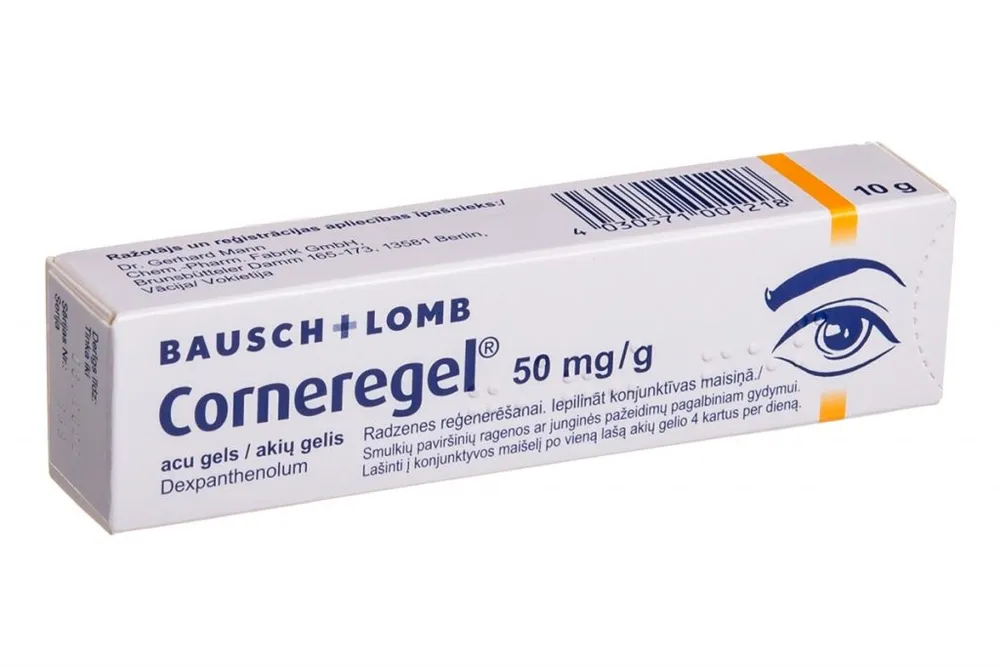
CORNEREGEL
PolandThe medicine is used in the treatment of non-inflammatory keratopathy (e.g., corneal dystrophy or degeneration), erosions and injuries related to contact lens use, as well as in cases of corneal and conjunctival burns and injuries. It may also be used as an adjunct in bacterial, fungal, and viral corneal injuries.
Frequently asked questions
How to use Corneregel?
It should be applied to the eye according to the instructions of a doctor or pharmacist. The standard recommendation is 1 drop into the conjunctival sac 4 times a day, plus an additional 1 drop before bedtime. It can be used until the symptoms subside.
When should you not use the medicine?
Do not use it if you are allergic to the active substance or any of the excipients.
Can I wear contact lenses during treatment?
Contact lenses should not be worn during the use of the medicine, as they may become discolored. They should be removed before applying the drops and only put back in after approximately 10-15 minutes.
How to use the medicine to avoid infection?
Wash your hands before use and under no circumstances touch the tip of the tube to the eye, eyelids, or any other surfaces, in order to avoid contaminating the gel with bacteria.
Does Corneregel interact with other preparations?
If you are using other eye drops or ointments, maintain an interval of at least 15 minutes between them. Corneregel should always be administered last.
What side effects may occur?
Eye irritation may occur, such as redness, pain, tearing, itching, conjunctival swelling, or a foreign body sensation in the eye. Very rarely, hypersensitivity reactions may occur, e.g., a rash.
Does the medicine affect driving?
Use of the medicine may cause transient visual disturbances (smearing), which may affect reaction time. Do not drive vehicles or operate machinery until these symptoms have subsided.
Instructions for use
Package leaflet: Information for the user
Warning! Keep the leaflet. Information on the immediate packaging in a foreign language.
Corneregel
50 mg/g, eye gel
Dexpanthenolum
Please read this leaflet carefully before using the medicine, because it contains
important information for the patient.
- Keep this leaflet so that you can read it again if necessary.
- If you have any questions, please consult your doctor, pharmacist, or nurse.
- This medicine has been prescribed for a specific individual. Do not pass it on to others. The medicine may harm someone else, even if their symptoms are the same.
- If you experience any adverse reactions, including any not listed in this leaflet, tell your doctor, pharmacist, or nurse. See section 4.
Table of contents:
- What Corneregel is and what it is used for
- Important information before using Corneregel
- How to use Corneregel
- Possible side effects
- How to store Corneregel
- Contents of the pack and other information
1. What Corneregel is and what it is used for
The active substance in Corneregel is dexpanthenol.
Corneregel is used in the treatment of non-inflammatory keratopathy, e.g. corneal dystrophy,
corneal degeneration, recurrent erosion, and injuries related to the use of contact lenses.
Additionally, as an adjunctive treatment promoting healing in corneal and conjunctival injuries,
chemical burns, and thermal burns.
Supportively in the specific treatment of bacterial, fungal, and viral corneal lesions.
WARNING:
Corneregel is not intended for the treatment of bacterial, fungal, or viral corneal lesions, but only as an adjunctive agent supporting the appropriate treatment of these corneal diseases.
2. Information before using Corneregel
When not to use Corneregel
- if the patient is allergic to the active substance or any of the other ingredients of this medicine (listed in section 6).
Warnings and precautions
- Before starting to use Corneregel, discuss it with your doctor or pharmacist. Corneregel contains cetrimide (a preservative), which may cause stinging, redness, or a sensation of a foreign body in the eye, and with frequent use may damage the corneal epithelium.
- Do not wear contact lenses during treatment with Corneregel, as lenses may become discolored and there is a risk of incompatibility with the lens material. Remove contact lenses before instilling the drops and do not reinsert them earlier than approximately 10–15 minutes after application.
- Do not touch the dropper tip to any surface or the eye area, or to any other surface, as this may contaminate the dropper or gel with bacteria, which could lead to eye infection.
Corneregel and other medicines
Tell your doctor or pharmacist about all medicines you are currently taking or have recently taken, as well as any medicines you plan to take.
If Corneregel is used simultaneously with other eye drops/ointments, an interval of at least 15 minutes should be maintained between the administration of these medicines, and Corneregel should always be administered last.
Pregnancy, breastfeeding and fertility
If the patient is pregnant, breastfeeding, suspects she may be pregnant, or is planning to have a child, she should consult her doctor or pharmacist before using this medicine.
Corneregel should not be used during pregnancy unless advised by a doctor.
Driving and operating machinery
Corneregel, even when used correctly, may temporarily impair visual acuity by causing streaks or blurred vision, thus possibly affecting reaction ability. Do not drive, perform tasks without stable support, or operate machinery until these symptoms have resolved.
3. How to use Corneregel
This medicine should always be used as directed by a physician or pharmacist. If in doubt,
consult a physician or pharmacist.
For ocular use only.
Recommended dose:
Depending on the severity and intensity of the condition, instill 1 drop into the conjunctival sac 4 times daily,
and also 1 drop before bedtime.
There are no time limitations for use. The medicine may be used until subjective symptoms resolve.
Caution!
Administration instructions
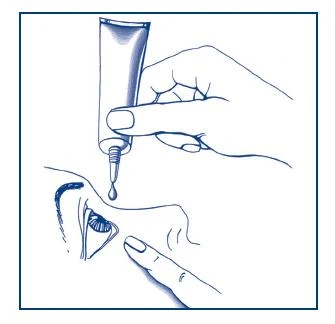
Wash your hands.
Tilt your head backward and gently pull down the lower eyelid with your index finger.
With the other hand, hold the tube vertically above the eye.
Do not touch the tip of the tube to the eye, eyelid, surrounding areas, or any other surface.
This may lead to contamination of the gel. Using contaminated gel may result in dangerous complications, including loss of vision.
Instill one drop into the conjunctival sac.
If the drop does not enter the eye, repeat the procedure.
After instillation, keep the eye open and move it around to ensure even distribution of the gel.
Use of a higher than recommended dose of Corneregel
Using more than the recommended amount of Corneregel is not associated with any additional risk.
Missed dose of Corneregel
Do not use a double dose to make up for a missed dose.
4. Possible adverse effects
Like all medicines, this medicine can cause adverse effects, although not everyone will experience them.
Very rare adverse effects (may occur in not more than 1 in 10,000 people): hypersensitivity
reactions (e.g. itching, rash).
Adverse effects with unknown frequency include: eye irritation, e.g. redness, pain, sensation of a foreign body in the eye, tearing, eye itching, conjunctival swelling.
Reporting of adverse effects
If any adverse effects occur, including any adverse effects not listed in this leaflet, inform your doctor, pharmacist, or nurse. Adverse effects can be reported directly to the Department of Monitoring Adverse Drug Reactions of the Office for Registration of Medicinal Products, Medical Devices and Biocidal Products
Al. Jerozolimskie 181 C
02-222 Warsaw
Tel.: +48 22 49 21 301
Fax: +48 22 49 21 309
website: https://smz.ezdrowie.gov.pl
Reporting adverse effects allows further information on the safety of this medicine to be collected.
5. How to store Corneregel
Keep this medicine out of sight and reach of children.
Do not store above 25°C.
Keep the tube tightly closed.
Do not use after the expiry date stated on the packaging. The expiry date refers to the last day of the stated month.
Discard any remaining contents 6 weeks after first opening the tube.
Medicines must not be disposed of via wastewater or household waste. Ask your pharmacist how to dispose of medicines no longer required. Such measures help protect the environment.
6. Contents of the packaging and other information
What Corneregel contains
- The active substance is dexpanthenol. 1 g of gel contains 50 mg of dexpanthenol.
- Excipients: cetrimide, disodium edetate, sodium hydroxide, carbomer, water for injections.
What Corneregel looks like and contents of the pack
Corneregel is available as an eye gel. The medicine is supplied in tubes within a cardboard box.
Pack size: 10 g of gel.
For more detailed information, please contact the responsible party or parallel importer.
Responsible entity in Lithuania, country of export:
Dr. Gerhard Mann
Chem.-Pharm. Fabrik GmbH
Brunsbütteler Damm 165-173
13581 Berlin, Germany
Manufacturer:
Dr. Gerhard Mann
Chem.-Pharm. Fabrik GmbH
Brunsbütteler Damm 165-173
13581 Berlin, Germany
Parallel importer:
Delfarma Sp. z o.o.
ul. Św. Teresy od Dzieciątka Jezus 111
91-222 Łódź, Poland
Repackaged in:
Delfarma Sp. z o.o.
ul. Św. Teresy od Dzieciątka Jezus 111
91-222 Łódź, Poland
Marketing authorization number in Lithuania, country of export: LT/1/03/3527/001
Parallel import authorization number: 198/18
Similar drugs
| Brand name | Dosage form | Active substance / Dosage | Manufacturer |
|---|---|---|---|
| CORNEREGEL | gel, ophthalmic |
|
Bausch + Lomb Ireland limited |
| CORNEREGEL | gel, ophthalmic |
|
Dr. Gerhard Mann Chem. - Pharm. Fabrik GmbH |
| CORNEREGEL | gel, ophthalmic |
|
Dr. Gerhard Mann Chem. - Pharm. Fabrik GmbH |
| CORNEREGEL | gel, ophthalmic |
|
Dr. Gerhard Mann Chem. - Pharm. Fabrik GmbH |
The original data is available in the language of the country of manufacture.
Data source: Register of Medicinal Products of Poland (URPL)
Data last verified: September 01, 2026