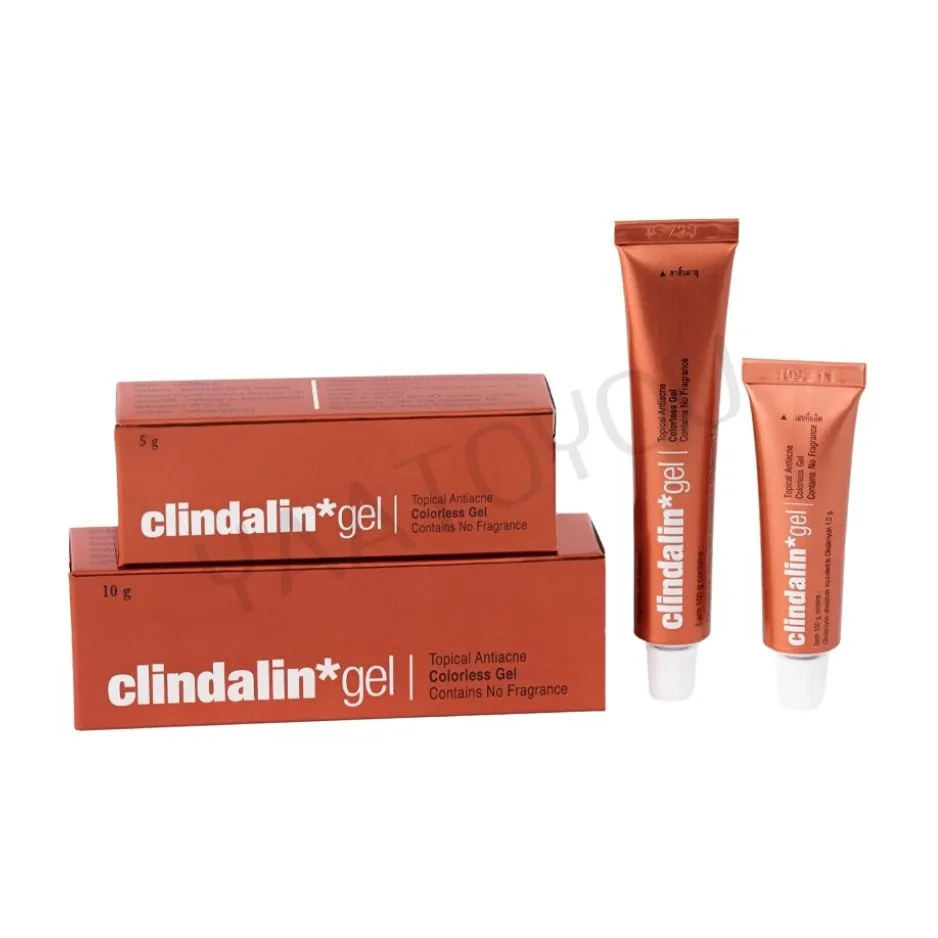
CLINDALIN
PolandThe medicinal product is used topically for the treatment of acne vulgaris.
Frequently asked questions
How to use Clindalin?
Apply a thin layer of gel to thoroughly cleansed skin on the affected areas twice daily. Massaging the gel into the skin is not recommended. Wash hands after use.
When should you not use this medicine?
Do not use this medicine if you are allergic to clindamycin, lincomycin, or any of the other ingredients of the medicine. A contraindication is also the occurrence of colitis during antibiotic use.
What are the possible side effects of Clindalin?
The most common side effects may include skin irritation, increased oiliness, or excessive dryness. Urticaria (hives) may occur frequently, and gastrointestinal disorders may occur infrequently. Other side effects may include, among others, eye pain, abdominal pain, or folliculitis.
Can this medicine be used with other medicines?
Inform your doctor about all medicines you are taking. Caution should be exercised if muscle relaxants are being used. An antagonistic effect between clindamycin and erythromycin has also been observed.
Can the medicine be used during pregnancy or breastfeeding?
This medicine should not be used during breastfeeding. In case of pregnancy, the medicine may only be used if the doctor deems it absolutely necessary.
What should you do if diarrhea or abdominal pain occurs?
If severe, persistent diarrhea or abdominal pain occurs, inform your doctor immediately, as these may be symptoms of pseudomembranous colitis, which can be life-threatening.
What should you do if you miss a dose?
If you forget to apply the gel, apply it as soon as possible, unless it is almost time for your next dose. Do not apply a double dose to make up for the missed one.
How should the product be stored?
Store the medicine at a temperature below 25°C, in a place that is out of the sight and reach of children. Do not freeze. Once the tube is opened, the medicine should be used within 3 months.
Instructions for use
Package leaflet: Information for the patient
Clindalin, 10 mg/g, gel
Clindamycinum
Please read this leaflet carefully before using the medicine, because
it contains important information for the patient.
- Keep this leaflet, so that you can read it again if necessary.
- If you have any questions, consult your doctor or pharmacist.
- This medicine has been prescribed for a specific individual. Do not pass it on to others. The medicine may harm another person, even if their symptoms are the same.
- If you experience any adverse reactions, including any not listed in this leaflet, inform your doctor or pharmacist. See section 4.
Table of contents
- What Clindalin is and what it is used for
- Important information before using Clindalin
- How to use Clindalin
- Possible side effects
- How to store Clindalin
- Contents of the package and other information
1. What Clindalin is and what it is used for
Clindalin is a medicine in the form of a gel intended for topical application to the skin. This medicine contains the active substance clindamycin phosphate, which, when applied to the skin, is converted into clindamycin, an antibiotic with antibacterial activity. Clindamycin acts against Propionibacterium acnes bacteria, one of the causes of acne vulgaris.
Indications:
Topical treatment of acne vulgaris.
2. Important information before using Clindalin
When not to use Clindalin
- If the patient is allergic to clindamycin, lincomycin (patients allergic to one of these substances may also be allergic to the other – so-called cross-reaction), or to any of the other ingredients of this medicine (listed in section 6).
- If the patient has previously experienced antibiotic-associated colitis.
Warnings and precautions
Before starting treatment with Clindalin, discuss the following with your doctor or pharmacist:
if the patient has ever had or currently has antibiotic-associated colitis, intestinal inflammation, Crohn's disease, or ulcerative colitis.
This medicine is intended for topical use only.
Avoid contact with eyes, mucous membranes, and broken skin. In case of accidental contact, wash the affected area thoroughly with cool water.
Clindalin should be used with caution in patients with a history of allergies.
Immediately inform your doctor if, during or within several weeks after treatment, diarrhoea develops – especially if it is severe and persistent – or if abdominal pain occurs, as these may be symptoms of pseudomembranous colitis (usually caused by Clostridium difficile). This condition, a complication of antibiotic therapy, may be life-threatening. Once pseudomembranous colitis is diagnosed, your doctor should immediately discontinue Clindalin and initiate appropriate treatment. Do not take medications that inhibit intestinal peristalsis or have constipating effects.
Prolonged use of Clindalin should be under strict medical supervision.
Children
The safety and efficacy of Clindalin have not been established in children under 12 years of age.
Clindalin and other medicines
Inform your doctor or pharmacist about all medicines the patient is currently using, has recently used, or plans to use.
Clindamycin may interfere with neuromuscular transmission; therefore, caution is advised when used in patients receiving neuromuscular blocking agents.
An antagonistic effect has been observed between clindamycin and erythromycin.
Cross-resistance (resistance to drugs within the same class) has been demonstrated between clindamycin and lincomycin.
Pregnancy, breastfeeding and fertility
If the patient is pregnant, breastfeeding, suspects she may be pregnant, or is planning to become pregnant, she should consult her doctor or pharmacist.
Pregnancy
There are no adequate data on the safety of Clindalin in pregnant women. Clindalin should be used during pregnancy only if clearly necessary and as advised by a physician.
Breastfeeding
Clindalin should not be used during breastfeeding.
Fertility
Animal studies in rats receiving oral clindamycin did not show any effect on fertility or reproductive capacity.
Driving and operating machinery
No studies on the effects of Clindalin on the ability to drive or operate machinery have been conducted.
Clindalin contains:
- 49 mg of propylene glycol (E 1520) in each gram of gel, which may cause skin irritation;
- methyl parahydroxybenzoate (E 218), which may cause allergic reactions (including delayed-type reactions).
3. How to use Clindalin
This medicine should always be used exactly as directed by your doctor or pharmacist.
If in doubt, consult your doctor or pharmacist.
Clindalin is intended for topical application to the skin.
Use in adults and adolescents
Apply a thin layer to the affected areas of skin twice daily. It is not recommended to
rub the gel into the skin. The gel should be applied to thoroughly cleansed skin.
Hands should be washed after applying the medicine.
Use of more Clindalin than recommended
When applied topically, the medicine may be absorbed in amounts leading to systemic
adverse effects of clindamycin (see sections 2. and 4.).
Missed dose of Clindalin
Do not use a double dose to make up for a missed dose. If a dose is missed, apply the
medicine as soon as possible, unless it is almost time for the next dose.
Stopping treatment with Clindalin
If you have any further questions about the use of this medicine, consult your doctor or
pharmacist. Do not stop treatment without consulting your doctor.
4. Possible adverse reactions
Like all medicines, this medicine can cause adverse reactions, although not everyone will experience them.
The following adverse reactions may occur after using Clindalin:
Very common (occur in more than 1 in 10 people):
- skin irritation, oily skin, excessive skin dryness.
Common (occur in more than 1 in 100 but less than 1 in 10 people):
- urticaria.
Uncommon (occur in more than 1 in 1,000 but less than 1 in 100 people):
- gastrointestinal disorders.
Frequency not known (cannot be estimated from the available data):
- Gram-negative bacterial folliculitis;
- eye pain;
- abdominal pain, pseudomembranous colitis;
- contact dermatitis.
Reporting of adverse reactions
If any adverse reactions occur, including any possible adverse reactions not listed in this leaflet, inform your doctor or pharmacist. Adverse reactions can be reported directly to the Department of Monitoring Adverse Drug Reactions of the Office for Registration of Medicinal Products, Medical Devices and Biocidal Products
Al. Jerozolimskie 181C
02-222 Warsaw
Phone: +48 22 49 21 301
Fax: +48 22 49 21 309
Website: https://smz.ezdrowie.gov.pl
Adverse reactions can also be reported to the marketing authorization holder.
Reporting adverse reactions helps to provide more information on the safety of the medicine.
5. How to store Clindalin
Keep the medicine out of the sight and reach of children.
Store below 25°C. Do not freeze.
Period of use after first opening of the tube: 3 months.
Do not use this medicine after the expiry date stated on the packaging after:
"EXP". The expiry date refers to the last day of the stated month.
Medicines must not be disposed of via wastewater or household waste. Ask your pharmacist how to dispose of medicines no longer required. This will help protect the environment.
6. Contents of the pack and other information
What Clindalin contains
- The active substance is clindamycin in the form of clindamycin phosphate. Each 1 g of gel contains 10 mg of clindamycin.
- The other ingredients are: allantoin, methylparaben (E 218), propylene glycol (E 1520), macrogol 400, carbomer 974, sodium hydroxide (for pH adjustment), purified water.
What Clindalin looks like and contents of the pack
Clindalin is a colourless, transparent gel with a uniform consistency.
Pack: an aluminium tube internally coated with an epoxy-phenolic varnish, fitted with a polyethylene (HDPE) cap with a plug seal, placed together with the leaflet in a cardboard box.
Pack sizes: 15 g or 30 g.
Not all pack sizes may be marketed.
Marketing Authorisation Holder
ZIAJA Ltd Zakład Produkcji Leków sp. z o.o.
ul. Jesienna 9
80-298 Gdańsk
Tel.: +48 58 521 34 00
Manufacturer
ZIAJA Ltd Zakład Produkcji Leków sp. z o.o.
ul. Przemysłowa 12
83-050 Kolbudy
Similar drugs
| Brand name | Dosage form | Active substance / Dosage | Manufacturer |
|---|---|---|---|
| CLINDACNE | gel |
|
Jelfa Pharmaceutical Enterprise S.A. |
| DALACIN T | gel |
|
Pfizer Hellas A.E. |
| DALACIN T | gel |
|
Pfizer Hellas A.E. |
| DALACIN T | gel |
|
Pfizer Hellas A.E. |
| KLINDACIN T | gel |
|
Tarchomin Pharmaceutical Works 'Polfa' S.A. |
| NORMACLIN | gel |
|
Aflofarm Farmacja Polska Limited |
The original data is available in the language of the country of manufacture.
Data source: Register of Medicinal Products of Poland (URPL)
Data last verified: September 01, 2026