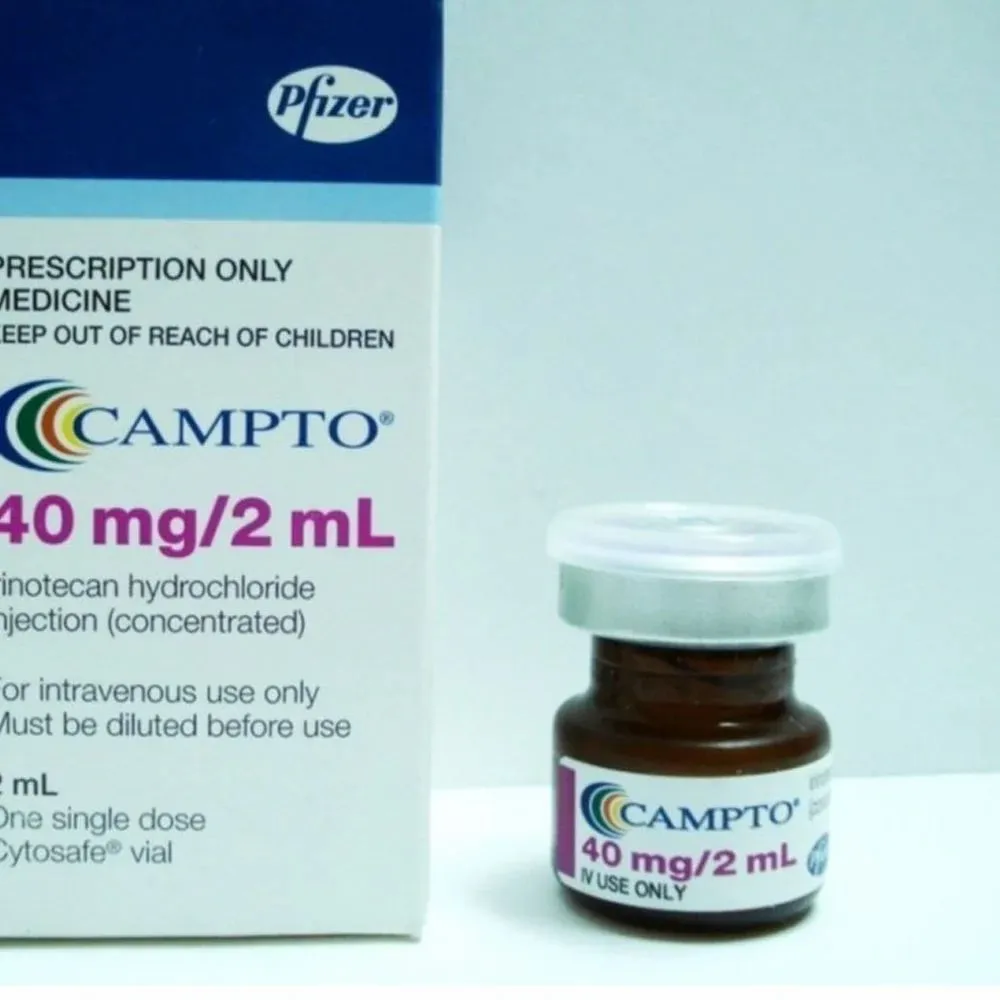
CAMPTO
PolandThe medicinal product is used in the treatment of patients with advanced colorectal cancer (colon and rectum) in various treatment regimens, depending on the stage of the disease and previous use of other therapies.
Frequently asked questions
How should CAMPTO be administered?
The medicinal product is administered exclusively in a hospital setting by qualified medical personnel via intravenous infusion. The dosage is determined by a physician depending on the patient's condition and the type of therapy being used.
When should you not use CAMPTO?
Do not use it if you are allergic to any of the ingredients of the medicinal product, have chronic inflammatory bowel disease or colorectal obstruction, are pregnant or breastfeeding, have severe bone marrow disorders, or very high bilirubin levels. It is also contraindicated to take preparations containing St. John's wort and to use live vaccines.
What are the possible side effects of CAMPTO?
The most common side effects may include: decreased white blood cell count (neutropenia), anemia, loss of appetite, diarrhea, vomiting, nausea, abdominal pain, alopecia (hair loss), and weakness. Cholinergic syndrome (e.g., excessive salivation, tearing, dizziness) may also occur.
What should I do if diarrhea occurs during treatment?
The medicinal product may cause early diarrhea (up to 24h after administration) or late diarrhea (after 24h). In the case of early diarrhea, you must inform your doctor immediately. In the case of late diarrhea, you should inform your doctor, take the antidiarrheal medication prescribed by them, and drink large amounts of fluids. You should contact your doctor immediately if diarrhea is accompanied by vomiting or fever, or if it does not subside despite treatment after 48 hours.
Does CAMPTO interact with other medicines?
Yes, the medicinal product may interact with many substances, including St. John's wort, ketoconazole, rifampicin, certain anti-epileptic drugs, anticancer drugs (e.g., cetuximab, bevacizumab, capecitabine), as well as diuretics and laxatives. You must inform your doctor about them.
What precautions should be taken regarding contraception?
Women of childbearing age should use effective contraception during treatment and for 6 months after its completion. Men should use contraception during treatment and for 3 months after its completion.
Instructions for use
Package leaflet: Information for the patient
CAMPTO, 20 mg/ml, concentrate for solution for infusion
Irinotecan hydrochloride
Please read carefully the entire leaflet before use, as it contains
important information for the patient.
- Keep this leaflet, so that you can read it again if necessary.
- If you have any questions, please consult your doctor, pharmacist, or nurse.
- This medicine has been prescribed for a specific individual. Do not pass it on to others. This medicine may harm others, even if their symptoms are the same.
- If you experience any adverse reactions, including any not listed in this leaflet, inform your doctor, pharmacist, or nurse. See section 4.
Table of contents
- What CAMPTO is and what it is used for
- What you need to know before receiving CAMPTO
- How CAMPTO is given
- Possible side effects
- How to store CAMPTO
- Contents of the pack and other information
1. What CAMPTO is and what it is used for
The active substance in CAMPTO is irinotecan. Irinotecan is a semisynthetic derivative of
camptothecin. It belongs to a group of cytostatic (anticancer) drugs. CAMPTO inhibits DNA replication in dividing cells, thereby exerting cytotoxic effects on cancer cells, leading to their destruction.
CAMPTO is used in the treatment of patients with advanced colorectal cancer (colon and rectum):
- in combination with 5-fluorouracil and folinic acid in patients who have not previously received chemotherapy for advanced disease;
- as monotherapy in patients after failure of 5-fluorouracil treatment.
CAMPTO in combination with cetuximab is indicated for the treatment of patients with metastatic colorectal cancer whose cells express epidermal growth factor receptor (EGFR) and have wild-type KRAS, who have not previously been treated for metastatic colorectal cancer or after failure of cytotoxic therapy containing CAMPTO.
CAMPTO in combination with 5-fluorouracil, folinic acid, and bevacizumab is indicated as first-line treatment for patients with metastatic colorectal cancer (colon or rectum).
CAMPTO in combination with capecitabine with or without bevacizumab is indicated as first-line treatment for patients with metastatic colorectal cancer (colon and rectum).
Your doctor will decide on the appropriate dosing regimen of CAMPTO depending on the stage of the disease, the patient's condition, and response to treatment.
2. Important information before using CAMPTO
When not to use CAMPTO
- if the patient is allergic to the active substance or any of the other ingredients of this medicine (listed in section 6);
- in patients with chronic inflammatory bowel diseases and (or) obstruction of the large intestine;
- in women during breastfeeding;
- in patients whose serum bilirubin concentration exceeds 3 times the upper limit of normal (the value considered normal);
- in patients with severe bone marrow dysfunction;
- in patients whose performance status according to the WHO classification is > 2 (patients with limited ability to perform personal activities, spending more than half or all of the day in bed, and patients requiring assistance from another person);
- if the patient is taking or has recently taken preparations containing St. John's wort;
- if the patient is to receive or has recently received live attenuated vaccines. These vaccines must not be administered during treatment with CAMPTO or within 6 months after completion of chemotherapy.
Additional contraindications regarding cetuximab or bevacizumab are included in the patient leaflets for these medicines. Patients receiving cetuximab or bevacizumab concomitantly with CAMPTO should read the leaflets included in the packaging of those medicines.
Patients receiving capecitabine concomitantly with CAMPTO should read the leaflet included in the capecitabine packaging.
Warnings and precautions
Before starting treatment with CAMPTO, the use of the medicine should be discussed with the doctor in the following patients:
- patients at risk of complications, especially those with a WHO performance status of 2 (patients able to perform personal activities but unable to work, spending about half of the day in bed);
- patients who will not be able to follow recommendations regarding actions to take in case of adverse reactions (e.g. late diarrhea);
- patients with severe bone marrow insufficiency;
- patients with baseline serum bilirubin concentration of at least 1.0 mg/dL, in whom there is a significantly higher probability of developing grade 3 or 4 neutropenia during the first treatment cycle. The doctor should recommend weekly blood morphology tests with smear and inform the patient about the risks associated with neutropenia and fever related to neutropenia;
- patients with Gilbert's syndrome, a hereditary condition that may increase bilirubin levels and cause jaundice (yellowing of the skin and eyes);
- patients who have previously undergone pelvic and (or) abdominal radiotherapy or radiotherapy of large body surfaces, in whom dose reduction may be necessary due to increased risk of myelosuppression;
- patients with liver function disorders. The doctor should recommend liver function tests before and after each chemotherapy cycle;
- patients who have previously experienced acute cholinergic syndrome (characterized as early diarrhea, sweating, painful abdominal cramps, lacrimation, miosis, and salivation);
- patients with asthma;
- patients with lung involvement by tumor or other pre-existing lung disease, and those taking drugs toxic to the lungs or undergoing radiotherapy;
- elderly patients;
- patients with intestinal obstruction, in whom CAMPTO must not be administered until the obstruction resolves;
- patients with previously diagnosed heart disease, risk factors for heart disease, or undergoing cytotoxic chemotherapy.
Prophylactic administration of antiemetic agents is recommended before each administration of CAMPTO.
Care should be taken during administration of CAMPTO to prevent extravasation. In case of extravasation, the site should be flushed and ice applied.
Caution is advised, as severe anaphylactic and (or) anaphylactoid reactions have been reported following administration of CAMPTO.
Dizziness has been observed in dehydrated patients, which may sometimes indicate orthostatic hypotension (a sudden drop in blood pressure in individuals with normal or even high blood pressure, occurring after rapid transition from lying to standing position or during prolonged standing).
Cases of acute renal failure have been observed, attributed to complications of infection or dehydration associated with nausea, vomiting, and diarrhea. Cases of renal dysfunction due to tumor lysis syndrome have also been reported.
Administration of live or live attenuated vaccines (e.g. yellow fever vaccine) to patients with immunosuppression due to chemotherapy, including CAMPTO, may lead to serious infections and generalized allergic reactions, potentially resulting in death. Concomitant use of these vaccines is contraindicated both during treatment with CAMPTO and for 6 months after completion of chemotherapy.
Inactivated or killed vaccines may be administered, but the immune response to such vaccines may be diminished.
Patients receiving CAMPTO should use effective contraception during treatment and for at least 3 months after completion of treatment.
In patients with cancer and additional risk factors, CAMPTO has rarely caused thromboembolic events (pulmonary embolism, venous and arterial thrombosis).
Like other anticancer drugs, CAMPTO may cause adverse reactions, some of which may be severe. Appropriate management should be initiated if they occur to reduce the risk of complications. Physicians prescribing CAMPTO have experience in using such drugs and managing adverse effects that may occur during treatment; however, patients are advised to read the section "Management of diarrhea" and follow the instructions provided there.
Management of diarrhea
CAMPTO may cause diarrhea. Depending on when it occurs, two types of diarrhea are distinguished:
-
early diarrhea (occurring within the first 24 hours after administration of the drug), which may be accompanied by the following symptoms:
-
sweating;
-
abdominal pain;
-
lacrimation;
-
visual disturbances;
-
dizziness;
-
drop in blood pressure;
-
malaise;
-
excessive salivation. In case of early diarrhea, the doctor should be informed immediately, who will recommend appropriate treatment.
The patient must not independently decide to use any antidiarrheal medications prescribed by the doctor for the treatment of late diarrhea. -
late diarrhea (occurring more than 24 hours after administration of the drug). In case of late diarrhea, the treating physician should be informed immediately, and antidiarrheal medications prescribed by the doctor should be started immediately. The patient should also start drinking large amounts of fluids (i.e. water, soda water, carbonated drinks, soups, or oral rehydration solutions).
The doctor should be informed immediately if:
- diarrhea is accompanied by nausea and vomiting;
- diarrhea is accompanied by fever;
- diarrhea persists despite 48 hours of treatment.
Other methods of treating diarrhea than taking antidiarrheal medications prescribed by the treating physician and drinking the fluids listed above must not be used.
CAMPTO and other medicines
The patient should inform the doctor about all medicines currently or recently taken, as well as any medicines planned for future use.
CAMPTO may interact with many medicines and dietary supplements, which may increase or decrease the blood concentration of this drug. The patient should inform the doctor or pharmacist if they are taking any of the following medicines:
- preparations containing St. John's wort (Hypericum perforatum), which must not be used concomitantly with CAMPTO;
- ketoconazole (a medicine used to treat fungal infections);
- rifampicin (an antibiotic);
- carbamazepine, phenobarbital, or phenytoin (medicines used to treat epilepsy and other neurological conditions);
- regorafenib, crizotinib, idelalisib, and apalutamide (medicines used to treat cancer);
- atazanavir (a medicine used to treat HIV infections);
- dexamethasone (an anti-inflammatory medicine, also used to prevent vomiting);
- diuretics;
- laxatives.
Before administration of CAMPTO, the patient should inform the doctor, pharmacist, or nurse if they are currently or have recently undergone chemotherapy (and radiotherapy).
Anesthesia before surgery
If the patient is going to the hospital for surgery, they should inform the anesthesiologist about taking CAMPTO. CAMPTO interacts with anesthetics and muscle relaxants used for anesthesia before surgery.
The patient should contact the doctor if severe diarrhea, leukopenia, or neutropenia occurs during concomitant use of bevacizumab with CAMPTO.
If CAMPTO is received concomitantly with other anticancer medicines such as cetuximab, capecitabine, or bevacizumab, the patient should read the patient leaflets included with those medicines.
Pregnancy and breastfeeding
Women of childbearing potential should use effective contraception during treatment with CAMPTO and for six months after completion of treatment.
Men with partners of childbearing potential should use effective contraception during treatment with CAMPTO and for three months after completion of treatment.
Pregnancy
If the patient is pregnant or breastfeeding, suspects she may be pregnant, or plans to have a child, she should consult a doctor before using this medicine.
CAMPTO must not be used in pregnant women. Women of childbearing potential must not start treatment with CAMPTO unless pregnancy has been excluded.
If pregnancy occurs, the treating doctor should be informed immediately.
Breastfeeding
Breastfeeding must not be performed during treatment with CAMPTO.
Driving and operating machinery
The effect of CAMPTO on the ability to drive and operate machinery has not been studied.
However, dizziness and visual disturbances may occur during treatment with CAMPTO. If these adverse effects occur, driving or operating machinery should not be undertaken.
CAMPTO contains sorbitol (E 420)
Sorbitol is a source of fructose. If hereditary fructose intolerance, a rare genetic disorder, has been previously diagnosed in the patient, the patient must not take this medicine. In patients with hereditary fructose intolerance, the body cannot metabolize the fructose contained in this medicine, which may lead to severe adverse reactions.
The patient should inform the doctor before taking this medicine if they have hereditary fructose intolerance.
This medicine contains 45 mg of sorbitol in 1 ml of concentrate for solution for infusion, corresponding to 90 mg/2 ml, 225 mg/5 ml, 675 mg/15 ml.
CAMPTO contains sodium
The medicine contains less than 1 mmol (23 mg) of sodium per dose, meaning the medicine is considered "sodium-free".
The medicine may be diluted in 0.9% NaCl solution. The sodium content from the diluent should be taken into account when calculating the total sodium content in the prepared diluted solution. For precise information regarding the sodium content in the solution used to dilute the medicine, refer to the patient leaflet of the diluent used.
3. How to use CAMPTO
CAMPTO will be administered exclusively under the supervision of a physician qualified in the use of anticancer therapies, in a hospital department specialized in the administration of cytotoxic agents.
This medicine must always be used exactly as prescribed by the physician. In case of doubt, consult your doctor.
Detailed information on dosage and administration intended for medical personnel or healthcare professionals is provided at the end of this leaflet.
The CAMPTO infusion solution is administered intravenously into a peripheral or central vein. CAMPTO is intended for use only in adults.
Recommended dosage
Your doctor will determine the appropriate dosage of CAMPTO, whether used as monotherapy (single-agent treatment) or in combination with other medicinal products (combination therapy).
Dosage modifications
Your doctor will adjust the dose of CAMPTO appropriately depending on the severity of adverse reactions that occurred after administration of the drug (e.g. diarrhea) or during the previous treatment cycle, as well as if concomitant use of other medicinal products becomes necessary.
Special patient groups
Patients with hepatic impairment
Monotherapy: Your doctor will recommend appropriate dose adjustment of CAMPTO and regular performance of complete blood counts.
Combination therapy: There are no data available on patients with hepatic impairment treated with CAMPTO in combination chemotherapy.
Patients with renal impairment
CAMPTO should not be used in patients with impaired renal function, as clinical studies have not been conducted in this patient group.
Elderly patients (over 65 years of age)
Due to the higher likelihood of organ dysfunction in this patient group, the physician will exercise particular caution when selecting the dose and will recommend close monitoring of the patient.
Administration of a higher than recommended dose of CAMPTO
Since the medicine will be administered under strict medical supervision, administration of a dose higher than recommended is unlikely. In case of any doubts regarding the use of the medicine, consult your doctor or nurse.
Missed administration of CAMPTO
Given that the medicine is administered under strict medical supervision, missing a dose appears unlikely.
Discontinuation of CAMPTO treatment
The decision to discontinue treatment will be made by the physician.
In case of any doubts regarding the use of this medicine, consult your doctor.
4. Possible adverse reactions
Like all medicines, this medicine can cause adverse reactions, although not everyone experiences them.
The doctor should inform the patient about possible adverse reactions. It is very important to initiate appropriate management immediately if certain adverse reactions occur. The possible adverse reactions described below have been reported in clinical trials and following marketing authorization as part of pharmacovigilance.
The adverse reactions listed below are categorized by frequency of occurrence as follows:
Very common (may occur in more than 1 in 10 people):
- neutropenia (reduced number of neutrophils)
- anemia
- decreased appetite
- cholinergic syndrome (symptoms: rhinitis, excessive salivation, miosis, lacrimation, profuse sweating, flushing, bradycardia [slowing of heart rate], dizziness, conjunctivitis, visual disturbances)
- diarrhea
- vomiting
- nausea
- abdominal pain
- alopecia (reversible)
- mucositis
- fever
- asthenia (weakness)
Common (may occur in no more than 1 in 10 people):
- infection
- thrombocytopenia
- febrile neutropenia
- constipation
- increased blood creatinine concentration
- increased aminotransferase activity (AlAT and AspAT)
- increased bilirubin concentration
- increased alkaline phosphatase activity
Frequency not known (cannot be estimated from available data):
- pseudomembranous colitis
- sepsis
- fungal infections
- viral infections
- peripheral thrombocytopenia with antibodies directed against blood platelets
- dehydration (due to diarrhea and vomiting)
- hypovolemia
- hypersensitivity reactions
- anaphylactic reactions
- transient speech disorders
- paresthesia
- hypertension
- circulatory collapse
- interstitial lung disease
- dyspnea
- hiccups
- intestinal obstruction
- megacolon
- gastrointestinal hemorrhage
- colitis; in some cases complicated by ulceration, bleeding, obstruction, or infection
- typhlitis
- ischemic colitis
- ulcerative colitis
- gastrointestinal bleeding
- increased pancreatic enzyme activity, symptomatic and asymptomatic
- intestinal perforation
- hepatic steatosis
- skin reactions
- infusion site reactions
- increased serum amylase activity
- increased lipase activity
- hypokalemia
- hyponatremia (decreased sodium concentration in blood), usually occurring in the course of diarrhea and vomiting
- increased serum aminotransferase activity (i.e. AspAT and AlAT), very rarely reported in the absence of progressive liver metastases
- muscle spasms
- renal dysfunction and acute renal failure in patients with infections and/or fluid deficiency caused by gastrointestinal toxicity
- renal failure
- hypertension
Additional adverse reactions may occur when CAMPTO is used concomitantly with cetuximab, related to the use of both medicinal products (e.g. acneiform rash). It is recommended to read the patient leaflet included in the cetuximab packaging.
Additional adverse reactions may occur when CAMPTO is used concomitantly with bevacizumab, related to the use of both medicinal products. It is recommended to read the patient leaflet included in the bevacizumab packaging.
Additional adverse reactions may occur when CAMPTO is used concomitantly with capecitabine, related to the combined use of both medicinal products. Such adverse reactions include, among others: very common: thrombosis; common: allergic reactions, myocardial infarction, and fever in patients with reduced white blood cell count. It is recommended to read the leaflet included in the capecitabine packaging.
Additional adverse reactions may occur when CAMPTO is used concomitantly with capecitabine and bevacizumab, related to the combined use of these medicinal products. Such adverse reactions include, among others: decreased white blood cell count, thrombosis, high blood pressure, and myocardial infarction. For this reason, it is recommended to read the leaflet included in the packaging of capecitabine or bevacizumab.
Reporting of adverse reactions
If any adverse symptoms occur, including any adverse symptoms not listed in this leaflet, inform your doctor. Adverse reactions can be reported directly to the Department of Monitoring Adverse Drug Reactions of the Office for Registration of Medicinal Products, Medical Devices and Biocidal Products
Al. Jerozolimskie 181C
02-222 Warsaw
Tel.: + 48 22 49 21 301
Fax: + 48 22 49 21 309
Website: https://smz.ezdrowie.gov.pl
Adverse reactions can also be reported to the marketing authorization holder or its representative.
Reporting adverse reactions helps to collect more information on the safety of the medicine.
5. How to store CAMPTO
The medicine should be stored out of the sight and reach of children.
Store below 25°C and protect from light.
The diluted solution should be used immediately after preparation.
If the solution is prepared under aseptic conditions (laminar airflow cabinet), the medicinal solution should be administered to the patient (intravenous infusion completed) within 12 hours when stored at room temperature, or within 24 hours (including infusion duration) if the solution has been stored from the moment of preparation at a temperature between 2°C and 8°C (in a refrigerator).
Do not use this medicine after the expiry date stated on the label and carton after EXP.
The expiry date refers to the last day of the stated month.
Medicines must not be disposed of via wastewater or household waste. All materials and equipment used in the preparation and administration of the medicine must be destroyed in accordance with standard procedures for handling cytotoxic waste. This will help protect the environment.
6. Contents of the package and other information
What Campto contains
- The active substance is irinotecan hydrochloride trihydrate.
- The other ingredients are: D-sorbitol (E 420), lactic acid, sodium hydroxide, water for injections. One ml of concentrate for solution for infusion contains 20 mg of irinotecan hydrochloride trihydrate, equivalent to 17.33 mg of irinotecan. Each 2 ml vial contains 40 mg of irinotecan hydrochloride trihydrate, equivalent to 34.66 mg of irinotecan. Each 5 ml vial contains 100 mg of irinotecan hydrochloride trihydrate, equivalent to 86.65 mg of irinotecan. Each 15 ml vial contains 300 mg of irinotecan hydrochloride trihydrate, equivalent to 259.95 mg of irinotecan.
What Campto looks like and contents of the pack
Campto is a clear, slightly yellow liquid.
Pack contents:
1 vial of 2 ml (40 mg/2 ml) made of brown polypropylene in a cardboard box;
or
1 or 5 vials of 5 ml (100 mg/5 ml) made of brown polypropylene in a cardboard box;
or
1 vial of 15 ml (300 mg/15 ml) made of brown polypropylene in a cardboard box.
Marketing Authorisation Holder:
Pfizer Europe MA EEIG
Boulevard de la Plaine 17
1050 Bruxelles
Belgium
Manufacturer:
Pfizer Service Company BV
Hoge Wei 10
1930 Zaventem
Belgium
For more detailed information about this medicine, please contact the representative of the Marketing Authorisation Holder:
Pfizer Polska Sp. z o.o.
tel. 22 335 61 00
Information intended exclusively for medical professionals:
Recommended dosage
Monotherapy (in previously treated patients)
The recommended dose of CAMPTO is 350 mg/m² administered once every three weeks as an intravenous infusion lasting from 30 to 90 minutes.
Combination therapy (in previously untreated patients)
The safety and efficacy of CAMPTO in combination with 5-fluorouracil (5-FU) and folic acid (FA) have been established in the following dosing regimen:
CAMPTO with 5-FU/FA in a two-weekly schedule
The recommended dose of CAMPTO is 180 mg/m² administered once every two weeks as an intravenous infusion lasting from 30 to 90 minutes, followed by intravenous infusion of folic acid and 5-fluorouracil.
CAMPTO in combination with 5-fluorouracil (5-FU) and leucovorin in a two-weekly administration schedule
Irinotecan is recommended to be used in combination with 5-FU and leucovorin for the treatment of patients with metastatic colorectal cancer. In all regimens, leucovorin should be administered intravenously immediately after irinotecan, and 5-FU should be administered immediately after leucovorin.
Dosage and administration guidelines for CAMPTO used concomitantly with cetuximab are available in the Summary of Product Characteristics for cetuximab.
Typically, the same dose of irinotecan should be used as in the last cycle of the prior irinotecan-containing regimen. Irinotecan must not be administered earlier than 1 hour after completion of the cetuximab infusion.
Dosage and administration information for bevacizumab can be found in the Summary of Product Characteristics for that product.
Dosage and administration guidelines for CAMPTO used in combination with capecitabine are available in the relevant sections of the Summary of Product Characteristics for capecitabine.
Dosage modifications
CAMPTO may be administered once adverse reactions have resolved to grade 0 or 1 according to the NCI-CTC (National Cancer Institute Common Toxicity Criteria) scale and diarrhea related to drug administration has completely resolved.
The dose of CAMPTO and 5-FU may be reduced in the next chemotherapy cycle depending on the severity of adverse reactions during the previous treatment cycle.
Treatment may be delayed by 1 to 2 weeks to allow resolution of drug-related adverse reactions.
The dose of CAMPTO and (or) 5-FU should be reduced by 15–20% in case of occurrence of the following adverse reactions:
- hematologic toxicity – grade 4 neutropenia, febrile neutropenia (grade 3–4 neutropenia and grade 2–4 fever), grade 4 thrombocytopenia and grade 4 leukopenia;
- non-hematologic toxicity (grade 3–4).
When cetuximab is used concomitantly with irinotecan, dosage modification recommendations for cetuximab described in its Summary of Product Characteristics should be followed.
When bevacizumab is used concomitantly with CAMPTO in combination with 5-fluorouracil and folic acid (CAMPTO/5-FU/FA), dosage modification recommendations provided in the Summary of Product Characteristics for bevacizumab should be followed.
When capecitabine is used in combination with CAMPTO, in patients aged 65 years and older, a reduced initial dose of capecitabine to 800 mg/m² twice daily is recommended, according to the Summary of Product Characteristics for capecitabine. The dosage modification recommendations for the combination regimen described in the Summary of Product Characteristics for capecitabine should also be consulted.
Duration of treatment
Treatment with CAMPTO should be continued until tumor progression or significant worsening of adverse reactions.
Pharmaceutical incompatibilities
None known. Do not mix the medicinal product with other medicinal products.
Preparation and administration of the infusion solution
As with other antineoplastic agents, the CAMPTO solution should be prepared and handled with special precautions. Protective goggles, masks, and gloves are required.
If the CAMPTO concentrate or diluted solution comes into contact with the skin, it should be immediately and thoroughly washed off with soap and water. If contact occurs with mucous membranes, they should be immediately rinsed with water.
Like other intravenous drugs, the CAMPTO solution must be prepared under aseptic conditions.
Aseptically withdraw the required amount of CAMPTO from the vial into a calibrated syringe and add it to 250 mL of infusion fluid in a bottle or container containing 0.9% sodium chloride solution or 5% glucose solution. Mix the resulting solution thoroughly and administer via peripheral or central vein. The drug must not be administered as an intravenous bolus injection, nor as an infusion lasting less than 30 minutes or more than 90 minutes.
If a precipitate appears in the vial or in the prepared infusion solution, the product must not be administered to patients and must be discarded according to standard procedures for disposal of cytotoxic drug waste.
Disposal of drug residues and packaging
All materials and equipment used in the preparation and administration of the drug must be destroyed according to standard procedures for handling cytotoxic waste.
The original data is available in the language of the country of manufacture.
Data source: Register of Medicinal Products of Poland (URPL)
Data last verified: September 01, 2026