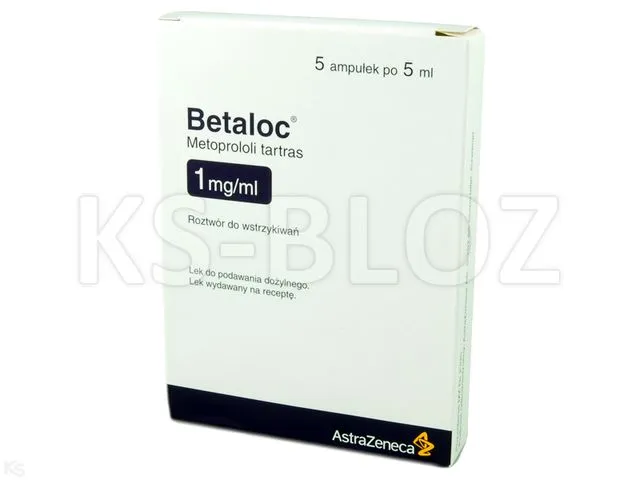
BETALOC
PolandThe medicine is used in the treatment of tachyarrhythmias (especially supraventricular) and in acute myocardial infarction to reduce the size of the infarct, the risk of ventricular fibrillation, and mortality.
Frequently asked questions
How should Betaloc be taken?
The medicine is administered intravenously in a hospital setting by qualified personnel. The dosage depends on the condition and is determined by a physician. In the case of a myocardial infarction, following intravenous administration, treatment may be continued in tablet form.
When should this medicine not be used?
It must not be used if there is an allergy to metoprolol or other beta-adrenergic receptor blockers, cardiogenic shock, sick sinus syndrome, second- or third-degree heart block, decompensated heart failure, very slow heart rate (below 45 beats per minute), very low blood pressure, or metabolic acidosis.
What are the possible side effects of Betaloc?
Fatigue is the most common side effect. Dizziness, headache, slow heart rate, palpitations, nausea, diarrhea, or constipation occur frequently. Less commonly, sleep problems, depression, muscle cramps, vision disturbances, or erectile dysfunction may occur.
Can the medicine be used with other preparations?
You must inform your doctor about all medications being taken, especially clonidine, antihypertensive drugs, glaucoma medications (e.g., timolol), monoamine oxidase inhibitors, verapamil, amiodarone, or antidiabetic drugs.
Should caution be exercised when driving?
Yes, you should monitor your individual reaction to the medicine, as some people may experience dizziness or fatigue, which could impair psychophysical performance.
Can the medicine be used during pregnancy or breastfeeding?
The medicine should not be used during pregnancy unless the benefits to the mother outweigh the risks to the fetus (it may cause fetal harm or premature birth). During breastfeeding, it should also only be used if the benefits outweigh the risks to the child.
Instructions for use
Package leaflet: Information for the user
Warning! Keep this leaflet. Information on the immediate packaging in a foreign language.
Betaloc (Seloken), 1 mg/ml, solution for injection
Metoprololi tartras
Betaloc and Seloken are different brand names of the same medicine.
Please read this leaflet carefully before using the medicine, as it contains
important information for the patient.
- Keep this leaflet so that you can read it again if necessary.
- If you have any doubts, consult your doctor, pharmacist, or nurse.
- This medicine has been prescribed for a specific individual. Do not pass it on to others. It may harm someone else, even if their symptoms are the same.
- If any side effects occur in the patient, including any not listed in this leaflet, inform a doctor, pharmacist, or nurse. See section 4.
Table of contents of the leaflet
- What Betaloc is and what it is used for
- Important information before using Betaloc
- How to use Betaloc
- Possible side effects
- How to store Betaloc
- Contents of the pack and other information
1. What Betaloc is and what it is used for
Metoprolol, the active substance in Betaloc, belongs to a group of medicines called β-adrenergic receptor blockers (β-blockers). The drug works by blocking β-receptors located in the heart, resulting in a reduced heart rate and myocardial contractility, and consequently leads to a reduction in blood pressure.
Therapeutic indications for Betaloc:
- Treatment of tachyarrhythmias, particularly supraventricular tachycardias.
- Early intravenous administration of Betaloc in patients with acute myocardial infarction reduces the infarct size and the risk of ventricular fibrillation. Pain relief following administration of the drug may reduce the need for opioid analgesics.
- Administration of Betaloc in acute myocardial infarction reduces mortality.
2. Important information before using Betaloc
When not to use Betaloc
- if the patient is allergic to metoprolol tartrate or any of the other ingredients of this medicine (listed in section 6),
- if the patient is allergic to other beta-adrenergic receptor blockers, e.g. atenolol, propranolol,
- if the patient has:
- cardiogenic shock,
- sick sinus syndrome (unless a pacemaker has been implanted),
- second- or third-degree atrioventricular block (a condition which may be treated by implanting a pacemaker),
- uncontrolled heart failure (shortness of breath, swelling around the ankles),
- bradycardia (slowed heart rate below 45 beats per minute),
- very low blood pressure which may cause fainting,
- severe peripheral arterial circulatory disorders,
- metabolic acidosis,
- untreated phaeochromocytoma,
- suspected recent myocardial infarction, if heart rate is less than 45 beats per minute, PQ interval is longer than 0.24 s, or systolic blood pressure is less than 100 mmHg.
- if the patient is receiving (short- or long-term) drugs with beta-adrenergic stimulating inotropic effects.
Warnings and precautions
Before starting treatment with Betaloc, discuss this with your doctor. Inform your doctor if the patient has:
- bronchial asthma, wheezing or other similar breathing disorders, or allergic reactions, e.g. to insect venom, food or other substances. If the patient has ever had an asthma attack or wheezing – do not use this medicine without consulting a doctor,
- chest pain due to Prinzmetal's angina,
- circulatory disorders or heart failure,
- liver disease,
- first-degree heart block (conduction disturbances in the heart),
- intermittent claudication (tiring and weakening of one or both legs while walking),
- diabetes (your doctor may recommend adjusting the dose of antidiabetic medicines),
- hyperthyroidism – Betaloc may mask symptoms,
- phaeochromocytoma,
- psoriasis.
Inform your doctor even if the above warnings refer to conditions that occurred in the past.
Before planned anaesthesia, inform your dentist or anaesthesiologist that you are being treated with Betaloc.
Betaloc and other medicines
Tell your doctor about all medicines the patient is currently taking or has recently taken, as well as any medicines the patient plans to use.
In particular, inform your doctor or nurse if any of the following medicines are being taken:
- clonidine (used to treat high blood pressure or migraine). If being treated simultaneously with clonidine and Betaloc, do not stop taking clonidine without consulting your doctor. If it becomes necessary to discontinue clonidine or Betaloc, your doctor will inform you how to do this,
- terbinafine, propafenone and diphenhydramine,
- medicines that lower blood pressure (dihydropyridine derivatives, e.g. amlodipine, tricyclic antidepressants),
- ganglion-blocking agents, sympathomimetics (may be included in some cold remedies),
- beta-blockers (e.g. eye drops used, among others, in glaucoma treatment – timolol),
- monoamine oxidase inhibitors,
- verapamil, diltiazem, nifedipine (used to treat high blood pressure and chest pain),
- quinidine, amiodarone or digitalis glycosides (used to treat heart diseases),
- hydralazine (used to treat high blood pressure),
- cimetidine (a medicine used in peptic ulcer disease),
- rifampicin (used in bacterial infections),
- adrenaline (a medicine stimulating the heart),
- indometacin, celecoxib – pain-relieving, anti-inflammatory medicines used, e.g. in joint inflammation,
- selective serotonin reuptake inhibitors (e.g. paroxetine, fluoxetine and sertraline, used to treat depression),
- phenothiazines (used to treat psychiatric disorders),
- barbiturates (sedative and anticonvulsant medicines),
- insulin or other antidiabetic medicines (dose adjustment may be necessary),
- lidocaine (a local anaesthetic),
- ergotamine derivatives (medicines used to treat migraine).
Also inform your doctor about any disturbing reactions that occurred after taking other medicines.
Taking Betaloc with food, drink and alcohol
Inform your doctor or nurse about alcohol consumption before taking Betaloc. Alcohol may affect the action of Betaloc.
Children and adolescents
Experience with the use of Betaloc in children is limited.
Elderly patients
There is no need to change the dose in elderly patients.
Pregnancy and breastfeeding
If the patient is pregnant, suspects she may be pregnant, or is planning to have a child, she should inform her doctor before using this medicine.
Pregnancy
Betaloc should not be used during pregnancy unless the benefits of treatment outweigh the risks to the fetus. Beta-blockers, including metoprolol, may cause fetal harm and premature delivery.
If a woman treated with Betaloc becomes pregnant, she should inform her doctor as soon as possible.
Breastfeeding
Betaloc should not be used during breastfeeding unless the benefits of treatment outweigh the risks to the breastfed infant.
Driving and using machines
Determine the patient's individual response to Betaloc, as some patients may experience dizziness or fatigue, which may impair psychophysical performance.
Betaloc contains sodium
This medicine contains 17.7 mg of sodium in one 5 ml ampoule of injection solution (1 ml contains 3.54 mg of sodium), i.e. less than 1 mmol of sodium (23 mg).
This medicine may be diluted with 0.9% sodium chloride solution or with mannitol 150 mg/ml, glucose 100 mg/ml, glucose 50 mg/ml and Ringer's solution. The sodium content originating from the diluent should be taken into account when calculating the total sodium content in the prepared diluted product. For precise information on the sodium content in the diluent solution used, refer to the summary of product characteristics of the diluent used.
3. How to use Betaloc
Betaloc is intended for hospital use and should be administered by personnel experienced in treatment with this product.
The medicine will be given intravenously.
The dose to be administered will be determined by the physician. The amount of medicine given depends on the type of condition.
Dosing for tachycardia
Initially, 5 mg of metoprolol is administered intravenously at a rate of 1 mg to 2 mg per minute. This dose may be repeated at 5-minute intervals until the desired clinical effect is achieved. A total dose of 10 mg to 15 mg is usually sufficient. Doses of 20 mg and higher are unlikely to provide additional clinical benefit.
Particular caution should be exercised when administering metoprolol intravenously to patients with systolic blood pressure below 100 mmHg. Administration of metoprolol may further reduce arterial blood pressure.
Dosing in myocardial infarction
Betaloc for intravenous injection should be administered as soon as possible after the onset of myocardial infarction symptoms. Treatment should be initiated immediately on a cardiology ward or similar unit, once the patient's hemodynamic status has been stabilized. Three doses of 5 mg should be administered as intravenous bolus injections at 2-minute intervals, depending on the patient's hemodynamic status.
In patients who tolerated the total intravenous dose (15 mg), 15 minutes after the last intravenous dose, 50 mg of metoprolol tartrate should be administered orally, followed by continued administration of 50 mg of metoprolol tartrate orally every 6 hours for 2 days.
The recommended maintenance dose of oral metoprolol tartrate is 100 mg twice daily (morning and evening), or 200 mg of metoprolol succinate once daily. In patients who did not tolerate the full intravenous dose (15 mg) of Betaloc, oral treatment should be initiated cautiously, starting with half of the recommended oral dose.
After each intravenous dose (5 mg) of Betaloc, arterial blood pressure and heart rate should be monitored. The next dose should not be administered if the heart rate is slower than 40 beats per minute, systolic blood pressure is below 90 mmHg, or the PQ interval is longer than 0.26 s. The next dose should also not be administered if worsening dyspnea occurs or if the patient's skin becomes cold and clammy.
Use of a higher or lower than recommended dose of Betaloc
Betaloc is administered by a physician, so overdose of metoprolol is unlikely. In the event of accidental administration of a higher-than-recommended dose, supportive and symptomatic treatment should be applied, including monitoring of cardiovascular, respiratory, and renal function, as well as blood glucose and electrolyte levels. Betaloc is not removed by hemodialysis.
If you feel that the effect of Betaloc is too strong or too weak, consult your doctor.
Stopping treatment with Betaloc
Do not independently discontinue treatment with beta-blockers or change the dose of the medicine.
If you have any further questions about the use of this medicine, consult your doctor or nurse.
4. Possible adverse effects
Like all medicines, this medicine can cause adverse effects, although they do not occur in everyone.
Below is a list of adverse effects that may occur during treatment with this medicine.
Very common (may affect at least 1 in 10 patients)
- fatigue.
Common (may affect less than 1 in 10 patients)
- dizziness,
- headache,
- slowing of heart rate; inform your doctor immediately, as the dose may need to be reduced or the medicine gradually discontinued,
- palpitations,
- changes in blood pressure related to change in body position (very rarely with fainting),
- shortness of breath during exertion,
- nausea,
- abdominal pain,
- diarrhoea,
- constipation,
- coldness in hands and feet.
Uncommon (may affect less than 1 in 100 patients)
- depression,
- insomnia,
- nightmares,
- difficulty concentrating,
- drowsiness,
- burning, tingling or numbness sensations (paraesthesiae),
- worsening of existing heart failure,
- cardiac conduction disturbances detected on ECG (first-degree atrioventricular block),
- sudden drop in blood pressure during myocardial infarction (cardiogenic shock),
- bronchospasm,
- vomiting,
- skin rash,
- excessive sweating,
- muscle cramps,
- chest pain,
- oedema,
- weight gain.
Rare (may affect less than 1 in 1,000 patients)
- nervousness,
- anxiety states,
- visual disturbances,
- dryness and/or eye irritation,
- conjunctivitis,
- cardiac conduction disturbances, cardiac arrhythmias, worsening of existing atrioventricular block,
- pallor, cyanosis, followed by redness of the fingers with associated numbness and pain (Raynaud's syndrome),
- nasal mucosal inflammation,
- dryness of the oral mucosa,
- hair loss,
- erectile dysfunction (impotence),
- liver function abnormalities (detected in blood tests),
- positive antinuclear antibody titre (antibodies used in diagnosis of connective tissue diseases).
Very rare (may affect less than 1 in 10,000 patients)
- necrosis (tissue death) in patients with severe peripheral circulatory disorders,
- reduced platelet count, which may lead to easy bruising,
- confusion,
- hallucinations,
- loss of or disturbances in memory,
- taste disturbances,
- tinnitus,
- worsening of intermittent claudication (leg pain during walking),
- hepatitis,
- photophobia,
- exacerbation of psoriasis,
- joint pain.
Conditions that may worsen
The following conditions may worsen during treatment with this medicine:
- shortness of breath, feeling of fatigue or swelling around the ankles (in case of heart attack). These are uncommon adverse effects occurring in less than 1 in 100 people.
- psoriasis (skin disease), circulatory disorders. These are rare adverse effects occurring in less than 1 in 10,000 people.
Reporting of adverse effects
If any adverse effects occur, including any not listed in this leaflet, tell your doctor, pharmacist or nurse. Adverse effects can be reported directly to the Department of Monitoring of Adverse Drug Reactions at the Office for Registration of Medicinal Products, Medical Devices and Biocidal Products
Al. Jerozolimskie 181C
PL-02 222 Warszawa
Tel.: + 48 22 49 21 301
Fax: + 48 22 49 21 309
Website: https://smz.ezdrowie.gov.pl
Reporting adverse effects helps provide more information on the safety of this medicine.
5. How to store Betaloc
Keep this medicine out of sight and reach of children.
Do not store above 25°C.
Store in the original packaging to protect from light.
Do not use this medicine after the expiry date stated on the packaging. The expiry date refers to the last day of the stated month.
Medicines must not be disposed of via wastewater or household waste. Ask your pharmacist how to dispose of medicines no longer required. These measures help protect the environment.
6. Contents of the package and other information
What Betaloc contains
The active substance is metoprolol tartrate. One millilitre of solution contains 1 mg of metoprolol tartrate.
The other components are: sodium chloride and water for injections.
What Betaloc looks like and contents of the pack
5 ampoules of 5 ml each.
Ampoules made of colourless glass in a cardboard box.
For more detailed information, please contact the marketing authorisation holder or the parallel importer.
Marketing authorisation holder in Italy, country of export:
RECORDATI Industria Chimica e Farmaceutica S.p.A., Via Matteo Civitali, 1, 20148 Milan, Italy
Manufacturer:
CIT S.r.l., Via Primo Villa, 17, 20875 Burago di Molgora (MB), Italy
Cenexi, 52 Rue Gaucher, 94120 Fontenay Sous Bois, France
Parallel importer:
Delfarma Sp. z o.o., ul. Św. Teresy od Dzieciątka Jezus 111, 91-222 Łódź, Poland
Repackaged in:
Delfarma Sp. z o.o., ul. Św. Teresy od Dzieciątka Jezus 111, 91-222 Łódź, Poland
Italian marketing authorisation number, country of export: 023616055
Parallel import authorisation number: 147/24
Similar drugs
| Brand name | Dosage form | Active substance / Dosage | Manufacturer |
|---|---|---|---|
| BETALOC | solution for injection |
|
Recordati Industria Chimica e Farmaceutica S.p.A. |
| BETALOC | solution for injection |
|
Recordati Industria Chimica e Farmaceutica S.p.A. |
| BETALOC | solution for injection |
|
Recordati Industria Chimica e Farmaceutica S.p.A |
| BETALOC | solution for injection |
|
Herbacos Recordati s.r.o. |
| METOPROLOL | solution for injection |
|
Polpharma Pharmaceutical Works S.A. |
The original data is available in the language of the country of manufacture.
Data source: Register of Medicinal Products of Poland (URPL)
Data last verified: September 01, 2026