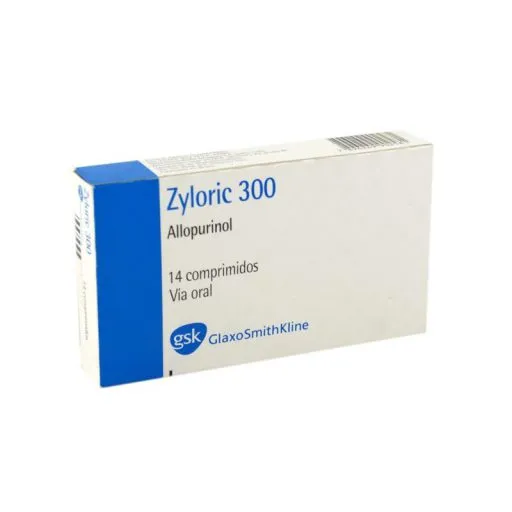
ZYLORIC
ItalyThis medicine is used to reduce the amount of uric acid produced by the body. It is used to treat gout, urinary tract stones, certain diseases caused by enzyme deficiencies (such as Lesch-Nyhan syndrome), and to prevent the formation of calcium oxalate stones.
Frequently asked questions
When should you not take Zyloric?
You must not use this medicine if you are allergic to the active substance or to any of the other components, or if you are in the middle of an acute gout attack, as the drug could cause further attacks.
How to take Zyloric?
Tablets should be taken orally after meals, preferably at the same time every day. The usual dose for adults is 300 mg once daily, but the doctor may prescribe an initial dose of 100 mg to be increased gradually. During therapy, it is important to drink plenty of fluids, sufficient to produce at least 2 liters of urine per day.
What are the side effects of Zyloric?
Common side effects include skin rashes and changes in thyroid hormone levels. Nausea and vomiting may also occur (which decrease if taken after meals). Rare or very rare side effects involving the skin (such as ulcers or vesicles), liver, blood, vision, muscles, and the nervous system have been reported. If a rash or other signs of an allergic reaction develop, you must stop taking the medicine and contact a doctor immediately.
Are there any special precautions to follow?
It is necessary to inform the doctor if you have kidney or liver problems. Caution should be exercised if you are taking other medications (such as anticoagulants, diabetes medications, antibiotics, or anticancer treatments) and report if you suffer from lactose intolerance. Since drowsiness or dizziness may occur, it is advisable to be careful before driving or using machinery.
What to do in case of overdose?
If you take a dose higher than prescribed, you must immediately inform your doctor or go to the nearest hospital, bringing the package leaflet with you.
Instructions for use
Package leaflet: Information for the patient
Zyloric 100 mg tablets, 300 mg tablets
Allopurinol
Please read this leaflet carefully before taking this medicine because it contains
important information for you.
- Keep this leaflet. You may need to read it again.
- If you have any questions, ask your doctor or pharmacist.
- This medicine has been prescribed for you only. Do not give it to others, even if their symptoms are the same as yours, as it may be harmful.
- If you experience any side effects, including those not listed in this leaflet, contact your doctor or pharmacist. See section 4.
Contents of this leaflet:
- What Zyloric is and what it is used for
- What you need to know before taking Zyloric
- How to take Zyloric
- Possible side effects
- How to store Zyloric
- Contents of the pack and other information
1. What Zyloric is and what it is used for
Zyloric contains allopurinol, a substance that acts against gout and other diseases by reducing the amount of uric acid produced by the body.
This medicine is used for:
- treating clinical conditions associated with excess uric acid in the body, such as gout (a disease characterized by the accumulation of uric acid crystals in the joints and tendons, causing an inflammatory reaction that makes the area around the joint swollen, tender, and painful), urinary stones (due to precipitation of uric acid crystals), following certain antitumor therapies, and in certain diseases caused by an enzyme deficiency (particularly in Lesch-Nyhan syndrome);
- preventing and treating calcium oxalate stone formation when uric acid levels are also elevated.
2. What you should know before taking Zyloric
Do not use Zyloric
- if you are allergic to the active substance or to any of the other ingredients of this medicine (listed in section 6);
- in case of acute attacks of gout, as allopurinol may trigger further attacks.
Warnings and precautions
Talk to your doctor or pharmacist before taking Zyloric:
- if you have kidney problems or suffer from diseases that may cause kidney damage (e.g. hypertension or diabetes mellitus);
- if you have liver problems.
Your doctor will want to carry out regular checks of your liver and kidney function, as well as blood tests.
At the beginning of treatment, gout attacks may occur. Therefore, your doctor might prescribe a medicine called colchicine or anti-inflammatory drugs. These gout attacks usually become shorter and less severe after several months of therapy.
Serious skin reactions (hypersensitivity syndrome, Stevens-Johnson syndrome, toxic epidermal necrolysis) have been reported with the use of allopurinol. Frequently, the rash may include ulcers in the mouth, throat, nose, genitals, and conjunctivitis (red and swollen eyes). These severe skin reactions are often preceded by flu-like symptoms such as fever, headache, and generalized body aches. The rash may progress to widespread blistering and skin peeling.
These serious skin reactions may be more common in individuals of Han Chinese, Thai, or Korean origin. Chronic kidney disease may also increase the risk in these patients.
If you develop a rash, the above-mentioned skin symptoms, or any other sign of an allergic reaction to the medicine, you must stop taking allopurinol and contact your doctor immediately.
If you experience muscle problems after taking the medicine, your doctor may prescribe certain blood tests to check for possible muscle damage and may consider discontinuing treatment with Zyloric.
Other medicines and Zyloric
Inform your doctor or pharmacist if you are currently taking, have recently taken, or might take any other medicine.
Be cautious and inform your doctor if you are using:
- medicines that affect bone marrow activity, reducing blood cell production; 6-mercaptopurine, (used to treat certain blood cancers) and azathioprine (used to prevent organ transplant rejection or to treat autoimmune diseases and chronic intestinal disorders). Your doctor will reduce the dose of these medicines;
- vidarabine, used to treat viral diseases. Be aware that adverse effects from vidarabine may occur more frequently. Pay special attention if such effects appear;
- salicylates, medicines used to reduce pain, fever, or inflammation, and uricosuric agents, medicines used to reduce uric acid levels in the body;
- chlorpropamide, used to treat diabetes;
- medicines used to thin the blood (such as warfarin). Your doctor will perform blood tests to determine the most appropriate dose for you;
- phenytoin, used to treat epilepsy or certain painful conditions;
- theophylline, used to treat asthma and other respiratory disorders. Your doctor may perform blood tests to monitor theophylline levels;
- ampicillin, amoxicillin, used to treat bacterial infections. Your doctor may prescribe alternative antibiotics;
- medicines used to treat certain cancers:
- cyclophosphamide
- doxorubicin
- bleomycin
- procarbazine
- mechlorethamine Your doctor will perform regular blood tests;
- cyclosporine, used to regulate the immune system, such as in preventing organ transplant rejection or treating other disorders. Be aware that adverse effects from cyclosporine may occur more frequently;
- didanosine, used to treat HIV infection;
- thiazide diuretics, medicines used to treat hypertension and heart failure. Your doctor will perform tests to assess your kidney function;
- tolbutamide, used to treat type II diabetes (adult-onset diabetes);
- aluminium hydroxide. If aluminium hydroxide is taken at the same time, the effect of allopurinol may be reduced. There should be an interval of at least 3 hours between taking the two medicines;
- cytostatic agents. When allopurinol is administered together with cytostatic agents (e.g. cyclophosphamide, doxorubicin, bleomycin, procarbazine, alkylating halides), blood dyscrasias occur more frequently than when these active substances are administered alone. Therefore, regular monitoring of blood counts should be performed at regular intervals.
Pregnancy and breastfeeding
If you are pregnant, think you might be pregnant, planning a pregnancy, or breastfeeding, consult your doctor before taking this medicine.
Pregnancy
Take Zyloric during pregnancy only if your doctor considers it absolutely necessary and under medical supervision.
Breastfeeding
Allopurinol is excreted in breast milk. Allopurinol is not recommended during breastfeeding.
Driving and using machines
Since adverse reactions such as drowsiness, dizziness, and ataxia have been reported in patients taking allopurinol, patients should exercise caution before driving, operating machinery, or engaging in potentially hazardous activities, until they are reasonably certain that allopurinol does not negatively affect their performance.
Zyloric contains lactose: if your doctor has diagnosed you with an intolerance to certain sugars, contact them before taking this medicine.
3. How to take Zyloric
Take this medicine exactly as your doctor has told you. If you are unsure, consult your doctor or pharmacist.
Dosage
Adults
The usual dose is 300 mg once daily, taken after a meal, preferably at the same time each day.
At the beginning of treatment, your doctor will prescribe a starting dose of 100 mg, which will be increased weekly until the optimal dose for you is reached.
The maximum dose is 800 mg per day, taken in 2–3 divided doses after meals.
Use in patients with severe kidney problems
Your doctor will adjust the dose according to your condition.
If you are undergoing dialysis, take the dose prescribed by your doctor immediately after the dialysis session.
Use in the elderly
Your doctor will adjust the dose according to your condition.
Use in children and adolescents under 15 years of age
The recommended dose is 10–20 mg/kg, i.e. 100–400 mg daily.
Method of administration
Zyloric is for oral use. Take the tablets after meals, at the same time each day.
The score line on the tablet is intended to facilitate breaking the tablet if you have difficulty swallowing it whole.
During treatment, drink an abundant amount of fluids, sufficient to produce at least 2 litres of urine per day.
If you take more Zyloric than you should
If you take more Zyloric than prescribed, contact your doctor immediately or go to the nearest hospital. Bring this leaflet with you.
Symptoms of overdose may include nausea, vomiting, diarrhoea, and dizziness.
If you have any doubts about how to use this medicine, consult your doctor or pharmacist.
4. Possible side effects
Like all medicines, this medicine can cause side effects, although not everybody will experience them.
If you experience any of the following symptoms, stop taking the tablets and contact your doctor immediately:
Rare (may affect up to 1 in 1,000 people):
- fever and chills, headache, muscle pain (flu-like symptoms), and general feeling of malaise;
- any skin changes, for example mouth, throat, nose, genital ulcers, conjunctivitis (red and swollen eyes), widespread blisters and skin peeling. These may be symptoms of serious skin reactions called “Stevens-Johnson syndrome” and “toxic epidermal necrolysis” (see section 2 “Warnings and precautions”).
Very rare (may affect up to 1 in 10,000 people):
- severe hypersensitivity reactions including fever, skin rash, joint pain, and blood abnormalities and liver function test changes. These may be signs of a multi-organ hypersensitivity disorder (see section 2 “Warnings and precautions”);
- difficulty breathing, swelling of the face, lips, tongue and other body parts. These may be symptoms of anaphylactic shock (a severe allergic reaction).
- Hypersensitivity syndrome or DRESS, angioimmunoblastic lymphadenopathy, swelling of the lymph glands. Severe hypersensitivity reactions have been rarely reported, including Stevens-Johnson syndrome and toxic epidermal necrolysis.
The following side effects have been reported with the use of this medicine:
Common (may affect up to 1 in 10 people):
- skin rashes;
- increased levels of thyroid-stimulating hormone in the blood.
Uncommon (may affect up to 1 in 100 people):
- nausea, vomiting (these side effects may decrease if the medicine is taken after meals);
- symptoms of hypersensitivity reactions;
- increased liver function test values.
Rare (may affect up to 1 in 1,000 people):
- hepatitis (liver inflammation) and/or altered liver function;
- swelling of the skin and mucous membranes (angioedema);
- skin reaction recurring in the same locations each time the drug is administered (fixed drug eruption).
Very rare (may affect up to 1 in 10,000 people):
- boils;
- blood abnormalities: decreased number of white blood cells, red blood cells and/or platelets in the blood, increased number of white blood cells; occasionally Zyloric tablets may affect the blood, which may present as increased tendency to bruise, or you may develop a sore throat or other signs of infection. These effects generally occur in people with liver or kidney problems. Inform your doctor as soon as possible;
- elevated levels of fats in the blood;
- diabetes mellitus;
- inability to move muscles (paralysis) or movement coordination problems (ataxia), numbness and pain (neuropathy), tingling (paresthesia), drowsiness, headache, altered taste, coma;
- cataract (clouding of the lens), visual disturbances and macular changes;
- dizziness;
- depression;
- chest pain (angina), slowed heart rate;
- high blood pressure (hypertension);
- vomiting blood, high levels of fatty substances in the stools (steatorrhea), inflammation of the mouth lining (stomatitis), changes in bowel habits (diarrhea or constipation), bleeding from the stomach or intestine;
- hair loss or discoloration;
- blood in the urine, very high levels of uric acid in the blood due to the kidneys’ inability to eliminate it (uraemia);
- male infertility, inability to achieve or maintain an erection, breast enlargement in men;
- general feeling of malaise, fatigue, fever, fluid retention leading to swelling (edema).
In addition, the following have been reported:
- diarrhea
- peripheral vascular disorders, thrombophlebitis
- hyperlipemia
- tongue edema
- paralysis
- paralysis of the lower limbs
- stomach pain or burning, indigestion (dyspepsia), abdominal pain, loss of appetite (anorexia);
- enlarged liver, yellowing of the skin or whites of the eyes (jaundice);
- increased bilirubin in the blood, increased calcium in the blood;
- inflammation of nerves including those of the eyes (neuritis and optic neuritis), diseases affecting muscles (myopathies);
- kidney failure, inflammation of the kidneys (nephritis);
- nosebleeds (epistaxis), bruising, inflammation of blood vessels, sometimes associated with blood clot formation (thrombi), increased blood vessel diameter;
- inflammation of the pericardium (a thin membrane surrounding the heart);
- pancreatitis with bleeding;
- bronchial muscle contraction (bronchospasm), bronchial inflammation characterized by breathing difficulty (asthma);
- sore throat (pharyngitis), nasal mucosa inflammation (rhinitis);
- eye inflammation (iritis or conjunctivitis), double vision;
- confusion, dizziness, insomnia, decreased libido;
- ringing in the ears (tinnitus);
- nocturnal urinary incontinence;
- enlargement of the salivary glands.
Reporting of side effects
If you experience any side effect, including those not listed in this leaflet, talk to your doctor or pharmacist.
You can also report side effects directly via the website: www.agenziafarmaco.gov.it/content/come-segnalare-una-sospetta-reazione-avversa
By reporting side effects, you can help provide more information on the safety of this medicine.
5. How to store Zyloric
Store in a dry place.
Keep this medicine out of the sight and reach of children.
Do not use this medicine after the expiry date stated on the carton after "Exp.".
The expiry date refers to the last day of that month.
Do not dispose of any medicine via wastewater or household waste. Ask your pharmacist how to dispose of medicines you no longer use. This will help protect the environment.
6. Package contents and other information
What Zyloric contains
Zyloric 100 mg tablets
- The active substance is allopurinol. One tablet contains 100 mg of allopurinol.
- The other ingredients are lactose, maize starch, povidone, magnesium stearate.
Zyloric 300 mg tablets
- The active substance is allopurinol. One tablet contains 300 mg of allopurinol.
- The other ingredients are lactose, maize starch, povidone, magnesium stearate.
Description of the appearance of Zyloric and contents of the pack
Zyloric 100 mg tablets are presented in blisters containing 50 divisible tablets.
Zyloric 300 mg tablets are presented in blisters containing 30 divisible tablets.
Marketing Authorisation Holder and Manufacturer
Marketing Authorisation Holder
Teofarma S.r.l.
Via F.lli Cervi, 8
27010 Valle Salimbene
Pavia
Manufacturer
Teofarma S.r.l.
Viale Certosa 8/A
27100 Pavia
Similar drugs
| Brand name | Dosage form | Active substance / Dosage | Manufacturer |
|---|---|---|---|
| ALLOPURINOL ACCORD | tablets | ACCORD HEALTHCARE, S.L.U. | |
| ALLOPURINOL DOC GENERICI | tablets | DOC GENERICI SRL | |
| ALLOPURINOL MOLTENI | tablets | L. MOLTENI & C. DEI F.LLI ALITTI SOCIETA' DI ESERCIZIO S.P.A. | |
| ALLOPURINOL MYLAN | tablets | MYLAN S.P.A. | |
| ALLOPURINOL SANDOZ | tablets | SANDOZ S.P.A. | |
| ALLOPURINOL TEVA ITALIA | tablets | TEVA ITALIA S.R.L. | |
| ALLURIT | tablets | TEOFARMA S.R.L. |
The original data is available in the language of the country of manufacture.
Data source: Italian Medicines Agency (AIFA)
Data last verified: September 21, 2026