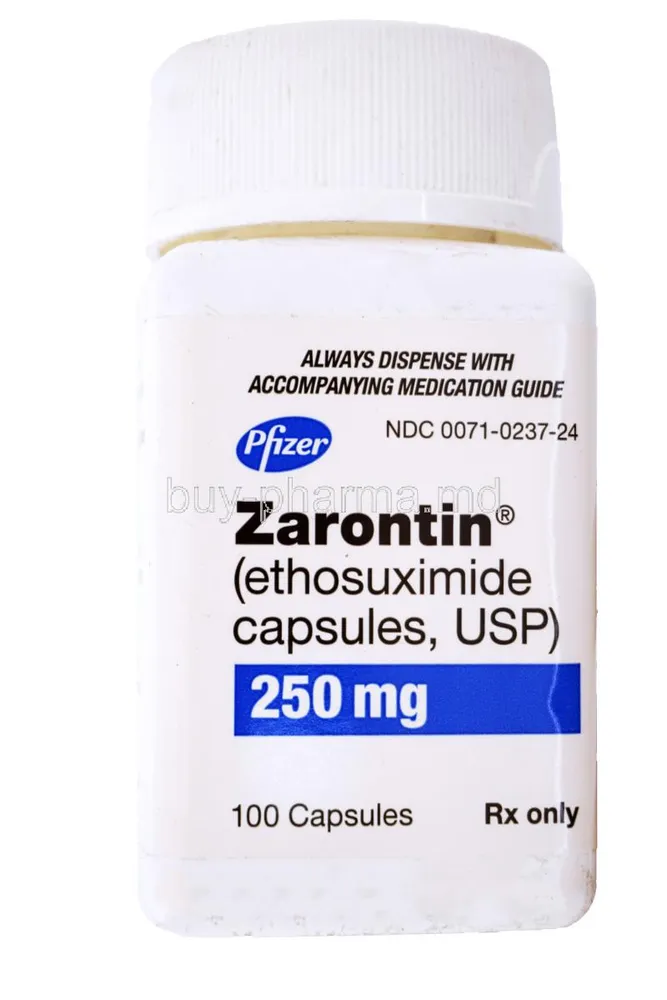
ZARONTIN
ItalyZarontin is used in adults and children to treat a form of epilepsy called 'absence seizures', which manifest as brief seizures in which the person appears absent and unresponsive to external stimuli, but without convulsions.
Frequently asked questions
When should you not take Zarontin?
You must not use this medicine if you are allergic to ethosuximide or any of its other components, if you are allergic to peanuts or soy, if you are pregnant, or if you are breastfeeding.
How should the drug be taken?
The medicine should be taken following the exact instructions of the doctor or pharmacist. The dose varies based on the age and condition of the patient. For children over 6 years of age, the initial dose is 500 mg per day, while for children between 3 and 6 years of age, it is 250 mg per day. For children under 3 years of age, the dose is determined by the doctor.
What to do if a dose is forgotten or if too much is taken?
If you forget a dose, contact your doctor but do not take a double dose to compensate. If, however, you have accidentally taken an excessive dose, inform your doctor immediately or go to the emergency room, as nausea, vomiting, respiratory depression, or coma may occur.
What are the common side effects of Zarontin?
Common side effects may include reduced appetite, headache, coordination problems, dizziness, drowsiness, abdominal pain, stomach or intestinal problems, nausea, vomiting, and skin rashes.
What are the serious side effects that require immediate attention?
It is necessary to inform the doctor immediately if serious reactions occur, such as a reduction in blood cells (pancitopenia), suicidal thoughts, severe skin reactions (such as Stevens-Johnson syndrome or DRESS syndrome), or autoimmune diseases such as systemic lupus erythematosus.
Are there interactions with other drugs?
It is important to inform the doctor if you are taking or have recently taken other medicines, particularly other anti-epileptic drugs such as phenytoin or valproic acid.
Instructions for use
Patient Information Leaflet
ZARONTIN 250 mg soft capsules, 250 mg/5 ml syrup
ethosuccimide
Please read this leaflet carefully before using this medicine because it contains important information for you.
- Keep this leaflet. You may need to read it again.
- If you have any questions, consult your doctor or pharmacist.
- This medicine has been prescribed for you only. Do not give it to other people, even if their symptoms are the same as yours, as it may be harmful.
- If you experience any side effects, including those not listed in this leaflet, consult your doctor or pharmacist. See section 4.
Contents of this leaflet:
- What Zarontin is and what it is used for
- What you need to know before taking Zarontin
- How to take Zarontin
- Possible side effects
- How to store Zarontin
- Contents of the pack and other information
1. What Zarontin is and what it is used for
Zarontin contains the active substance ethosuximide. Ethosuximide is a succinimide derivative and acts
against seizures.
Zarontin is used in adults and children for the treatment of a form of epilepsy called "absence seizures",
characterized by brief episodes during which the person becomes unresponsive and unaware of external
stimuli, but without convulsions.
2. What you need to know before taking Zarontin
Do not take Zarontin
- if you are allergic to ethosuximide or to any of the other ingredients of this medicine (listed in section 6);
- if you are or think you may be pregnant, or if you are breastfeeding (see section “Pregnancy and breastfeeding”);
- if you are allergic to peanuts or soya (see section “Warnings and precautions”).
Warnings and precautions
Talk to your doctor or pharmacist before taking Zarontin:
- if you suffer from mixed forms of epilepsy. In such cases, Zarontin must be administered together with other anticonvulsant medicines;
- if you have kidney problems;
- if you have liver problems.
During treatment with this medicine, you may experience:
-
symptoms of infection (e.g. sore throat and fever). Inform your doctor, as these may indicate changes in blood components;
-
systemic lupus erythematosus, a chronic autoimmune disease affecting various organs in the body;
-
severe skin reactions and changes in blood test values. Inform your doctor immediately, as they may, if necessary, change your treatment to a medicine with a different active ingredient. These symptoms may indicate a serious disorder which, in some cases, could be fatal.
-
suicidal thoughts. Inform your family members that they must immediately notify your doctor if you have a tendency to harm yourself or express suicidal thoughts.
Other medicines and Zarontin
Inform your doctor or pharmacist if you are taking, have recently taken, or might take any other medicines.
Tell your doctor if you are taking other antiepileptic medicines (e.g. phenytoin and valproic acid).
Pregnancy and breastfeeding
If you are pregnant, think you might be pregnant, planning to become pregnant, or breastfeeding, consult your doctor or pharmacist before taking this medicine.
You must not take Zarontin if you are or think you may be pregnant. If you are a woman of childbearing age, you must use effective contraception to avoid becoming pregnant during treatment with this medicine. Taking this medicine during pregnancy may increase by 2–3 times the risk that the baby will be born with congenital malformations of the lips, gums, heart, blood vessels, brain, and spinal cord.
Talk to your doctor if you wish to plan a pregnancy.
Zarontin must not be taken during breastfeeding because this medicine passes into breast milk. Your doctor will decide whether it is better for you and your baby to stop breastfeeding or to discontinue treatment with this medicine.
Driving and using machines
Zarontin may cause mental disturbances, dizziness, and drowsiness. If you experience these symptoms, do not drive or operate machinery.
Zarontin 250 mg soft capsules contain:
Soybean lecithin
This medicine contains soya. If you are allergic to peanuts or soya, do not use this medicine.
Sodium ethyl parahydroxybenzoate (E 215) and sodium propyl parahydroxybenzoate (E 217)
May cause allergic reactions (including delayed reactions).
Sodium
This medicine contains less than 1 mmol (23 mg) of sodium per soft capsule (5 ml), i.e. essentially 'sodium-free'.
Zarontin 250 mg/5 ml syrup contains:
Sucrose and glucose
Zarontin syrup contains 3 g of sucrose (sugar) and 5 mg of glucose per dose. This should be taken into account in people with diabetes mellitus. If your doctor has diagnosed you with an intolerance to certain sugars, contact them before taking this medicine.
May be harmful to teeth.
Sodium benzoate (E 211)
This medicine contains 12 mg of sodium benzoate (E 211) per 5 ml, equivalent to 2.4 mg/ml.
Benzoic acid / Benzoate salt (E 211) may increase the risk of jaundice (yellowing of the skin and eyes) in newborns up to 4 weeks of age.
Propylene glycol (E 1520)
This medicine contains 42 mg of propylene glycol per 5 ml, equivalent to 8.4 mg/ml. If the child is less than 4 weeks old, talk to your doctor or pharmacist before administering this medicine, especially if the child is taking other medicines containing propylene glycol or alcohol.
If the child is under 5 years of age, talk to your doctor or pharmacist before administering this medicine, especially if the child is taking other medicines containing propylene glycol or alcohol.
If you are pregnant or breastfeeding, do not take this medicine unless otherwise recommended by your doctor. Your doctor may carry out additional monitoring during treatment.
If you have liver or kidney disease, do not take this medicine unless otherwise recommended by your doctor. Your doctor may carry out additional monitoring during treatment.
Sodium
This medicine contains 5.8 mg of sodium (main component of table salt) per 5 ml. This corresponds to 0.3% of the maximum daily recommended dietary intake for an adult.
3. How to use Zarontin
Use this medicine exactly as directed by your doctor or pharmacist. If you have
any doubts, consult your doctor or pharmacist.
Zarontin doses vary from person to person. Your doctor will determine the most suitable dose based on age and
condition.
Children over 6 years of age
The recommended starting dose is 500 mg per day (equivalent to 2 soft capsules or 2 teaspoonfuls
of syrup).
Children from 3 to 6 years of age
The recommended starting dose is 250 mg per day (equivalent to 1 soft capsule or 1 teaspoonful
of syrup).
Children under 3 years of age
Your doctor will determine the most appropriate dose for your child.
The starting dose should be gradually increased until the optimal dose for treating your condition or that of your child is reached.
If you use more Zarontin than you should
If you accidentally take an excessive dose of Zarontin, contact your doctor immediately or go to the nearest hospital.
You may experience nausea, vomiting, respiratory depression, and coma.
If you forget to use Zarontin
Consult your doctor if you realize you have missed a dose of Zarontin. Do not take a double dose to make up for the missed dose.
It is extremely important that you use exactly the dose prescribed by your doctor.
If you stop treatment with Zarontin
Do not stop treatment with Zarontin abruptly. Your doctor will advise you how to gradually reduce the dose to avoid worsening of your condition.
If you have any questions about the use of this medicine, consult your doctor or pharmacist.
4. Possible side effects
Like all medicines, this medicine can cause side effects, although not everybody gets them.
Contact your doctor immediately if you or your child experience any of the following side effects because they are serious:
- reduced bone marrow activity (bone marrow failure) leading to a decrease in all blood cells (white blood cells, red blood cells and platelets) (pancytopenia)
- suicidal thoughts
- Stevens-Johnson syndrome, a serious reaction characterized by blisters, sores, lesions and peeling of the outer layer of the skin
- DRESS syndrome, a serious allergic reaction characterized by skin rash, fever and symptoms affecting multiple organs in the body
- systemic lupus erythematosus, a chronic autoimmune disease affecting multiple organs in the body
Contact your doctor if you experience any of the following side effects:
Common (may affect up to 1 in 10 people):
- decreased appetite
- headache
- problems with movement coordination (ataxia)
- dizziness
- drowsiness
- abdominal pain or discomfort
- stomach and intestinal problems
- nausea, vomiting
- skin rash, hives
Uncommon (may affect up to 1 in 100 people):
- increased number of eosinophils (a type of white blood cells) in the blood
- decreased number of white blood cells (leukopenia, agranulocytosis) and red blood cells in the blood (aplastic anemia)
- hypersensitivity
- aggression
- depression
- mental disturbances
- sleep disorders, night terrors
- inner restlessness accompanied by excessive motor agitation
- excessive sleepiness (lethargy)
- attention disturbances
- myopia (blurred distance vision)
- hiccups
- diarrhea
- swelling of the gums (gingival hyperplasia) and of the tongue (tongue edema)
- severe general health problems associated with fever and skin rash: DRESS syndrome
- severe reaction characterized by blisters, sores, lesions and peeling of the outer layer of the skin: Stevens-Johnson syndrome
- chronic autoimmune disease affecting multiple organs in the body: systemic lupus erythematosus
- presence of blood in the urine (haematuria)
- heavy vaginal bleeding (vaginal haemorrhage)
- weakness (asthenia), irritability
- weight loss
Not known (frequency cannot be estimated from the available data):
- euphoria
- increased sex drive (increased libido)
- increased hair growth (hirsutism)
Reporting of side effects
If you experience any side effect, including those not listed in this leaflet, talk to your doctor or pharmacist.
You can also report side effects directly via the national reporting system at: https://www.aifa.gov.it/content/segnalazioni-reazioni-avverse.
By reporting side effects, you can help provide more information on the safety of this medicine.
5. How to store Zarontin
Keep this medicine out of the sight and reach of children.
Do not use this medicine after the expiry date stated on the carton and on the bottle after
"Exp.". The expiry date refers to the last day of that month.
Zarontin 250 mg soft capsules
Keep the bottle tightly closed to protect the medicine from light and moisture.
Zarontin 250 mg/5 ml syrup
Do not store above 25°C.
Do not dispose of any medicine via wastewater or household waste. Ask your pharmacist how to
dispose of medicines no longer required. This will help protect the environment.
6. Package contents and other information
What Zarontin contains
The active substance is ethosuximide.
Zarontin 250 mg soft capsules
- The active substance is ethosuximide.
- The other components are: macrogol 400, gelatin, glycerol, sodium ethyl parahydroxybenzoate (E 215), sodium propyl parahydroxybenzoate (E 217), traces of medium-chain triglycerides, soy lecithin (see section 2 “Zarontin 250 mg soft capsules contains” for further information on sodium ethyl parahydroxybenzoate (E 215), sodium propyl parahydroxybenzoate (E 217), soy lecithin and sodium).
Zarontin 250 mg/5 ml syrup - The active substance is ethosuximide.
- The other components are: sodium citrate, sodium saccharin, sodium benzoate (E 211), sucrose, glycerol, raspberry flavour (containing glucose and propylene glycol), citric acid monohydrate and purified water. (See section 2 “Zarontin 250 mg/5 ml syrup contains” for further information on sodium benzoate (E 211), sucrose, glucose and sodium).
Description of the appearance of Zarontin and contents of the pack
Zarontin 250 mg soft capsules are available in polypropylene bottles containing 50 or 56 capsules.
Zarontin 250 mg/5 ml syrup is available in a 200 ml glass bottle.
Not all pack sizes may be marketed.
Marketing Authorisation Holder
Essential Pharma (M) Ltd
Vision Exchange Building
Triq it-Territorjals, Zone 1,
Central Business District,
Birkirkara, CBD 1070,
Malta
Manufacturer
Zarontin 250 mg soft capsules
Catalent France Beinheim SA
74, rue Principale
67930 Beinheim
France
Zarontin 250 mg/5 ml syrup
Delpharm Orléans
Avenue de Concyr, 5
45071 Orléans Cedex 2
France
The original data is available in the language of the country of manufacture.
Data source: Italian Medicines Agency (AIFA)
Data last verified: September 21, 2026