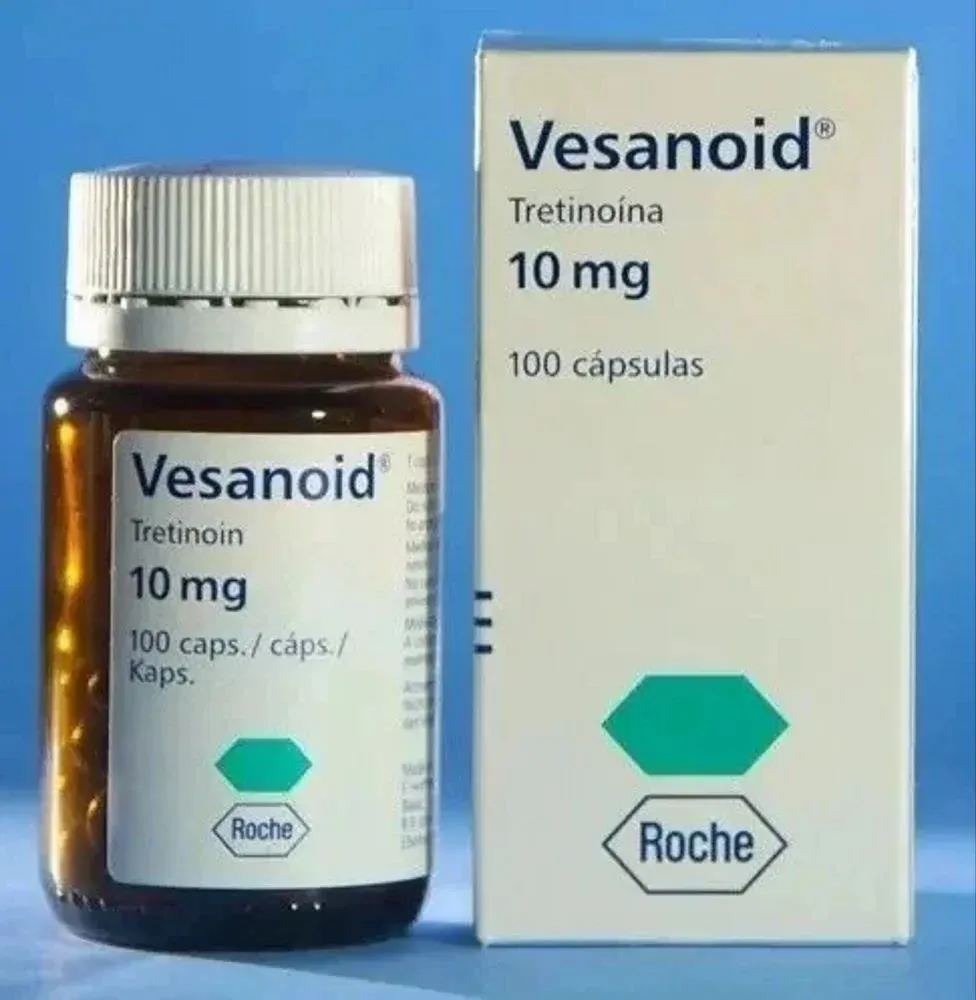
VESANOID
ItalyVesanoid is used to treat a type of blood disease called acute promyelocytic leukemia, acting to slow the growth of certain diseased blood cells.
Frequently asked questions
How should I take Vesanoid?
The capsules should be swallowed whole with water, preferably during or immediately after meals. They must not be chewed. The exact dose is determined by the doctor based on the patient's disease, weight, and height.
When should I not take this medicine?
You must not take Vesanoid if you are allergic to tretinoin, other retinoids (such as isotretinoin, acitretin, or tazarotene), or if you are allergic to peanuts or soy. It is also contraindicated in case of pregnancy, breastfeeding, or if you are taking vitamin A, tetracyclines, or other retinoids.
What are the side effects of Vesanoid?
Common side effects may include hair loss, irregular heartbeat, changes in vision or hearing, skin problems (rash, itching, dryness), fatigue, headache, or dizziness. It is necessary to inform the doctor immediately if serious symptoms occur, such as severe stomach pain, breathing difficulties, fever with skin nodules, or sudden mood changes.
Are there interactions with other medicines?
Yes, it is very important to inform the doctor if you are taking any other medicines, including non-prescription or herbal products. In particular, tetracyclines, vitamin A, or the mini-pill contraceptive should not be taken during treatment. Other medicines that require attention include certain antibiotics, glucocorticoids, antifungals, and drugs for epilepsy or heart problems.
What do I need to know regarding pregnancy?
Vesanoid must not be taken during pregnancy or while breastfeeding. If pregnancy is suspected or if you intend to conceive, it is essential to inform the doctor immediately. During treatment and for the four weeks following discontinuation, both the woman and her partner must use an effective and continuous method of contraception. If pregnancy occurs during therapy, the baby may be born with malformations.
Instructions for use
PACKAGE LEAFLET: INFORMATION FOR THE USER
Vesanoid 10 mg soft capsules
Tretinoin
Please read this leaflet carefully before you start taking this medicine because it contains
important information for you.
Keep this leaflet. You may need to read it again.
If you have any questions, ask your doctor or pharmacist.
This medicine has been prescribed for you only. Do not give it to other people, even if their
symptoms are the same as yours, because it could be dangerous.
If you experience any side effects, including those not listed in this leaflet,
inform your doctor or pharmacist. See section 4.
Contents of this leaflet:
- What Vesanoid is and what it is used for
- What you need to know before taking Vesanoid
- How to take Vesanoid
- Possible side effects
- How to store Vesanoid
- Contents of the pack and other information
1. What Vesanoid is and what it is used for
Vesanoid contains a medicine called tretinoin, which belongs to a group of medicines known as "retinoids" and is similar to vitamin A.
Vesanoid is used to treat a type of blood disorder called "acute promyelocytic leukaemia" and works by slowing down the growth of certain types of diseased blood cells.
2. What you need to know before taking Vesanoid
Do not take Vesanoid if you are allergic to:
- tretinoin or any of the other excipients of this medicine (listed in section 6).
- other "retinoid" medicines, including isotretinoin, acitretin, and tazarotene.
- peanuts or soya, because Vesanoid contains soya bean oil.
Do not take Vesanoid if:
- you are pregnant, planning to become pregnant, or breastfeeding (see section 2, Pregnancy, breastfeeding and fertility).
- you are taking vitamin A, tetracyclines, or retinoids.
If any of these conditions apply to you, do not take this medicine. If you have any doubts,
consult your doctor or pharmacist before taking Vesanoid.
Warnings and precautions:
Talk to your doctor or pharmacist before taking Vesanoid if:
you have any other illness.
you have had mental health problems, including depression, aggressive tendencies, or mood
changes. This is because Vesanoid may affect your mood.
you have allergies.
your doctor has told you that you have an intolerance to certain sugars, as Vesanoid contains sorbitol.
If any of these conditions apply to you (or if you have any doubts), consult your doctor or pharmacist
before taking Vesanoid.
Mental health problems
You may notice some changes in your mood and behaviour, and it is very important that you inform your
friends and family that this medicine may affect mood and behaviour.
They may notice these changes and help you identify problems that need to be discussed with your doctor.
Be alert to the following side effects
Vesanoid may cause side effects such as:
- severe headache with a feeling or state of discomfort
- difficulty breathing
- fever
- dizziness
- back or chest pain You should be attentive to these effects during treatment with Vesanoid. For further details, see section 4 “Important side effects”. Your doctor may decide to change the dose of your medicine or prescribe an additional medicine.
Children
Information on the safety and efficacy of tretinoin in children is limited.
Other medicines and Vesanoid
Tell your doctor or pharmacist if you are taking, have recently taken, or might take any other medicines, including those without a prescription and herbal medicines.
This is extremely important, as taking multiple medicines at the same time may enhance or reduce their effects. Therefore, you must not take Vesanoid with other medicines unless you have informed your doctor and your doctor agrees.
While taking Vesanoid, you must not take:
- tetracyclines (a type of antibiotic)
- vitamin A
- low-dose progestogens for contraception (mini-pill). If you are taking low-dose progestogens for contraception, your doctor may ask you to stop treatment and prescribe a different oral contraceptive.
Medicines that may require special attention when taken with Vesanoid include:
- rifampicin and erythromycin (antibiotics)
- glucocorticoids (for allergies and inflammation)
- phenobarbital (for epilepsy)
- pentobarbital (for insomnia)
- azole antifungals (e.g. ketoconazole, fluconazole, itraconazole, posaconazole)
- protease inhibitors or macrolides (e.g. clarithromycin)
- cimetidine (for stomach ulcers)
- verapamil and diltiazem (for heart problems or high blood pressure)
- cyclosporine (used after organ or bone marrow transplantation)
- tranexamic acid, aminocaproic acid, and aprotinin (used to reduce bleeding).
Pregnancy, breastfeeding and fertility
Ask your doctor or pharmacist for advice before taking any medicine.
Before starting treatment with Vesanoid
Inform your doctor immediately
if you are pregnant
if you think you may be pregnant
if you intend to become pregnant.
You must not become pregnant during treatment with Vesanoid and for one month (four weeks) after stopping it. If you become pregnant while taking Vesanoid, it is highly likely that your baby will be born with birth defects.
During treatment with Vesanoid
- During treatment with Vesanoid and for four weeks after stopping it, you and your partner must use effective and continuous contraception (birth control). Your doctor will advise you on which contraceptive method to use. If you are taking low-dose progestogen-only contraceptives (mini-pill), your doctor will instruct you to stop taking them and will prescribe a different oral contraceptive.
- Women taking Vesanoid must perform a pregnancy test every month during treatment with Vesanoid.
- Inform your doctor immediately if you become pregnant during treatment with Vesanoid. Your doctor will advise you on the appropriate treatment if you are pregnant and have acute promyelocytic leukemia.
Do not breastfeed during treatment with Vesanoid. Vesanoid passes into breast milk and may therefore be harmful to the baby.
Driving and using machines
Your ability to drive or operate machinery may be impaired during treatment with Vesanoid, especially if you experience dizziness or severe headaches.
Vesanoid contains soya bean oil, sorbitol and sodium
Vesanoid contains soya bean oil. If you are allergic to peanuts or soya, do not use this medicine.
This medicine contains 1.93 - 2.94 mg of sorbitol in each soft capsule.
This medicine contains less than 1 mmol of sodium (23 mg) per soft capsule, i.e. essentially “sodium-free”.
3. How to take Vesanoid
Always take this medicine exactly as your doctor or pharmacist has told you. If you are unsure, consult your doctor or pharmacist.
Recommended dose
Your doctor will prescribe the correct dose based on the nature of your illness, your response to Vesanoid, your body weight and height. Do not change the prescribed dose on your own initiative. If you feel that the effect of Vesanoid is too strong or too weak, consult your doctor or pharmacist.
Adults
The daily dose will be 45 mg/m\², i.e. approximately 8 capsules per day, divided into two equal doses.
Children
The daily dose will be 45 mg/m\², divided into two equal doses. For children experiencing severe headaches during treatment, a lower daily dose of 25 mg/m\² should be considered.
Adults with renal or hepatic impairment
The daily dose will be 25 mg/m\², divided into two equal doses.
Treatment with Vesanoid may last 3 months or longer. Your doctor will tell you how long you should continue taking Vesanoid.
Taking this medicine
Swallow the capsules whole with water, preferably during or shortly after meals. Do not chew the capsules.
If you take more Vesanoid than you should
If you or someone else has taken an excessive dose of Vesanoid, you must contact your doctor, pharmacist, or go immediately to the nearest hospital.
If you forget to take Vesanoid
If you forget to take a dose, take the capsules as soon as you remember and inform your doctor immediately. Do not take a double dose to make up for the missed dose.
If you have any doubts about how to use this medicine, consult your doctor or pharmacist.
4. Possible side effects
Like all medicines, this medicine can cause side effects, although not everybody gets them. In addition to its beneficial effects, most patients will experience some side effects during treatment. This may occur even when Vesanoid is used correctly.
Important side effects
Tell your doctor immediately if you experience any of the following symptoms:
- fever, especially with difficulty breathing, cough, dizziness, chest or abdominal pain.
- severe headache with a feeling of illness or malaise, difficulty breathing, cough, dizziness, or chest or abdominal pain. Your doctor may decide to change the dose of the medicine or prescribe an additional medicine.
- severe stomach pain spreading to the back (possible sign of pancreatitis)
- fever with dark red skin nodules, most likely on the face and neck (possible sign of “Sweet’s syndrome” or acute febrile neutrophilic dermatosis)
- painful swelling of the legs, sudden chest pain or difficulty breathing (possible sign of a blood clot)
- chest pain spreading to the arms or neck (possible sign of a heart attack)
- double vision and dizziness, especially accompanied by a feeling of illness or malaise, ringing in the ears, and headache (possible sign of increased pressure in the head)
- unexplained headache or migraine, including visual disturbances (possible sign of stroke).
Tell your doctor immediately if you notice any of the side effects listed above.
Other side effects
Very common (affects more than 1 in 10 people):
hair loss
irregular heartbeat
changes in vision or hearing
bone or joint pain, chest or abdominal pain
skin rash, itching, redness, peeling or inflammation of the skin
dryness of the nose or mouth; swollen, dry or cracked lips
difficulty breathing including asthma, possibly worsening (respiratory failure)
conjunctivitis or dry eyes, which could be problematic if you wear contact lenses
difficulty sleeping
unusual increase in sweating
headache or dizziness
feeling tired, cold or generally unwell
feeling confused, anxious or depressed
tingling or numbness in the hands or feet
loss of appetite, feeling unwell, stomach discomfort, stomach ache, inflammation of the pancreas (pancreatitis), inflammation of the lips, vomiting, diarrhoea or constipation
blood test abnormalities such as increased levels of transaminases, creatinine, or blood fats (triglycerides and cholesterol).
Not known (frequency cannot be estimated from the available data):
genital ulcers
severe bacterial infections (necrotizing fasciitis)
kidney problems (renal infarction)
muscle swelling or inflammation of blood vessels (vasculitis)
painful red nodules under the skin, most often seen on the legs (erythema nodosum)
loss of appetite, feeling unwell, with headache, drowsiness or weakness (possible sign of excess calcium in the blood)
other blood abnormalities (shown in blood tests) such as excess platelets (thrombocytosis), a change in white blood cells (basophilia), or increased histamine levels
inflammation of the heart muscle (myocarditis) or inflammation of the pericardium surrounding the heart (pericarditis), which may cause shortness of breath, palpitations or chest pain.
Reporting of side effects
If you get any side effects, including any not listed in this leaflet, talk to your doctor or pharmacist. You can also report side effects directly via the national reporting system at www.aifa.gov.it/content/segnalazioni-reazioni-avverse.
By reporting side effects, you can help provide more information on the safety of this medicine.
5. How to store Vesanoid
Keep this medicine out of the sight and reach of children.
Do not use this medicine after the expiry date stated on the carton and label of the
vial after Exp. The expiry date refers to the last day of that month.
Do not store above 30°C.
Keep the vial tightly closed to protect the medicine from moisture.
Keep the vial in the outer packaging to protect the medicine from light.
Do not dispose of any medicine via wastewater or household waste. Ask your pharmacist how
to dispose of medicines no longer required. This will help protect the environment.
6. Package contents and other information
What Vesanoid contains
- The active substance is tretinoin. Each soft capsule contains 10 mg of tretinoin.
- The excipients contained in the soft capsule are yellow wax, hydrogenated soybean oil, partially hydrogenated soybean oil, and soybean oil (see section 2).
- The excipients in the soft capsule shell are gelatin, glycerol (E 422), Karion 83 containing sorbitol (see section 2), mannitol, and starch (corn), and the colourings titanium dioxide (E 171), yellow iron oxide (E 172) and red iron oxide (E 172).
Description of the appearance of Vesanoid and contents of the pack
Vesanoid 10 mg soft capsules are bicoloured, yellow-orange/brownish-red.
An amber glass bottle contains 100 capsules.
Marketing Authorisation Holder
CHEPLAPHARM Arzneimittel GmbH
Ziegelhof 24
17489 Greifswald
Germany
Manufacturer responsible for batch release
CHEPLAPHARM Arzneimittel GmbH
Ziegelhof 23-24
17489 Greifswald
Germany
CHEPLAPHARM Arzneimittel GmbH
Bahnhofstr. 1a
17498 Mesekenhagen
Germany
CENEXI SAS
52, rue M. et J. Gaucher
94120 Fontenay-sous-Bois
France
This medicinal product is authorised in the European Economic Area Member States under the following names:
Vesanoid, Tretinoin
This leaflet was last updated on
The original data is available in the language of the country of manufacture.
Data source: Italian Medicines Agency (AIFA)
Data last verified: September 21, 2026