VANCOMYCIN REIG JOFRE
ItalyIt is an antibiotic used to treat serious infections of the skin and underlying tissues, bones and joints, pneumonia, and infections of the inner lining of the heart (endocarditis).
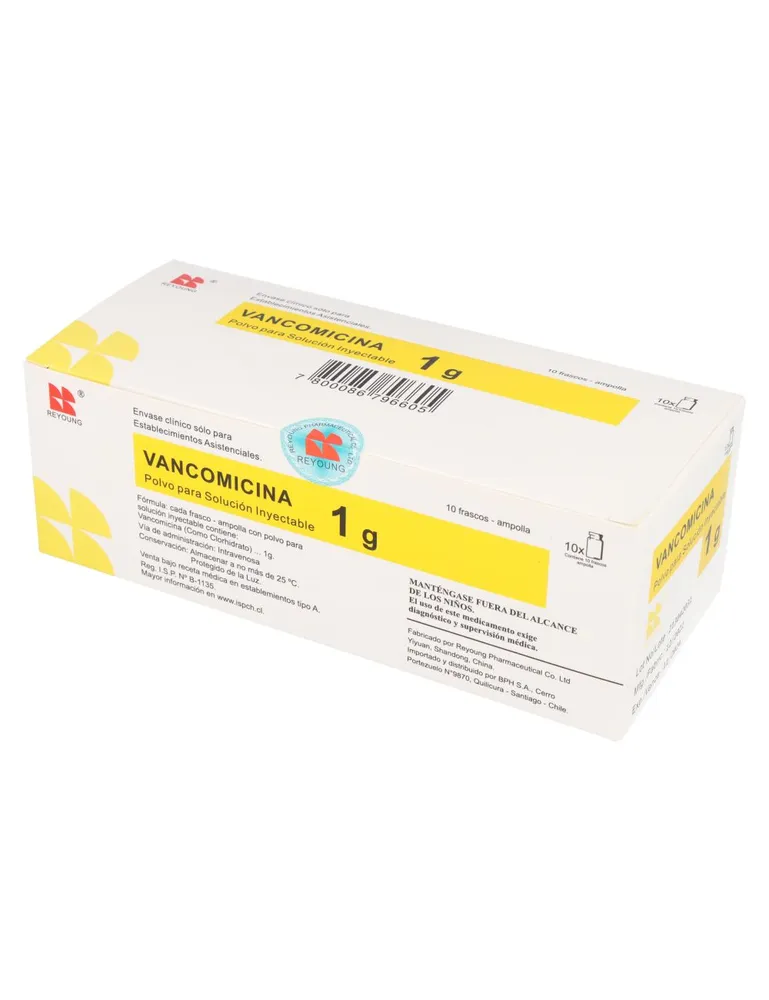
Frequently asked questions
How is Vancomicina Reig Jofre administered?
The drug is administered in a hospital by medical personnel via intravenous infusion (into the blood) and not into the muscle. The infusion must last at least 60 minutes.
What precautions should be taken before starting treatment?
You must inform your doctor if you are allergic to vancomycin or teicoplanin, if you have hearing problems, kidney disease, or if you have experienced severe skin reactions in the past. It is also important to report the intake of other medicines, such as anesthetics, anticoagulants, or drugs that are potentially harmful to the kidneys or hearing.
What are the common side effects of Vancomicina Reig Jofre?
The most common side effects may include reduced blood pressure, breathing difficulties, skin rashes, itching, inflammation of the mouth, kidney problems detectable by blood tests, and redness of the face or upper body.
When is it necessary to contact a doctor immediately while using Vancomicina Reig Jofre?
You must consult a doctor immediately if you experience severe allergic reactions (such as wheezing or difficulty breathing), severe skin rashes with blisters, skin peeling, mouth or genital ulcers, or if you develop severe and prolonged diarrhea.
Are there particular risks for children or the elderly?
Yes. In the elderly, the dose may need to be reduced due to decreased kidney function. In children, especially infants, careful monitoring of drug levels in the blood is necessary because the kidneys are not yet fully developed.
Can the drug interact with other medicines?
Yes, the simultaneous use of anesthetics, muscle relaxants, anticoagulants (such as warfarin), or certain antibiotics and antifungal drugs can influence the action of the medicine or increase the risk of damage to the kidneys or hearing.
Instructions for use
Table of contents
- Vancomycin Reig Jofre 500 mg powder for concentrate for solution for infusion, 1 000 mg powder for concentrate for solution for infusion
- 1. What Vancomycin Reig Jofre is and what it is used for
- 2. What you need to know before using Vancomycin Reig Jofre
- 3. How to use Vancomycin Reig Jofre
- 4. Possible side effects
- 5. How to store Vancomycin Reig Jofre
- 6. Package contents and other information
Patient Information Leaflet
Vancomycin Reig Jofre 500 mg powder for concentrate for solution for infusion, 1 000 mg powder for concentrate for solution for infusion
Vancomycin hydrochloride
Generic medicine
Please read this leaflet carefully before using this medicine because it contains important information for you.
- Keep this leaflet. You may need to read it again.
- If you have any questions, ask your doctor or pharmacist.
- This medicine has been prescribed for you only. Do not give it to other people. It may be harmful even if their symptoms are the same as yours.
- If you experience any side effects, including those not listed in this leaflet, tell your doctor or pharmacist. See section 4.
Contents of this leaflet
- What Vancomycin Reig Jofre is and what it is used for
- What you need to know before using Vancomycin Reig Jofre
- How to use Vancomycin Reig Jofre
- Possible side effects
- How to store Vancomycin Reig Jofre
- Contents of the pack and other information
1. What Vancomycin Reig Jofre is and what it is used for
Vancomycin Reig Jofre is an antibiotic belonging to a group of antibiotics known as "glycopeptides".
Vancomycin Reig Jofre works by eliminating certain bacteria that cause infections.
Vancomycin Reig Jofre powder is reconstituted to form a solution for infusion.
Vancomycin Reig Jofre is used by infusion in all age groups for the treatment of the following severe infections:
Infections of the skin and underlying tissue.
Infections of bones and joints.
Lung infection known as "pneumonia".
Infection of the inner lining of the heart (endocarditis).
2. What you need to know before using Vancomycin Reig Jofre
Do not use Vancomycin Reig Jofre
if you are allergic to vancomycin or to any of the other ingredients of this medicine (listed in
section 6).
Warnings and precautions
Talk to your doctor, hospital pharmacist, or nurse before using vancomycin if:
- you have previously had an allergic reaction to the medicine teicoplanin, as this may mean you are also allergic to vancomycin.
- you have a hearing disorder, especially if you are elderly (you may need hearing tests during treatment).
- you have kidney disease (you will need blood and kidney function tests during treatment).
- you are receiving vancomycin by infusion for the treatment of Clostridium difficile-associated diarrhoea rather than orally.
- you have ever developed a severe skin reaction or skin peeling, blisters and/or mouth ulcers after taking vancomycin.
Talk to your doctor, hospital pharmacist, or nurse during treatment with vancomycin
if:
- you have been receiving vancomycin for a long time (you may need blood, liver, and kidney function tests during treatment).
- you develop any skin reaction during treatment.
- you develop severe and persistent diarrhoea during or after taking vancomycin, contact your doctor immediately. This could be a sign of inflammation of the intestine (pseudomembranous colitis), which can occur following antibiotic treatment.
Serious skin reactions have been reported with vancomycin treatment, including
Stevens-Johnson syndrome, toxic epidermal necrolysis (TEN), drug reaction with eosinophilia
and systemic symptoms (DRESS), and acute generalized exanthematous pustulosis (AGEP). Discontinue
vancomycin and seek immediate medical attention if you notice any of the symptoms described in
section 4.
Serious adverse effects, which may lead to vision loss, have been reported following
injection of vancomycin into the eyes.
Children
Vancomycin will be used with particular caution in premature infants and newborns, as their
kidneys are not fully developed and may lead to accumulation of vancomycin in the blood. This
age group requires blood tests to monitor vancomycin levels in the blood.
Concomitant administration of vancomycin and anaesthetic agents has been associated with
skin redness (erythema) and allergic reactions in children. Similarly, concomitant use with other
medicines such as aminoglycoside antibiotics, non-steroidal anti-inflammatory drugs
(NSAIDs, e.g. ibuprofen), or amphotericin B (a medicine for fungal infections) may increase the
risk of kidney damage, and therefore more frequent blood and kidney function tests may be required.
Elderly
If you are elderly, your doctor will adjust the dose of Vancomycin Reig Jofre, as due to the natural
age-related decline in kidney filtration capacity, levels of the medicine in the blood may rise more easily.
Other medicines and Vancomycin Reig Jofre
Tell your doctor or pharmacist if you are taking, have recently taken, or might take any other
medicines.
The following medicines may affect the action of Vancomycin Reig Jofre or Vancomycin Reig Jofre
may affect their action and cause adverse effects if used at the same time:
- Anaesthetics: the use of anaesthetics increases the risk of developing certain adverse effects of vancomycin, such as low blood pressure, skin redness, hives, reduced heart function, and itching.
- Muscle relaxants: if muscle relaxants (e.g. succinylcholine) are taken at the same time, their muscle-relaxing effect may be intensified or prolonged.
- Oral anticoagulants: if you are taking warfarin at the same time, the effect of this anticoagulant may be increased.
- Medicines potentially harmful to the kidneys or hearing: medicines for bacterial infections (e.g. polymyxin B, colistin, bacitracin, aminoglycosides, piperacillin/tazobactam), medicines for fungal infections (amphotericin B), medicines for tuberculosis (viomycin), anticancer medicines (cisplatin), platinum-based chemotherapeutic agents, some diuretics. If you take these medicines together with vancomycin, this harmful effect may be increased. In this case, regular and careful monitoring of hearing is required.
Pregnancy, breastfeeding, and fertility
If you are pregnant, think you might be pregnant, are planning a pregnancy, or are breastfeeding,
ask your doctor or pharmacist for advice before taking this medicine.
Vancomycin Reig Jofre should only be used during pregnancy and breastfeeding if considered
strictly necessary. Your doctor will decide whether breastfeeding should be discontinued.
Driving and using machines
Vancomycin Reig Jofre has either no or negligible effect on the ability to drive vehicles and
use machinery.
3. How to use Vancomycin Reig Jofre
Vancomycin will be administered to you by medical staff while you are in hospital. Your doctor will decide the daily dose and duration of treatment.
Dosage
The dose administered will depend on:
- age,
- weight,
- the type of infection you have,
- kidney function,
- hearing ability,
- any other medicines you are taking.
Method of administration
Intravenous infusion means that the medicine flows from an infusion bottle or bag through a tube into one of your blood vessels and into your body. The doctor or nurse will always administer vancomycin into your bloodstream and never into muscle.
Vancomycin will be administered intravenously over at least 60 minutes.
If you have further questions about the use of this medicine, consult your doctor or healthcare provider.
Intravenous administration
Adults and adolescents (from 12 years of age)
The dose will be calculated based on your body weight. The usual infusion dose is 15–20 mg per kg of body weight. It is generally administered every 8–12 hours. In some cases, the doctor may decide to administer an initial dose of up to 30 mg per kg of body weight. The maximum daily dose must not exceed 2 g.
Use in children
Children from 1 month up to 12 years of age
The dose will be calculated based on body weight. The usual infusion dose is 10–15 mg per kg of body weight. It is generally administered every 6 hours.
Premature infants and newborns (from 0 to 27 days)
Dosage will be calculated based on postmenstrual age (the time elapsed from the first day of the last menstrual period to birth [gestational age] plus the time elapsed after birth [postnatal age]).
Other populations
Elderly patients, pregnant women, and patients with kidney disease, including those on dialysis, may require a different dose.
If you take more Vancomycin Reig Jofre than you should
Contact your doctor or healthcare provider if you think you have taken too much Vancomycin Reig Jofre and feel unwell as a result. Your doctor will monitor the amount of Vancomycin Reig Jofre you are receiving. If blood tests and other examinations show that you have an excessive amount in your body, the dose of Vancomycin Reig Jofre will be reduced, or the treatment will be suspended or stopped completely. The amount remaining in the blood will then decrease.
4. Possible side effects
Like all medicines, this medicine can cause side effects, although not everybody gets them.
Vancomycin may cause allergic reactions, although severe allergic reactions (anaphylactic shock) are rare. Inform your doctor immediately if you experience sudden wheezing, difficulty breathing, redness of the upper body, rash, or itching.
Stop using vancomycin and consult your doctor immediately if you notice any of the following symptoms:
- Flat, reddish spots, target-shaped or circular rashes on the trunk, often with central blisters, peeling of the skin, mouth, throat, nose, genital or eye ulcers. These serious skin rashes may be preceded by fever and flu-like symptoms (Stevens-Johnson syndrome and toxic epidermal necrolysis).
- Widespread rash, high body temperature, and swollen lymph nodes (DRESS syndrome or drug hypersensitivity syndrome).
- Generalized, red, scaly rash with subcutaneous nodules and blisters accompanied by fever at the beginning of treatment (acute generalized exanthematous pustulosis).
Common side effects (may affect up to 1 in 10 people):
Decreased blood pressure
Shortness of breath, noisy breathing (a high-pitched sound caused by obstruction of airflow in the upper airways)
Skin rash and inflammation inside the mouth, itching, itchy rash, urticaria
Kidney problems, which may mainly be detected through blood tests
Redness of the upper body and face, inflammation of a vein
Uncommon side effects (may affect up to 1 in 100 people):
Temporary or permanent hearing loss
Rare side effects (may affect up to 1 in 1,000 people):
Reduction in white blood cells, red blood cells, and platelets (blood cells responsible for clotting)
Increase in certain white blood cells in the blood
Loss of balance, ringing in the ears, dizziness
Inflammation of blood vessels
Nausea (feeling sick)
Kidney inflammation and kidney failure
Chest and back muscle pain
Fever, chills
Very rare side effects (may affect up to 1 in 10,000 people):
Sudden onset of severe allergic reaction with blistering or peeling of the skin. This may be associated with high fever and joint pain
Cardiac arrest
Inflammation of the intestine causing abdominal pain and diarrhoea, which may contain blood
Not known (frequency cannot be estimated from the available data):
Feeling unwell (vomiting), diarrhoea
Confusion, dizziness, loss of energy, swelling, fluid retention, reduced urine output
Rash with swelling or pain behind the ears, neck, groin, under the chin and armpits (swollen lymph nodes), abnormal liver function and blood tests
Rash with blisters and fever.
Reporting of side effects
If you experience any side effects, including those not listed in this leaflet, talk to your doctor, pharmacist, or nurse. You can also report side effects directly via the national reporting system at: https://www.aifa.gov.it/content/segnalazioni-reazioni-avverse.
By reporting side effects, you can help provide more information on the safety of this medicine.
5. How to store Vancomycin Reig Jofre
The physician is responsible for the storage of the medicinal product.
Keep this medicine out of the reach of children.
Do not use this medicine after the expiry date stated on the carton and vial (after "Exp."). The expiry date refers to the last day of that month.
Powder packaged for sale:
Do not store above 25°C.
Reconstituted concentrate:
The reconstituted concentrate must be further diluted immediately after reconstitution.
Storage time of the diluted product:
Chemical and physical in-use stability has been demonstrated for 8 hours at temperatures below 25°C and for 14 days at 2–8°C when diluted in a sodium chloride solution 9 mg/mL (0.9%) or in a glucose solution 50 mg/mL (5%) and protected from light.
From a microbiological standpoint, the medicine should be used immediately.
If not used immediately, the times and conditions of in-use storage before administration are the responsibility of the user and normally should not exceed 24 hours at 2–8°C, unless reconstitution and dilution have been carried out under controlled and validated aseptic conditions.
Before administration, reconstituted and diluted solutions should be inspected visually for particulate matter and discoloration. Only clear, particle-free, colourless solutions should be used.
Do not dispose of medicines via wastewater or household waste. Ask your pharmacist how to dispose of medicines no longer required. This will help protect the environment.
6. Package contents and other information
What Vancomycin Reig Jofre contains:
The active substance is vancomycin hydrochloride.
Vancomycin Reig Jofre 500 mg powder for concentrate for solution for infusion:
Each vial contains 500 mg of vancomycin hydrochloride, equivalent to 500,000 IU of vancomycin.
When reconstituted with 10 mL of water for injections, the final concentrate for infusion solution contains 50 mg/mL of vancomycin hydrochloride.
Vancomycin Reig Jofre 1,000 mg powder for concentrate for solution for infusion contains:
Each vial contains 1,000 mg of vancomycin hydrochloride, equivalent to 1,000,000 IU of vancomycin.
When reconstituted with 20 mL of water for injections, the final concentrate for infusion solution contains 50 mg/mL of vancomycin hydrochloride.
Description of the appearance of Vancomycin Reig Jofre and contents of the pack:
Vancomycin Reig Jofre 500 mg powder for concentrate for solution for infusion:
- A white to off-white powder in a transparent vial with a white flip-off cap.
Pack: 1 vial, 10 x 1 vials.
Vancomycin Reig Jofre 1,000 mg powder for concentrate for solution for infusion:
- A white to off-white powder in a transparent vial with a blue flip-off cap.
Pack: 1 vial, 10 x 1 vials.
Not all pack sizes may be marketed.
Marketing Authorization Holder and Manufacturer
Marketing Authorization Holder
Laboratorio Reig Jofre, S.A.
Gran Capitán, 10
08970 Sant Joan Despí (Barcelona)
Spain
Manufacturer responsible for batch release
Laboratorio Reig Jofre, S.A.
Gran Capitán, 10
08970 Sant Joan Despí, Barcelona
Spain
The following information is intended for physicians or healthcare professionals:
500 mg:
Dissolve the contents of the vial in 10 mL of sterile water for injections. Dilute the reconstituted solution with at least 100 mL of injectable solution of sodium chloride 9 mg/mL (0.9%) and glucose 50 mg/mL (5%).
1,000 mg:
Dissolve the contents of the vial in 20 mL of sterile water for injections. Dilute the reconstituted solution with at least 200 mL of injectable solution of sodium chloride 9 mg/mL (0.9%) and glucose 50 mg/mL (5%).
The concentration of vancomycin in the final infusion solution must not exceed 5 mg/mL.
For patients requiring restriction of fluid volume, concentrations up to 10 mg/mL may be used. The use of such high concentrations increases the risk of infusion-related events.
Prior to administration, reconstituted and diluted solutions should be inspected visually for particulate matter and discoloration. Only solutions that are particle-free, clear, and colorless should be used.
The infusion solution must not be mixed with other medicinal products.
Infusion
Administer by slow intravenous infusion over at least 60 minutes at a maximum rate of 10 mg/min, equivalent to 2 mL/min at a concentration of 5 mg/mL.
Dosage
Adults and children over 12 years
The recommended daily intravenous dose is 2,000 mg (2 g), given as 500 mg every 6 hours or 1,000 mg (1 g) every 12 hours. Improvement usually occurs within 48–72 hours. The total duration of treatment is determined by the nature and severity of the infection and the patient's clinical response.
Pediatric population
- Children from 1 month to 12 years: 40 mg/kg/day; dose usually divided into four doses (e.g., 10 mg/kg every 6 hours). Each dose should be administered over a period of at least 60 minutes.
- Neonates (term infants) 0–7 days: initial dose of 15 mg/kg followed by 10 mg/kg every 12 hours. 7–30 days: initial dose of 15 mg/kg followed by 10 mg/kg every 8 hours. Each dose should be administered over a period of at least 60 minutes. In these patients, careful monitoring of serum vancomycin concentrations may be required.
Elderly
Lower maintenance doses may be required due to age-related decline in renal function.
Pregnancy
Significant dose increases may be required to achieve therapeutic serum concentrations, as reported.
Storage
Vancomycin Reig Jofre, powder for concentrate for solution for infusion, must not be stored above 25°C.
Vancomycin Reig Jofre must not be used after the expiry date stated on the packaging.
For storage conditions after reconstitution and further dilution, see section 5.
Similar drugs
| Brand name | Dosage form | Active substance / Dosage | Manufacturer |
|---|---|---|---|
| VANCOMYCIN A.P. | powder for concentrate for infusion solution | VANCOCIN ITALIA SRL |
The original data is available in the language of the country of manufacture.
Data source: Italian Medicines Agency (AIFA)
Data last verified: September 21, 2026