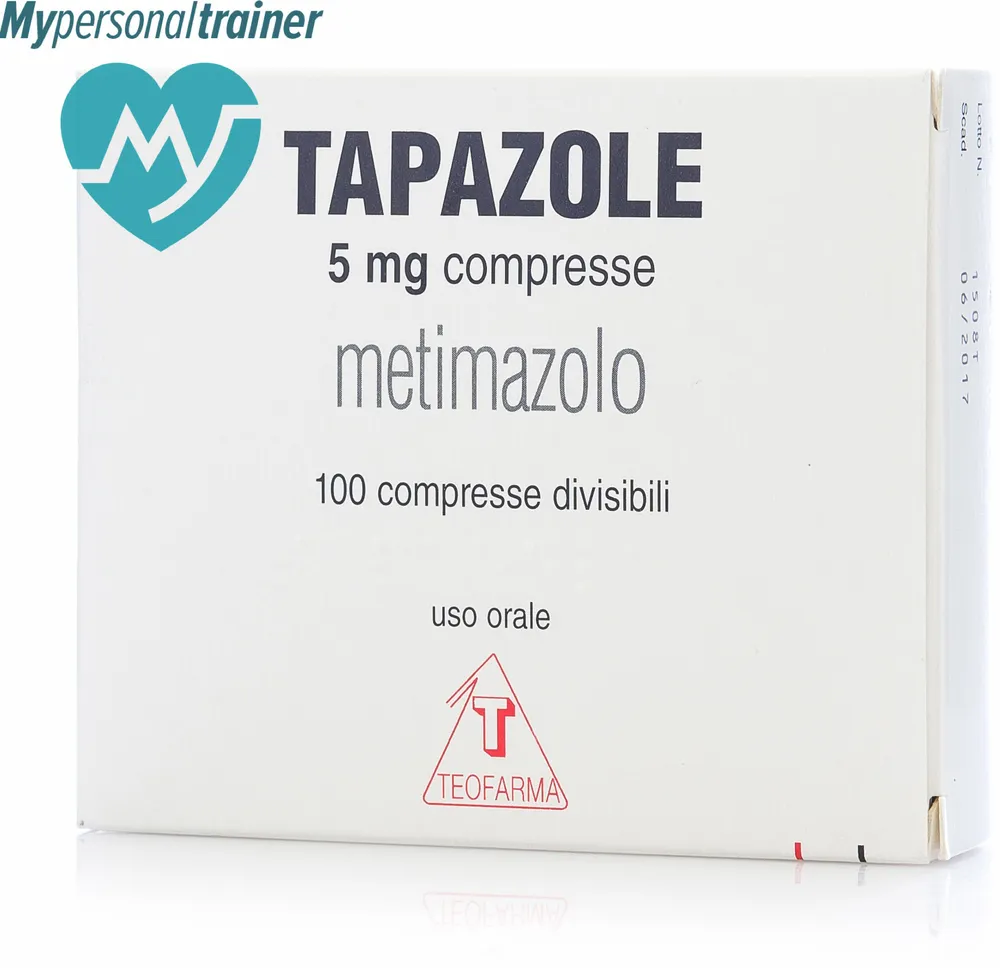
TAPAZOLE
ItalyIt is used to treat hyperthyroidism (increased production of thyroid hormones) and can lead to recovery with long-term therapy. It is also used to prepare the patient for partial removal of the thyroid or radioiodine therapy, or when surgery is not advisable.
Frequently asked questions
How should Tapazole be taken?
The medication should be taken orally, generally in three equal doses distributed every 8 hours. The specific dosage depends on the severity of the hyperthyroidism and must be followed exactly according to the instructions of the doctor or pharmacist.
When should you not take Tapazole?
It must not be taken if you are allergic to methimazole or other antithyroid medicines, if you are breastfeeding, or if you have previously suffered from acute pancreatitis after taking methimazole or carbimazole. It is also necessary to inform the doctor in case of lactose intolerance.
What are the side effects of Tapazole?
Among the very rare side effects are reported bone marrow problems, anemia, very high fever, joint or muscle pain, jaundice (yellow skin), hair loss, nausea, vomiting, and severe skin reactions. Inflammation of the pancreas, kidneys, or lymph nodes may also occur.
What should I do if particular symptoms occur during treatment?
It is necessary to contact a doctor immediately if you experience a sore throat, fever, skin rashes, migraines, general malaise, abdominal pain, or signs of liver problems such as loss of appetite, itching, or pain in the right side.
Are there interactions with other drugs?
You must inform the doctor if you are taking oral anticoagulants (which could become more effective), beta-blockers, digitalis glycosides, or theophylline, as it may be necessary to adjust the dosage of the latter.
Can the drug be used during pregnancy or breastfeeding?
The drug must not be used during breastfeeding. During pregnancy, it can harm the fetus and should only be used if the doctor considers the benefits to outweigh the risks, under strict medical supervision.
Instructions for use
Package leaflet: Information for the patient
Tapazole 5 mg tablets
methimazole
Please read this leaflet carefully before taking this medicine because it contains
important information for you.
- Keep this leaflet. You may need to read it again.
- If you have any questions, ask your doctor or pharmacist.
- This medicine has been prescribed for you only. Do not give it to others, even if their symptoms are the same as yours, because it could be dangerous.
- If you experience any adverse reactions, including those not listed in this leaflet, contact your doctor or pharmacist. See section 4.
Contents of this leaflet:
- What Tapazole is and what it is used for
- What you need to know before taking Tapazole
- How to take Tapazole
- Possible side effects
- How to store Tapazole
- Contents of the pack and other information
1. What Tapazole is and what it is used for
Tapazole contains the active substance methimazole, a compound used to block the production of thyroid hormones (antithyroid agent).
Tapazole is indicated for the treatment of increased production of thyroid hormones (hyperthyroidism), and with long-term therapy it may lead to patient recovery.
Tapazole is also used:
- to prepare the patient for partial surgical removal of the thyroid gland (thyroidectomy);
- to prepare the patient for radioactive iodine therapy;
- when removal of the thyroid gland is contraindicated or not advisable.
2. What you should know before taking Tapazole
DO NOT take Tapazole
- if you are allergic to methimazole or to other antithyroid medicines, or to any of the other ingredients of this medicine (listed in section 6),
- if you are breastfeeding (see section "Pregnancy and breastfeeding"),
- if you have previously had inflammation of the pancreas (acute pancreatitis) following administration of methimazole or carbimazole.
Warnings and precautions
Talk to your doctor or pharmacist before taking Tapazole.
If you are being treated with Tapazole
Your doctor will keep you under close monitoring. Inform your doctor immediately if you experience any symptoms such as:
- sore throat,
- skin disorders (rash),
- fever,
- migraine (a specific type of headache characterized by severe painful attacks affecting one side of the head),
- general malaise. In these cases, your doctor may request laboratory tests to rule out a reduction in a type of white blood cells known as granulocytes (agranulocytosis), and may perform more careful monitoring if you are simultaneously taking medicines that can cause agranulocytosis.
Contact your doctor immediately if you develop fever or abdominal pain, which could be signs of inflammation of the pancreas (acute pancreatitis). It may be necessary to discontinue use of Tapazole.
Also inform your doctor:
- if you have hepatitis,
- if you have skin inflammation with formation of whitish scales (exfoliative dermatitis),
- if you have a reduced number of white blood cells (leukopenia) and platelets (thrombocytopenia),
- if you have a reduction in white blood cells, red blood cells, and platelets (aplastic anemia or pancytopenia),
- if you have had or currently have inflammation of blood vessels (vasculitis). In these cases, your doctor may decide to discontinue treatment with Tapazole.
Tapazole may cause liver problems, even severe ones. Therefore, you must report to your doctor any symptoms suggesting liver damage, such as:
- marked loss of appetite,
- itching,
- pain in the right side of the abdomen, etc. In such cases, your doctor will request tests to assess liver function and may decide to discontinue treatment with Tapazole if your liver is not functioning properly.
Your doctor may periodically request tests to monitor:
- thyroid function, because if levels of thyroid-stimulating hormone (TSH) are elevated, your doctor may reduce the dose of Tapazole;
- blood coagulation function (prothrombin levels), especially before any surgical procedure, because Tapazole may cause decreased prothrombin levels (hypoprothrombinemia);
- hematopoietic function, i.e., your body's ability to produce blood cells.
Tapazole may harm the fetus. Use reliable contraceptive methods starting from the initiation of treatment and throughout its duration if you could become pregnant.
Children and adolescents
Tapazole is not recommended in children under 2 years of age due to lack of safety and efficacy data in this age group.
In early infancy, the medicine should be used only when strictly necessary and under direct medical supervision.
Other medicines and Tapazole
Inform your doctor or pharmacist if you are currently using, have recently used, or might use any other medicines.
Pay particular attention if you are using or might use the following medicines:
- oral anticoagulants (medicines used to thin the blood), because Tapazole may increase blood fluidity;
- beta-blockers (used to treat high blood pressure and heart problems), because their dose may need to be reduced;
- digitalis glycosides (used to treat heart problems), because their dose may need to be reduced;
- theophylline (used to treat breathing problems), because its dose may need to be reduced.
No interaction studies have been conducted in pediatric populations.
Pregnancy and breastfeeding
If you are pregnant, suspect you may be pregnant, plan to become pregnant, or are breastfeeding, consult your doctor or pharmacist before taking this medicine.
Pregnancy
Tapazole may harm the fetus.
Use reliable contraceptive methods from the start of treatment and throughout its duration if you could become pregnant.
If you are pregnant, suspect you are pregnant, or are planning a pregnancy, inform your doctor immediately. Treatment with Tapazole during pregnancy may continue only if the potential benefits outweigh the potential risks to you and the fetus. The medicine will be prescribed only when strictly necessary and under direct medical supervision.
Tapazole crosses the placenta rapidly and may cause the following in the fetus:
- enlargement of the thyroid gland (goiter),
- reduced secretion of thyroid hormones, leading to impaired physical and mental development (cretinism).
Additionally, newborns whose mothers were treated with Tapazole during pregnancy have rarely presented at birth with the following congenital defects:
- failure of skin development, especially of the scalp (aplasia cutis);
- incomplete development of the esophagus (esophageal atresia) with abnormal connection between trachea and esophagus (tracheoesophageal fistula);
- incomplete development of one or both nasal cavities (choanal atresia), accompanied by absent or incomplete development of the nipples.
Your doctor will inform you of the potential risks to the fetus if you take Tapazole during pregnancy or if conception occurs during treatment with this medicine.
Your doctor may switch methimazole to another medicine, such as propylthiouracil, which has not been associated with the above congenital defects in newborns of mothers who took propylthiouracil during pregnancy. However, your doctor will always consider the risk of the fetus developing goiter and hypothyroidism.
If you are taking Tapazole during pregnancy, your doctor may reduce the dose, as thyroid dysfunction may improve as pregnancy progresses. Your doctor may also discontinue Tapazole 2–3 weeks before delivery.
Breastfeeding
Tapazole must not be used during breastfeeding due to passage of the medicine into breast milk.
Driving and using machines
No effects of Tapazole on the ability to drive vehicles or use machinery have been reported.
Tapazole contains monohydrate lactose
If your doctor has diagnosed you with an intolerance to certain sugars, contact him/her before taking this medicine.
3. How to take Tapazole
Take this medicine exactly as directed by your doctor or pharmacist.
If you have any doubts, consult your doctor or pharmacist.
Tapazole is taken by mouth (orally), usually in three equal doses given at 8-hour intervals.
Mild hyperthyroidism
The recommended dose is 15 mg per day.
Moderate hyperthyroidism
The recommended dose is 30–40 mg per day.
Severe hyperthyroidism
The recommended dose is 60 mg per day.
The recommended maintenance dose is 5–15 mg per day.
Use in children and adolescents
Tapazole is not recommended for children aged 2 years or younger.
Children and adolescents (3–17 years)
The initial dose for treatment in children over 3 years of age and adolescents should be calculated based on body weight. Generally, the initial daily dose is 0.5 mg/kg, divided into two or three equal doses.
For maintenance therapy, the daily dose may be reduced according to the patient's response to treatment.
Additional treatment with levothyroxine may be necessary to avoid hypothyroidism. The daily dose must not exceed 40 mg.
The score line on the tablet is intended to facilitate breaking the tablet if you have difficulty swallowing it whole.
If you take more Tapazole than you should
If you accidentally take too much Tapazole, contact your doctor immediately or go to the nearest hospital. For up-to-date information, if you have taken an excessive dose of Tapazole, contact your Regional Poison Control Center.
Signs and symptoms that may occur after an overdose include:
- nausea;
- vomiting;
- stomach ache;
- headache;
- fever;
- joint pain;
- fluid accumulation in tissues (edema).
Within a few hours or days after taking an excessive dose of Tapazole, the following may occur:
- a decrease in the number of white blood cells, red blood cells, and platelets (aplastic anemia);
- a decrease in the number of granulocytes (agranulocytosis). Although the mechanism triggering agranulocytosis is not yet fully understood, this condition is generally associated with doses of methimazole equal to or greater than 40 mg in patients over 40 years of age.
Less frequently, the following may occur:
- inflammation of the liver (hepatitis);
- impaired kidney filtration leading to loss of protein in the urine (nephrotic syndrome);
- skin inflammation with formation of whitish scales (exfoliative dermatitis);
- disorders of the peripheral nervous system (neuropathies);
- stimulation or reduction of central nervous system activity.
If you forget to take Tapazole
Do not take a double dose to make up for the missed dose.
If you stop taking Tapazole
If you have any questions about using this medicine, consult your doctor or pharmacist.
4. Possible side effects
Like all medicines, this medicine can cause side effects, although not everybody gets them.
The following side effects may occur:
Very rare (may affect up to 1 in 10,000 people):
- suppression of bone marrow function (agranulocytosis and thrombocytopenia);
- simultaneous decrease in blood cells such as white blood cells, red blood cells, and platelets (aplastic anemia);
- fever above 40°C (hyperpyrexia);
- joint pain (arthralgia);
- muscle pain (myalgia);
- syndrome with symptoms resembling an autoimmune disease called lupus;
- hepatitis and yellowing of the skin and mucous membranes due to accumulation of a substance called bilirubin (jaundice), which may persist for several weeks after discontinuation of the drug;
- fluid accumulation in tissues (edema);
- decreased levels of prothrombin in the blood (hypoprothrombinemia) with risk of bleeding;
- severe skin reaction affecting the skin and mucous membranes (Stevens-Johnson syndrome);
- enlargement and/or pain of the salivary glands (sialoadenopathy);
- generalized skin inflammation (dermatitis);
- itching, itchy skin rash (urticaria);
- hair loss;
- tingling and numbness sensations (paresthesia);
- headache;
- drowsiness;
- inflammation of cranial or peripheral nerves (neuritis);
- loss of taste (ageusia);
- dizziness;
- upper stomach pain (epigastralgia);
- nausea, vomiting;
- inflammation of blood vessel walls (vasculitis).
Frequency not known (frequency cannot be estimated from the available data):
- suppression of bone marrow function (granulocytopenia);
- autoimmune syndrome directed against insulin, which may cause coma due to low blood sugar levels (hypoglycemic coma);
- inflammation of an arterial wall (periarteritis);
- inflammation of the pancreas (acute pancreatitis);
- enlargement and/or pain of lymph nodes (lymphadenopathy);
- skin discoloration;
- onset of fever associated with drug intake (drug fever);
- kidney inflammation (nephritis).
Paediatric population
The frequency, type, and severity of adverse reactions in children are comparable to those in adults.
Reporting of side effects
If you experience any side effect, including those not listed in this leaflet, talk to your doctor or pharmacist. You can also report side effects directly via the national reporting system at https://www.aifa.gov.it/content/segnalazioni-reazioni-avverse.
By reporting side effects, you can help provide more information on the safety of this medicine.
5. How to store Tapazole
Keep this medicine out of the sight and reach of children.
This medicine does not require any special storage conditions.
Do not use this medicine after the expiry date stated on the pack after "Exp".
The expiry date refers to the last day of that month.
Do not dispose of medicines via wastewater or household waste. Ask your pharmacist how to dispose of medicines you no longer use. This will help protect the environment.
6. Package contents and other information
What Tapazole contains
- The active substance is methimazole. Each tablet contains 5 mg of methimazole.
- The other components are monohydrate lactose, maize starch, magnesium stearate, talc.
Description of the appearance of Tapazole and contents of the pack
Each pack contains 100 5 mg scored tablets in blisters.
Marketing Authorization Holder
Teofarma S.r.l.
Via F.lli Cervi, 8
27010 Valle Salimbene (PV)
Manufacturer
Teofarma S.r.l.
Viale Certosa, 8/A
27100 Pavia
The original data is available in the language of the country of manufacture.
Data source: Italian Medicines Agency (AIFA)
Data last verified: September 21, 2026