SIGMACILLINA
ItalyIt is used in adults and children over 3 years of age for the treatment of syphilis, a venereal infection.
Frequently asked questions
When should you not take SIGMACILLINA?
It must not be administered if you are allergic to Benzathine Benzylpenicillin, other penicillins, cephalosporins, or beta-lactam antibiotics, or if you have infections caused by bacteria that do not respond to this class of antibiotics. Use is prohibited in children under 3 years of age.
How is the drug administered?
The medicinal product must be injected intramuscularly into the upper part of the buttock. In children over 3 years of age and adolescents, the lateral aspect of the thigh is preferred. The dose is determined by the doctor based on the severity of the infection, weight, and kidney function.
What are the side effects of SIGMACILLINA?
Possible side effects include pain at the injection site, skin reactions (redness, hives, swelling), joint pain, fever, weakness, nausea, vomiting, diarrhea, and possible alterations in blood values or laboratory tests. Serious effects that require immediate medical intervention are also reported, such as severe allergic reactions, seizures, or disturbances in consciousness.
Are there interactions with other medicines?
You must inform the doctor if you are taking bacteriostatic antibiotics (such as erythromycin or tetracycline), as they may reduce its efficacy, or probenecid, which may prolong the presence of the drug in the blood.
What should you do in case of overdose?
In case of accidental ingestion of an excessive dose, it is necessary to inform the doctor immediately or go to the nearest hospital.
How should the medicinal product be stored?
It must be stored in a refrigerator at a temperature between 2 °C and 8 °C, in its original packaging to protect it from light.
Instructions for use
Table of contents
- SIGMACILLINA 1,200,000 IU/2.5 ml injectable suspension for intramuscular use
- 1. What SIGMACILLINA is and what it is used for
- 2. What you should know before SIGMACILLINA is administered
- 3. How SIGMACILLINA will be administered
- 4. Possible side effects
- 5. How to store SIGMACILLINA
- 6. Package contents and other information
- Instructions for Use for Syringes
Package leaflet: Information for the patient
SIGMACILLINA 1,200,000 IU/2.5 ml injectable suspension for intramuscular use
Benzylpenicillin Benzathine
Please read this leaflet carefully before this medicine is administered, as it contains
important information for you.
- Keep this leaflet. You may need to read it again.
- If you have any questions, ask your doctor, pharmacist, or nurse.
- This medicine has been prescribed only for you/your child. Do not give it to others, even if their symptoms are the same as yours, as it could be harmful.
- If you experience any side effects, including those not listed in this leaflet, contact your doctor or pharmacist. See section 4.
Contents of this leaflet:
- What SIGMACILLINA is and what it is used for
- What you need to know before SIGMACILLINA is administered
- How SIGMACILLINA will be administered
- Possible side effects
- How to store SIGMACILLINA
- Contents of the pack and other information
1. What SIGMACILLINA is and what it is used for
Sigmacillina contains the active substance Benzylpenicillin Benzathine, an antibiotic that causes the death of bacteria responsible for the infection.
Sigmacillina is used in adults and children over 3 years of age:
- for the treatment of a specific type of sexually transmitted infection (mainly spread through sexual contact), called syphilis (lues)
Consult your doctor if you do not feel better or if you feel worse.
2. What you should know before SIGMACILLINA is administered
SIGMACILLINA must not be administered
- if you/your child are allergic to Benzathine Benzylpenicillin or to any of the other ingredients of this medicine (listed in section 6);
- if you/your child are allergic to penicillins, cephalosporins, or other beta-lactam antibiotics (the same class of antibiotics to which Sigmacillina belongs);
- if you/your child have infections caused by bacteria that are unresponsive to the class of antibiotics to which Sigmacillina belongs (penicillins);
- if the child is under 3 years of age (see Warnings and precautions).
This medicine will not be administered if you/your child have any of the symptoms listed above. If you are unsure, ask your doctor, pharmacist, or nurse before starting treatment with Sigmacillina.
Warnings and precautions
Talk to your doctor, pharmacist, or nurse before using Sigmacillina.
In particular, inform your doctor if you/your child have kidney problems or any other conditions affecting kidney function.
Take special care when administering the injection of Sigmacillina. Injecting near nerves or blood vessels is dangerous, as it may cause damage to nerves or blood vessels.
Children and adolescents
Sigmacillina must not be administered to children under 3 years of age.
In children over 3 years of age and adolescents, the preferred injection site is the outer side of the thigh.
Other medicines and SIGMACILLINA
Inform your doctor or pharmacist if you/your child are taking, have recently taken, or might take any other medicines.
Consult your doctor if you/your child are taking:
- antibiotics that act by inhibiting bacterial growth (bacteriostatic agents), such as erythromycin or tetracycline, as they may reduce the effects of penicillins (the same class of antibiotics to which Sigmacillina belongs), which act by killing the bacteria responsible for the infection;
- probenecid, a medicine used to treat gout, as it may prolong the presence of Sigmacillina in the blood.
Pregnancy and breastfeeding
If you are pregnant, think you might be pregnant, planning a pregnancy, or breastfeeding, consult your doctor or pharmacist before this medicine is administered.
Pregnancy
Sigmacillina may be used during pregnancy.
Breastfeeding
If you are breastfeeding, use Sigmacillina only when clearly needed and under direct medical supervision.
Driving and using machines
Sigmacillina may cause adverse effects, and symptoms may impair your ability to drive or operate machinery.
Do not drive or use machines unless you feel fully alert and well.
SIGMACILLINA contains propyl-parahydroxybenzoate and methyl-parahydroxybenzoate
Parahydroxybenzoates may cause allergic reactions (including delayed reactions) and, rarely, bronchospasm.
SIGMACILLINA contains sodium
This medicine contains less than 1 mmol (23 mg) of sodium per dose, i.e. it is practically 'sodium-free'.
3. How SIGMACILLINA will be administered
Use this medicine exactly as directed by your doctor or pharmacist. If you have any doubts,
consult your doctor or pharmacist.
It is recommended that Sigmacillina be administered by a doctor or experienced nurse.
The dose will be determined by the doctor according to the severity of your infection, kidney function,
and your general condition.
The recommended dose is:
- primary, secondary, and latent syphilis: 2,400,000 IU as a single dose
- tertiary syphilis and neurosyphilis: 2,400,000 IU every 7 days for three doses (7,200,000 IU total)
Sigmacillina must be injected into the upper quadrant of the buttock. When repeated doses are required,
the injection site should be changed each time.
Use in children over 3 years of age and adolescents
The doctor will determine the recommended dose based on the child's age, weight, severity of infection,
and kidney function.
In children and adolescents, the preferred injection site is the lateral aspect of the thigh.
If more SIGMACILLINA is administered than intended
It is highly unlikely that you will be given a dose of Sigmacillina higher than intended.
In case of accidental overdose, inform your doctor immediately or go to the nearest hospital.
The doctor will initiate appropriate treatment and supportive measures.
If you stop treatment with SIGMACILLINA
If you have any doubts about using this medicine, consult your doctor or pharmacist.
4. Possible side effects
Like all medicines, this medicine can cause side effects, although not everyone gets them.
If, during administration of Sigmacillina, you experience any of the following serious side effects, which may lead to death, stop treatment immediately and contact your doctor immediately:
- severe allergic reactions, including anaphylactic shock
- diseases characterised by altered brain tissue (metabolic encephalopathies) that may cause disturbances in consciousness
- abnormal movements
- seizures (violent, involuntary contractions of certain muscles)
The following are side effects associated with benzathine benzylpenicillin.
There are insufficient data available to determine the frequency of the individual side effects listed below.
Pain at the injection site
Effects on the skin and underlying tissue:
- appearance of red skin patches with blisters (maculopapular skin rashes)
- inflammation of the skin with loss of the superficial layer (exfoliative dermatitis)
- appearance of raised areas of varying shape and size, accompanied by itching (urticaria)
- swelling, sometimes rapid, of the skin and underlying tissue (oedema and Quincke's oedema)
Effects on the joints:
- joint pain (arthralgia)
Effects on the whole body and at the site of medicine administration:
- increased body temperature (hyperthermia)
- extreme physical weakness (prostration)
Renal effects:
- inflammation of the kidneys (acute interstitial nephritis)
Effects on the immune system (the body's defence system):
- a reaction called "serum sickness" with chills
- in the treatment of syphilis, presence of toxic substances in the body following the death of bacteria causing the infection (Jarisch-Herxheimer reaction)
Effects on the mouth, stomach and intestine:
- inflammation of the tongue (glossitis)
- inflammation of the mucous membrane lining the oral cavity (stomatitis)
- nausea
- vomiting
- diarrhoea
Effects on the blood:
- reduced levels of haemoglobin, the protein that carries oxygen in the blood (anaemia)
- reduced number of platelets in the blood (thrombocytopenia)
- reduced number of white blood cells in the blood (leucopenia)
- increased blood concentration of eosinophils, a type of white blood cell (eosinophilia)
Effects on laboratory tests:
- increased transaminases (liver enzymes)
Reporting of side effects
If you experience any side effect, including those not listed in this leaflet, talk to your doctor or pharmacist. You can also report side effects directly via the national reporting system at www.aifa.gov.it/content/segnalazioni-reazioni-avverse.
By reporting side effects, you can help provide more information on the safety of this medicine.
5. How to store SIGMACILLINA
Store in the refrigerator (2 °C – 8 °C).
Keep in the original packaging to protect the medicine from light.
Keep this medicine out of the sight and reach of children.
Do not use this medicine after the expiry date stated on the carton after EXP. The expiry date refers to the last day of that month.
Do not dispose of medicines via wastewater or household waste. Ask your pharmacist how to dispose of medicines no longer required. This will help protect the environment.
6. Package contents and other information
What Sigmacillina contains
- The active substance contained in a 2.5 ml pre-filled syringe is benzathine benzylpenicillin 1,200,000 IU.
- The other components contained in a 2.5 ml pre-filled syringe are: lecithin, povidone, sodium citrate, citric acid, sodium carmellose (see section “SIGMACILLINA contains sodium”), propyl-parahydroxybenzoate (E216), methyl-parahydroxybenzoate (E218) (see section “SIGMACILLINA contains propyl-parahydroxybenzoate and methyl-parahydroxybenzoate”), water for injections.
Description of the appearance of Sigmacillina and package contents
Sigmacillina 1,200,000 IU/2.5 ml injectable suspension for intramuscular use is supplied as a pre-filled syringe of 2.5 ml and is available in the following pack sizes:
- Box containing 1 pre-filled syringe of 2.5 ml with 4 sterile needles (18G and 21G).
- Box containing 2 pre-filled syringes of 2.5 ml with 8 sterile needles (18G and 21G).
- Box containing 6 pre-filled syringes of 2.5 ml with 24 sterile needles (18G and 21G). Not all pack sizes may be marketed.
Marketing Authorization Holder
Biopharma S.r.l. - Via Paolo Mercuri, 8 - 00193 Rome - Italy
Distribution Licensee
ALFASIGMA S.P.A.
Via Ragazzi del '99 n. 5
40133 Bologna
Manufacturer
Biopharma S.r.l. - Via delle Gerbere, 22/30 - 00134 Santa Palomba (Rome)
Instructions for Use for Syringes
Injectable suspension for intramuscular use in pre-filled syringes: the suspension is ready to use.
Due to the high concentration of suspended material, the product may cause needle blockage and
difficulties during administration. The package contains two types of needles: a green needle (21 G) and a
pink needle (18 G). The smaller gauge needle (green) is suitable for administration; however, to minimize
the aforementioned difficulties, a larger needle (18 G) is provided as an alternative.
Following a few simple precautions can facilitate administration:
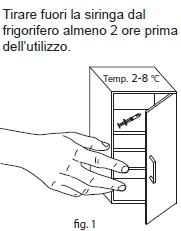
The product must be removed from the refrigerator at least 2 hours before administration (see
Fig. 1).
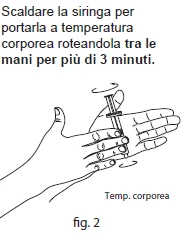
The product must be brought to a temperature suitable for administration, i.e., close to body temperature. Ensure that this temperature is also reached by the needle provided in the package (simply roll the syringe between both hands for more than 3 minutes and hold the needle in its pouch in the hand) (see Fig. 2).
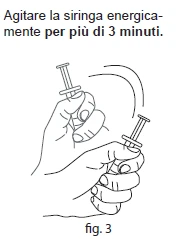
Shake vigorously for more than 3 minutes before use (see Fig. 3). When the product is ready for use, the suspension inside the syringe appears uniform and fluid.
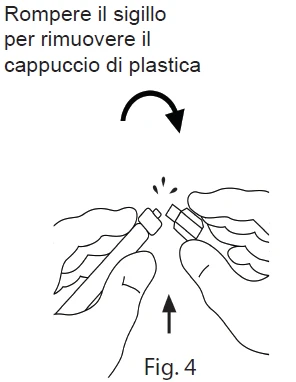
To attach the needle, it is necessary to remove the plastic cap of the syringe by breaking the seal as illustrated below (see Fig. 4).
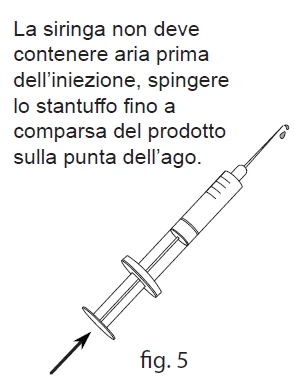
The syringe must not contain air before injection. Attach either the green 21G needle or the pink 18G needle, then push the plunger until the product appears at the tip of the needle (see Fig. 5). The product is naturally white in color and creamy in consistency.
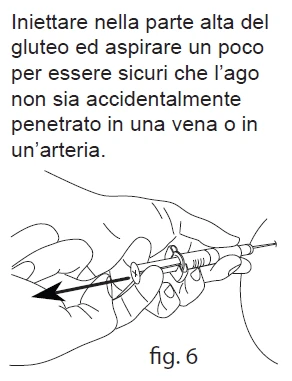
Given the microcrystalline nature of Benzathine Benzylpenicillin, it is absolutely essential—and critical to prevent serious embolic incidents (which have occurred particularly in children)—that the injection be administered only after ensuring that the needle has not accidentally entered a vein or artery, by performing the standard aspiration procedure.
Inject into the upper quadrant of the gluteal muscle (see Fig. 6).
The pressure applied by the finger on the syringe plunger must be greater than that traditionally required for non-suspension products.
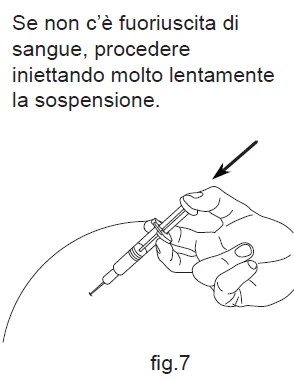
Administration must be performed slowly, steadily, and without interruption (see Fig. 7). If during injection resistance is felt when pressing the plunger (a possible sign of needle blockage due to crystalline agglomerate formation) or if the patient experiences acute local pain, immediately stop the injection, remove the needle, expel a drop of the product from the syringe without a needle, attach a new needle, and administer a new injection. The choice of needle type to replace may follow the criterion indicated above. For this purpose, double the number of both needle types (18G and 21G) are provided.
Administration is recommended to be performed by experienced medical or nursing personnel.
If not all the contents of the syringe are used, the remaining portion must be discarded and not reused.
When repeated doses are required, the injection site must be changed each time.
 |  |  |
 |  |  |
 | ||
The original data is available in the language of the country of manufacture.
Data source: Italian Medicines Agency (AIFA)
Data last verified: September 21, 2026