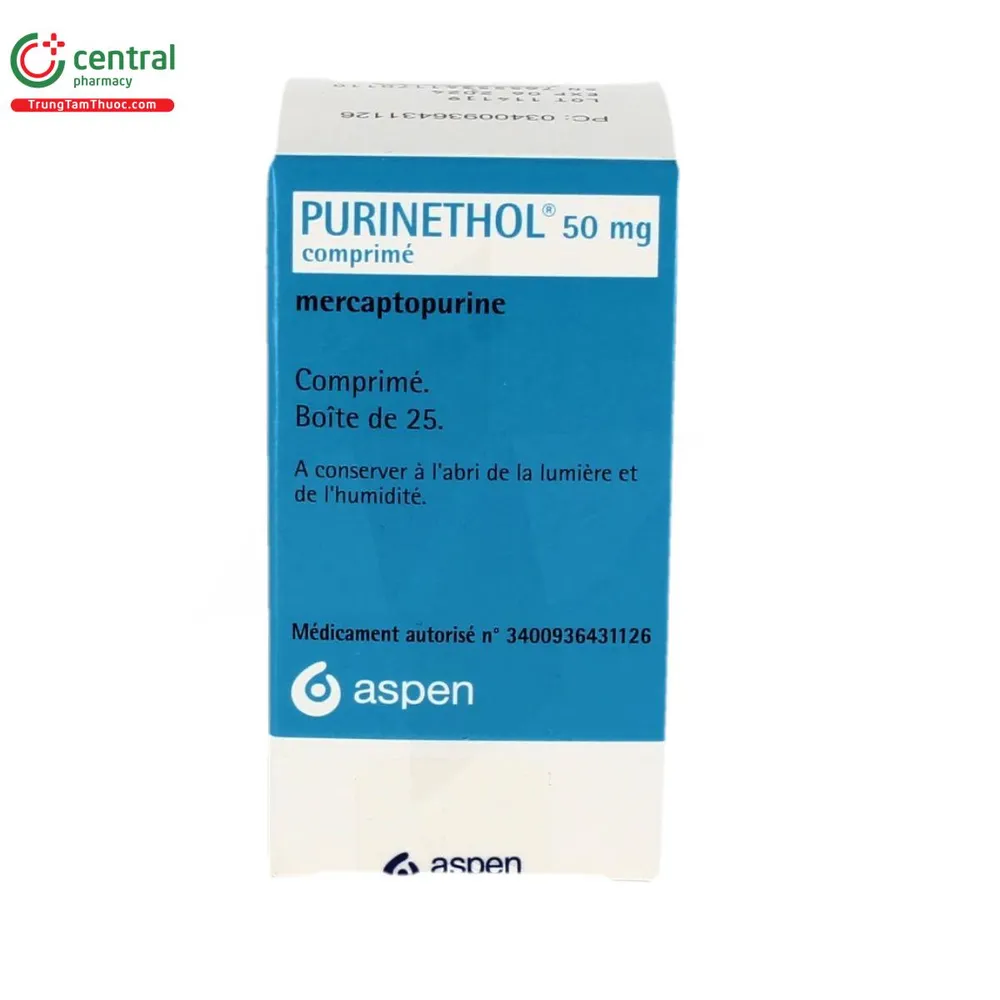
PURINETHOL
ItalyIt is used for the treatment of certain types of blood cancers, such as acute lymphoblastic leukemia and acute promyelocytic leukemia/acute myeloid leukemia, in adults, adolescents, and children.
Frequently asked questions
How should I take PURINETHOL?
Tablets should be swallowed whole, without being broken or crushed. They can be taken with or without food, but it is important to maintain the same method every day. The medicine must be taken at least one hour before or two hours after consuming milk or dairy products. It is important to take it in the evening hours to enhance its efficacy.
Are there any special dietary precautions?
Yes, it is necessary to take the drug at least one hour before or two hours after ingesting milk or dairy products.
When should I not take PURINETHOL?
You must not take the medicine if you are allergic to the active ingredient or to other components, or if you have planned a yellow fever vaccination, as it could be fatal.
What are the most common side effects of PURINETHOL?
Very common effects include a reduction in the number of white blood cells and platelets. Common effects reported include nausea, vomiting, liver damage, anemia (decrease in red blood cells), loss of appetite, and inflammation of the pancreas in patients with inflammatory bowel disease.
Which symptoms require immediate medical attention?
You must contact a doctor or go to the hospital immediately in case of allergic reactions (rash, high fever, facial swelling), signs of infection, unexpected bruising or bleeding, yellowing of the skin or eyes (jaundice), or sudden malaise with abdominal pain, nausea, and vomiting.
Can I expose myself to the sun while taking this medication?
No, taking it increases skin sensitivity to sunlight and UV rays. It is necessary to limit exposure, wear covering clothing, and use a sunscreen with a high protection factor.
What do I need to know regarding pregnancy and fertility?
The drug can damage sperm or eggs. Men and women must use effective contraceptive methods during treatment and for at least three months after the last dose. Women who are pregnant or breastfeeding must consult a doctor and must not handle the medicine.
Instructions for use
Package leaflet: Information for the user
PURINETHOL 50 mg tablets
mercaptopurine monohydrate
Read all of this leaflet carefully before taking this medicine because it contains important information for you.
- Keep this leaflet. You may need to read it again.
- If you have any questions, ask your doctor or pharmacist.
- This medicine has been prescribed for you only. Do not give it to other people, even if their symptoms are the same as yours, as it could be harmful.
- If you experience any side effect, including those not listed in this leaflet, contact your doctor or pharmacist. See section 4.
Contents of this leaflet:
- What PURINETHOL is and what it is used for
- What you need to know before taking PURINETHOL
- How to take PURINETHOL
- Possible side effects
- How to store PURINETHOL
- Contents of the pack and other information
1. What PURINETHOL is and what it is used for
PURINETHOL contains the active substance mercaptopurine monohydrate. Mercaptopurine monohydrate
belongs to a group of medicines called chemotherapeutic agents (also known as cytotoxic, meaning toxic
to cells).
PURINETHOL is used in the treatment of certain types of blood cancers (acute lymphoblastic leukaemia and acute promyelocytic leukaemia/acute myeloid leukaemia) in adults, adolescents, and children.
These are rapidly progressing diseases characterized by an excessive increase in the number of new white blood cells. These new white blood cells are immature (not fully developed) and are unable to grow and function properly. Therefore, they cannot fight infections effectively and may cause bleeding.
Please consult your doctor if you would like more information about this disease.
2. What you need to know before taking PURINETHOL
Do not take PURINETHOL
- If you are allergic to the active substance or to any of the other ingredients of this medicine (see section 6).
- Do not get vaccinated against yellow fever while taking PURINETHOL, as it could be fatal.
Warnings and precautions
Talk to your doctor, pharmacist, or nurse before taking PURINETHOL if:
- you have been vaccinated against yellow fever or have recently been vaccinated, or are planning to be vaccinated (vaccine).
- you are taking PURINETHOL, you must avoid vaccines containing live organisms (e.g., influenza vaccine, measles vaccine, tuberculosis vaccine, etc.) until your doctor tells you it is safe to be vaccinated. This is because some vaccines may cause an infection if administered while you are taking PURINETHOL.
- you have kidney or liver problems, as your doctor will need to monitor the function of these organs.
- you have a condition in which your body produces insufficient levels of the enzyme TPMT (thiopurine methyltransferase), as your doctor may need to adjust your dose.
- you are planning to have a child. This applies to both men and women. PURINETHOL may damage sperm or eggs (see "Pregnancy, breastfeeding and fertility" below).
- you are allergic to a medicine called azathioprine (also used in cancer treatment).
- you have had or have not had chickenpox, shingles, or hepatitis B (a liver disease caused by a virus).
- you have a genetic disorder called Lesch-Nyhan syndrome.
If you are receiving immunosuppressive therapy, taking PURINETHOL may increase the risk of developing:
- tumors, including skin cancer. Therefore, while taking PURINETHOL, you should avoid excessive exposure to sunlight, wear protective clothing, and use sunscreen with a high protection factor.
- lymphoproliferative disorders.
- treatment with PURINETHOL increases the risk of developing a type of tumor called lymphoproliferative disorder. A treatment regimen based on multiple immunosuppressants (including thiopurines) can lead to death.
- the simultaneous administration of a combination of multiple immunosuppressants increases the risk of developing disorders of the lymphatic system caused by a viral infection (Epstein-Barr virus (EBV)-associated lymphoproliferative disorders).
Taking PURINETHOL may increase the risk of:
- developing a serious condition called Macrophage Activation Syndrome (excessive activation of white blood cells associated with inflammation), which usually occurs in people with certain types of arthritis.
- Some patients with inflammatory bowel disease who received mercaptopurine monohydrate have developed a rare and aggressive form of cancer called hepatosplenic T-cell lymphoma (see section 4, Possible side effects). The use of PURINETHOL for the treatment of inflammatory bowel disease (IBD) is an unauthorised indication.
Blood tests
Treatment with PURINETHOL affects the bone marrow. This means that there may be a reduction in the number of white blood cells, platelets, and (less frequently) red blood cells. Your doctor will perform blood tests to monitor the levels of these cells daily at the beginning of therapy (induction phase), and at least weekly during maintenance therapy. If treatment is stopped promptly, your blood cell counts will return to normal levels.
Liver function
PURINETHOL is toxic to the liver. Therefore, during treatment with PURINETHOL, your doctor will perform liver function tests weekly. If you already have liver disease or are taking other medicines that may affect the liver, your doctor may perform these tests more frequently. If you notice yellowing of the whites of your eyes or your skin, inform your doctor immediately, as you may need to stop treatment immediately.
Vitamin B3 deficiency (pellagra)
Inform your doctor immediately if you experience diarrhea, pigmented skin rash (dermatitis), or deterioration in memory, reasoning, and thinking skills (dementia), as these symptoms may indicate vitamin B3 deficiency. Your doctor will prescribe vitamin supplements (niacin/nicotinamide) to improve your condition.
Infections
During treatment with PURINETHOL, the risk of viral, fungal, and bacterial infections is increased, and infections may be more severe. See also section 4.
Before starting treatment, tell your doctor if you have had chickenpox, shingles, or hepatitis B (a liver disease caused by a virus). If you think you have an infection, speak to your doctor immediately.
Sunlight and ultraviolet (UV) radiation
While taking PURINETHOL, your skin's sensitivity to sunlight and UV radiation increases. Therefore, you should limit exposure to sunlight and UV radiation, wear protective clothing, and use sunscreen with a high protection factor.
NUDT15 gene mutation
If you have an inherited mutation in the NUDT15 gene (a gene involved in the metabolism of PURINETHOL in the body), you are at higher risk of infections and hair loss, and in this case, your doctor may prescribe a lower dose.
Children and adolescents
Low blood sugar levels (excessive sweating, nausea, dizziness, confusion, etc.) have occasionally been observed in children, particularly in children under six years of age or with low body mass index. Talk to your child’s paediatrician if this occurs.
If you are unsure whether any of the above applies to you, consult your doctor or pharmacist before taking PURINETHOL.
Other medicines and PURINETHOL
Tell your doctor or pharmacist if you are taking, have recently taken, or might take any other medicines.
In particular, inform your doctor or pharmacist if you are taking any of the following medicines:
- ribavirin (used to treat viral infections)
- other cytotoxic medicines (chemotherapy – used to treat cancer)
- allopurinol, thiopurinol, oxipurinol, and febuxostat (used to treat gout)
- olsalazine or mesalazine (used to treat Crohn’s disease and an intestinal condition called ulcerative colitis)
- sulfasalazine (used to treat rheumatoid arthritis or ulcerative colitis)
- methotrexate (used to treat cancer, rheumatoid arthritis, or skin conditions (severe psoriasis))
- infliximab (used to treat certain intestinal diseases (Crohn’s disease and ulcerative colitis), rheumatoid arthritis, ankylosing spondylitis, or skin conditions (severe psoriasis))
- warfarin or acenocoumarol (used to thin the blood)
- antiepileptic medicines such as phenytoin, carbamazepine. Blood levels of antiepileptic medicines may need to be monitored and doses adjusted accordingly.
Vaccination during treatment with PURINETHOL
You must inform your doctor or nurse before receiving any vaccination (vaccine). If you are taking PURINETHOL, vaccination with live vaccines (such as those against polio, measles, mumps, and rubella) is not recommended without medical advice, as these vaccines may cause an infection if administered during treatment with PURINETHOL.
PURINETHOL with food and drink
You may take PURINETHOL with or without food; however, you should maintain the same method of administration every day. You should take this medicine at least one hour before or two hours after consuming milk or milk products.
Pregnancy, breastfeeding and fertility
Do not take PURINETHOL if you are planning to have a child without first consulting your doctor. This applies to both men and women. PURINETHOL may damage sperm or eggs. An effective contraceptive method should be used to prevent pregnancy while either partner is taking PURINETHOL. Men and women should continue using effective contraception for at least three months after the last dose.
If you are already pregnant, consult your doctor before taking PURINETHOL. PURINETHOL should not be handled by pregnant women, breastfeeding women, or women planning a pregnancy.
Do not breastfeed while taking PURINETHOL. Consult your doctor, pharmacist, or midwife.
If you are pregnant, suspect you may be pregnant, plan to become pregnant, or are breastfeeding, consult your doctor or pharmacist before taking this medicine.
Taking PURINETHOL during pregnancy may cause severe and excessive itching without skin rash. Nausea and loss of appetite may also occur at the same time, which could indicate a condition called intrahepatic cholestasis of pregnancy (a liver disorder during pregnancy). Contact your doctor immediately, as this condition may harm the unborn child.
Driving and using machines
No effects of PURINETHOL on the ability to drive or use machines are expected; however, no studies have been conducted to confirm this.
PURINETHOL tablets contain lactose
If you have been diagnosed by your doctor with an intolerance to certain sugars, contact your doctor before taking this medicine.
3. How to take PURINETHOL
Take this medicine exactly as directed by a specialist experienced in the treatment of blood cancers.
- While taking PURINETHOL, your doctor will regularly perform blood tests to monitor the number and types of blood cells and to ensure your liver is functioning properly.
- Your doctor may also request blood and urine tests to monitor kidney function and measure levels of uric acid. Uric acid is a natural substance produced by the body, and its levels may increase during treatment with PURINETHOL. High levels of uric acid can damage the kidneys.
- From time to time, your doctor may adjust your dose of PURINETHOL based on the results of these tests.
Always take this medicine exactly as prescribed by your doctor or pharmacist.
If you have any doubts, consult your doctor or pharmacist. It is important to take the medicine at the correct times.
The label on the packaging will indicate how many tablets to take and how often. If the label does not provide this information or if you have any doubts, consult your doctor, nurse, or pharmacist.
The recommended dose for adults and children is 2.5 mg per kilogram of body weight per day (or alternatively 50 to 75 mg per m² of body surface area per day).
Your prescribed dose of PURINETHOL will be calculated and adjusted by your doctor based on your body weight, test results, concomitant use of other chemotherapeutic medicines, and kidney and liver function.
Swallow the tablet whole. Tablets must not be broken or crushed. Individuals who come into contact with broken or crushed tablets should wash their hands immediately.
PURINETHOL with food and drink
You may take PURINETHOL with or without food; however, you should maintain the same administration method every day. You must take this medicine at least one hour before or two hours after consuming milk or milk products.
It is important to take PURINETHOL in the evening to enhance its effectiveness.
If you take more PURINETHOL than you should
If you take more PURINETHOL than prescribed, you may feel unwell, vomit, or have diarrhoea. Inform your doctor immediately or go directly to hospital.
If you forget to take PURINETHOL
Inform your doctor. Do not take a double dose to make up for a missed tablet.
If you stop taking PURINETHOL
Do not stop taking this medicine unless instructed by your doctor, as this may cause your condition to relapse.
If you have any questions about the use of this medicine, consult your doctor, pharmacist, or nurse.
4. Possible side effects
Like all medicines, this medicine can cause side effects, although not everybody gets them.
If you notice any of the following side effects, tell your specialist doctor or go to hospital
immediately:
Allergic reaction, the signs of which may include:
o skin rashes
o high fever
o joint pain
o facial swelling
o skin nodules (erythema nodosum) (frequency unknown).
Any sign of fever or infection (inflamed throat/mouth or urinary problems)
Any unexpected bruising or bleeding, as this could mean that your body is not producing enough of a particular type of blood cells
Any sudden feeling of illness (even with normal temperature) accompanied by abdominal pain and nausea/vomiting, as this could be a sign of inflammation of the pancreas.
- Any yellowing of the whites of the eyes or skin (jaundice).
Contact your doctor if you experience any of the following side effects, listed by frequency, which may also occur with this medicine:
Very common (affects more than 1 in 10 people)
Decrease in white blood cells and platelets (may be detected in blood tests)
Common (affects less than 1 in 10 people)
nausea or vomiting
liver damage (which may be detected in blood tests)
decrease in red blood cells, which may cause tiredness, weakness or shortness of breath (called anaemia)
loss of appetite
inflammation of the pancreas (pancreatitis) in patients with inflammatory bowel disease
Uncommon (affects less than 1 in 100 people)
inflammation of the pancreas (pancreatitis)
joint pain
skin rashes
fever
permanent liver damage (hepatic necrosis)
bacterial and viral infections, infections associated with neutropenia
Rare (affects less than 1 in 1,000 people)
hair loss
mouth ulcers
in men: temporary decrease in sperm count
facial swelling due to allergic reaction
various types of tumours, including blood, lymph node and skin tumours
inflammation of the pancreas (pancreatitis) in patients with leukaemia (a blood cancer)
Very rare (affects less than 1 in 10,000 people)
a different type of leukaemia than the one being treated
intestinal ulcers; symptoms may include abdominal pain and bleeding
Not known (frequency cannot be estimated from the available data)
a rare type of cancer (hepatosplenic T-cell lymphoma) in patients with a condition called Inflammatory Bowel Disease (see section 2, Warnings and precautions)
increased sensitivity to sunlight and UV rays causing skin reactions
decrease in blood sugar levels
burning or tingling sensation in the mouth or lips (mucosal inflammation, stomatitis)
cracked or swollen lips (cheilitis)
vitamin B3 deficiency (pellagra) associated with localized pigmented skin rash, diarrhoea, or decreased memory, reasoning, or other thinking abilities
decrease in clotting factors.
Additional side effects in children
Low blood sugar levels (excessive sweating, nausea, dizziness, confusion, etc.) have been reported in some children receiving PURINETHOL, the frequency of which is unknown.
However, most of these children were under six years of age and had low body weight.
Reporting of side effects
If you get any side effects, including any not listed in this leaflet, tell your doctor, pharmacist or nurse.
You can also report side effects directly via the national reporting system at
https://www.aifa.gov.it/content/segnalazioni-reazioni-avverse .
By reporting side effects, you can help provide more information on the safety of this medicine.
5. How to store PURINETHOL
Keep this medicine out of the sight and reach of children.
Do not use this medicine after the expiry date stated on the label of the bottle and on the
box after Exp. This is printed with the month and year, and refers to the last day of that month.
Do not store above 25°C. Store in the original bottle and in the outer box to
protect the medicine from light and moisture. Keep the bottle tightly closed to protect the
medicine from moisture.
If your doctor tells you to stop taking the tablets, it is important to return any
remaining tablets to the pharmacist, who will dispose of them according to the guidelines for the disposal of
hazardous substances. Keep the tablets only if your doctor tells you to do so.
6. Pack contents and other information
What PURINETHOL contains
- The active substance is mercaptopurine monohydrate. Each tablet contains 50 mg of mercaptopurine monohydrate.
- The other components are: lactose monohydrate, maize starch, modified maize starch, stearic acid, magnesium stearate.
Description of the appearance of PURINETHOL and pack contents
Pale yellow, round, biconvex tablets with a score line on one side. The tablets are marked with "PT" above and "50" below the score line and are smooth on the other side.
PURINETHOL is available in bottles containing 25 tablets.
Marketing Authorization Holder
Aspen Pharma Trading Limited
3016 Lake Drive,
Citywest Business Campus,
Dublin 24, Ireland
Tel: +39 0687 502 429
Manufacturer
Excella GmbH & Co. KG, Nürnberger Strasse 12, 90537 Feucht, Germany
Aspen Bad Oldesloe GmbH, Industriestrasse 32-36, 23843 Bad Oldesloe, Germany
The original data is available in the language of the country of manufacture.
Data source: Italian Medicines Agency (AIFA)
Data last verified: September 21, 2026