PULMOCIS
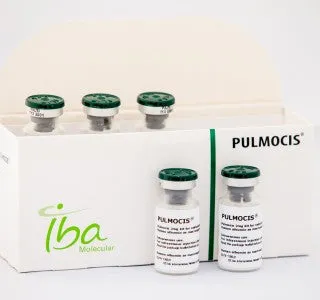
ItalyIt is a radiopharmaceutical used for diagnostic purposes via lung scans, which provide information on the structure of the lungs and blood flow through the lung tissue. It can also be used to examine blood circulation in the veins.
Frequently asked questions
When should you not take Pulmocis?
It must not be used if you are allergic to human serum albumin or any of its components, or if you suffer from severe pulmonary hypertension.
How is the drug administered?
It is administered via a single intravenous injection by specialized personnel. The exact amount is determined by the physician based on individual needs, with a typical adult dosage ranging between 40 and 200 MBq.
What are the side effects of Pulmocis?
Allergic reactions such as urticaria, chills, rigidity, convulsions, fever, nausea, facial flushing, sweating, or changes in breathing, pulse, and blood pressure may occur. Local reactions at the injection site (redness, swelling, and itching) may also occur. Severe allergic reactions, including shock, have been reported.
What should I do if I am pregnant or breastfeeding?
It is necessary to inform the specialist before administration. In case of pregnancy, the physician will only administer it if the benefit outweighs the risk. If you are breastfeeding, the physician may advise interrupting breastfeeding for approximately 12 hours, the time required for radioactivity to be eliminated from the body; in this case, the produced milk must be discarded.
Are there any precautions to take after the injection?
For the first 12 hours after administration, it is necessary to avoid close contact with young children and pregnant women. It is also important to drink plenty of water and urinate frequently to help the body eliminate traces of radioactivity more quickly.
Can there be interactions with other medicines?
Yes, some drugs may interfere with the interpretation of the images. It is important to inform the physician if you are taking blood clotting medications (heparin), anticancer drugs, medications for asthma or COPD (bronchodilators), certain antibiotics, headache medications (such as methysergide), electrolyte supplements (magnesium sulfate), or heroin.
Instructions for use
Table of contents
- Pulmocis 2 mg kit for radiopharmaceutical preparation
- 1. What Pulmocis is and what it is used for
- 2. What you need to know before you are given Pulmocis
- 3. How Pulmocis is used
- 4. Possible side effects
- 5. How Pulmocis is stored
- 6. Package contents and other information
- The following information is intended for healthcare professionals only:
Package leaflet: Information for the patient
Pulmocis 2 mg kit for radiopharmaceutical preparation
Human serum albumin macroaggregates
Please read this leaflet carefully before you are given this medicine because
it contains important information for you.
- Keep this leaflet. You may need to read it again.
- If you have any questions, consult the nuclear medicine specialist supervising the procedure.
- If you experience any side effects, including those not listed in this leaflet, contact the nuclear medicine physician. See section 4.
Contents of this leaflet:
- What Pulmocis is and what it is used for
- What you need to know before you are given Pulmocis
- How Pulmocis is used
- Possible side effects
- How Pulmocis is stored
- Contents of the pack and other information
1. What Pulmocis is and what it is used for
Pulmocis contains the active substance human albumin microspheres, which is a natural protein
derived from human blood.
This medicine is a radiopharmaceutical used solely for diagnostic purposes.
Pulmocis must be radiolabelled with 'technetium-99m', and the resulting product is used for scintigraphy in adults and children.
When injected, the product is temporarily taken up by certain organs. Since the product contains a small amount of radioactivity, it can be visualized from outside the body using special cameras, and an image (called a scan) can be captured. This scan shows the distribution of radioactivity within the organ and provides information on how the organ is functioning.
Pulmocis is used for lung scans. These scans provide information on the structure of the lungs and on blood flow through lung tissue.
Pulmocis may also be used to examine blood circulation in the veins.
The use of Pulmocis involves exposure to small amounts of radioactivity. Your doctor and the nuclear medicine specialist have assessed that the clinical benefit you will receive from the radiopharmaceutical examination will outweigh the risk due to radiation exposure.
2. What you need to know before you are given Pulmocis
Pulmocis must not be used
- if you are allergic to human serum albumin or to any of the other ingredients of this medicine (listed in section 6).
- if you suffer from severe pulmonary hypertension (unusually high pressure in the lung arteries). If in doubt, it is important to consult your doctor.
Warnings and precautions
You must inform the nuclear medicine physician:
- if you have abnormally high pressure in the pulmonary arteries (severe pulmonary hypertension), respiratory failure, or if you are aware of having a heart abnormality known as right-to-left cardiac shunt.
- if you are pregnant or think you might be pregnant.
- if you are breastfeeding.
- if you suffer from liver or kidney disease. The nuclear medicine physician will advise you whether special precautions are needed in such cases. Speak to the nuclear medicine physician if you have any questions.
Before administration of Pulmocis you should:
- drink plenty of water before starting the examination, so that you urinate as frequently as possible during the first few hours after the examination, thereby reducing radiation exposure.
Children and adolescents
Inform the nuclear medicine physician if you or your child is under 18 years of age.
Medicines derived from human blood or plasma
When medicines are prepared from human blood or plasma, certain precautions are taken to prevent the transmission of infections to patients. These include:
- careful selection of blood and plasma donors to ensure that individuals at risk of carrying infections are excluded,
- testing of each donation and plasma pools for signs of viruses/infections,
- inclusion of steps in the blood or plasma processing that can inactivate or remove viruses.
Despite these measures, when medicines derived from human blood or plasma are administered, the possibility of transmitting infection cannot be completely ruled out. This also applies to any unknown or emerging viruses or other types of infections.
There have been no reports of viral infections associated with albumin manufactured according to the requirements of the European Pharmacopoeia using well-established processes.
It is strongly recommended that each time you receive a dose of Pulmocis, the name and batch number of the medicine be recorded to maintain documentation of the batches used.
Other medicines and Pulmocis
Inform the nuclear medicine specialist if you are taking, have recently taken, or might take any other medicines, including medicines obtained without a prescription. This is because some medicines may interfere with the interpretation of images.
Specific examples include:
- a medicine used to prevent blood clotting (heparin)
- anticancer medicines (busulfan, cyclophosphamide, bleomycin, methotrexate)
- medicines used to treat asthma and chronic obstructive pulmonary disease (bronchodilators)
- some antibiotics (e.g. nitrofurantoin)
- some medicines used to prevent headaches (e.g. methysergide)
- a medicine used for electrolyte supplementation (magnesium sulfate)
- heroin.
Pregnancy and breastfeeding
If you are pregnant, suspect you may be pregnant, plan to become pregnant, or are breastfeeding, consult the nuclear medicine specialist before receiving this medicine.
Inform the nuclear medicine specialist before administration of Pulmocis if there is any possibility that you are pregnant, if you have missed your period, or if you are breastfeeding.
In case of doubt, it is important to consult the nuclear medicine specialist supervising the examination.
If you are pregnant:
the nuclear medicine specialist will administer Pulmocis to you only if the expected benefit outweighs the potential risk.
If you are breastfeeding:
Inform the nuclear medicine physician, as you will be advised to stop breastfeeding until radioactivity has been eliminated from your body. This occurs within approximately 12 hours. Breast milk produced during this time must be discarded. Ask the nuclear medicine specialist when you can resume breastfeeding.
Driving and using machines
Pulmocis is unlikely to affect your ability to drive or operate machinery.
Pulmocis contains sodium
This medicine contains less than 1 mmol of sodium (23 mg) per administration and can therefore be considered essentially "sodium-free".
3. How Pulmocis is used
There are strict regulations regarding the use, handling, and disposal of radiopharmaceuticals. Radiolabelled Pulmocis will be used only in a designated controlled area.
This product will be handled and administered to you exclusively by trained and qualified personnel competent in its safe use. The staff will take particular care in the safe handling of this product and will keep you informed about their actions.
The nuclear medicine specialist supervising the examination will determine the exact amount of Pulmocis to be administered in your case. This will be the smallest quantity necessary to obtain the required diagnostic information. The recommended administered dose for an adult typically ranges between 40 and 200 MBq (megabecquerels, the unit used to express radioactivity).
Use in children and adolescents
The dose to be administered to children and adolescents under 18 years of age must be adjusted according to body weight.
Administration of Pulmocis and performance of the examination:
Pulmocis is administered by intravenous injection. A single injection is sufficient to provide the physician with the necessary information. The imaging procedure may be performed at any time after the injection. Specifically, the timing of the examination depends on the type of investigation being performed.
After the injection, you will be offered fluids and asked to urinate immediately before the examination.
Duration of the examination
The nuclear medicine specialist will inform you about the expected duration of the examination.
After administration of Pulmocis, you should:
- avoid close contact with young children and pregnant women for the first 12 hours following administration;
- drink as much water as possible on the day of treatment. This will help eliminate traces of radioactivity from your body more quickly;
- urinate frequently to eliminate the product from your body.
The nuclear medicine specialist will inform you if you need to take any special precautions after receiving this product. Please consult the nuclear medicine specialist if you have any questions.
If you have been given more Pulmocis than you should have
An overdose is unlikely, as you will receive only a single dose of Pulmocis, precisely determined by the nuclear medicine specialist supervising the examination. However, administration of a very high number of particles may lead to vascular blockage.
Be alert for any marked changes in breathing, pulse, or blood pressure; in such cases, the nuclear medicine physician will take appropriate measures.
In the event of an overdose, you will receive appropriate treatment. In particular, the nuclear medicine specialist in charge of the procedure may recommend that you drink plenty of fluids to facilitate the elimination of Pulmocis from your body.
If you have any further questions about the use of Pulmocis, please consult the nuclear medicine specialist supervising the examination.
4. Possible side effects
Like all medicines, this medicine can cause side effects, although not everybody gets them.
Frequency not known (frequency cannot be estimated from the available data)
Allergic reactions: urticaria, chills, rigidity, convulsions, fever, nausea, facial flushing and sweating, as well as changes in cardiac and circulatory function in the form of alterations in respiration, pulse, blood pressure and collapse. Local allergic reactions have been observed at the injection site, such as redness, swelling and itching. In such cases, contact your nuclear medicine physician.
Severe allergic reactions: severe allergic reactions, including shock with potentially fatal outcome, have been reported. The onset of these reactions may not be immediate.
This radiopharmaceutical will deliver small amounts of ionising radiation, which is associated with a very low risk of cancer and congenital abnormalities.
Reporting of side effects
If you experience any side effect, including those not listed in this leaflet, contact your nuclear medicine specialist. You can also report side effects directly via the national reporting system at
www.aifa.gov.it/content/segnalazioni-reazioni-avverse.
By reporting side effects, you can help provide more information on the safety of this medicine.
5. How Pulmocis is stored
It is not your responsibility to store this medicine. This medicine is stored under the
responsibility of a specialist in appropriate conditions. Radiopharmaceuticals must be stored in
accordance with national regulations concerning radioactive materials.
6. Package contents and other information
What Pulmocis contains
- The active substance is human albumin aggregates (or macrosalb).
- One vial contains 2 mg of human serum albumin aggregates.
- The other components are: stannous chloride dihydrate (E 512), human plasma albumin, sodium chloride, sodium caprylate, nitrogen (E 941).
Description of the appearance of Pulmocis and contents of the package
The product is a kit for radiopharmaceutical preparation.
Package size: kit containing 5 multidose vials.
Marketing Authorization Holder and Manufacturer
CIS bio international
RN 306 - Saclay
B.P. 32
F-91192 GIF-SUR-YVETTE CEDEX
FRANCE
More detailed information on this medicinal product is available on the website of the Italian Medicines Agency (Italy) http://www.agenziafarmaco.gov.it.
The following information is intended for healthcare professionals only:
The full Summary of Product Characteristics (SmPC) for Pulmocis is provided as a separate document
in the product packaging, with the purpose of providing healthcare professionals with additional
scientific and practical information regarding the administration and use of this radiopharmaceutical.
Please refer to the SmPC included in the packaging.
Similar drugs
| Brand name | Dosage form | Active substance / Dosage | Manufacturer |
|---|---|---|---|
| NANOALBUMON | kit for radiopharmaceutical preparation | RADIOPHARMACY LABORATORY LTD | |
| NANOTOP | kit for radiopharmaceutical preparation | ROTOP PHARMAKA GMBH |
The original data is available in the language of the country of manufacture.
Data source: Italian Medicines Agency (AIFA)
Data last verified: September 21, 2026