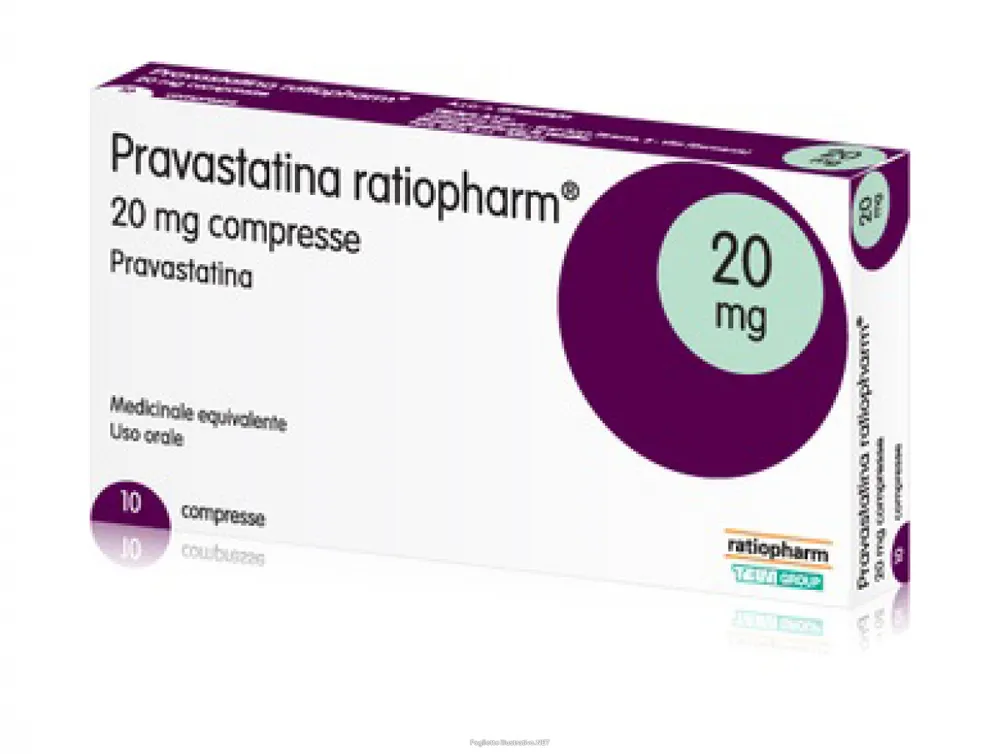
PRAVASTATIN RATIOPHARM
ItalyThis medicine is used to reduce high levels of 'bad' cholesterol and fats (triglycerides) in the blood, while simultaneously increasing 'good' cholesterol. It is also used to prevent heart and blood vessel diseases in people with risk factors or those who have already had a stroke or chest pain, and to reduce blood fat levels after an organ transplant.
Frequently asked questions
How should I take Pravastatina ratiopharm?
The medicine should be taken following the instructions of a doctor or pharmacist. For adults, the usual dose is 10-40 mg in a single daily dose, preferably in the evening, and can be taken with or without food, accompanied by half a glass of water. The maximum daily dose must not exceed 40 mg.
When should I not take this medicine?
You must not take Pravastatina ratiopharm if you are allergic to pravastatin or any of its other components, if you are pregnant or breastfeeding, if you suffer from liver disease, or if blood tests show abnormal liver function.
What are the side effects of Pravastatina ratiopharm?
Side effects may include muscle pain or weakness, dizziness, headache, digestive problems (nausea, diarrhea, constipation), or skin or vision problems. In very rare cases, liver problems, muscle inflammation, or severe allergic reactions may occur. It is important to inform your doctor immediately in case of unexplained muscle pain or allergic reactions.
Are there interactions with other medicines?
Yes, taking Pravastatina ratiopharm with certain medicines may increase the risk of muscle problems; these include fibrates, cyclosporine, certain antibiotics (such as erythromycin or clarithromycin), colchicine, nicotinic acid, rifampicin, and lenalidomide. It is also dangerous to take it together with fusidic acid. If you are using blood-clotting medications (vitamin K antagonists) or cholesterol resins, you must inform your doctor.
What should I do if I forget a dose?
If you forget a dose, simply take your next usual dose. Do not take a double dose to make up for the forgotten one.
Instructions for use
Table of contents
- Pravastatina ratiopharm 10 mg tablets, 20 mg tablets, 40 mg tablets
- 1. What Pravastatina ratiopharm is and what it is used for
- 2. What you should know before taking Pravastatin Ratiopharm
- 3. How to take Pravastatin Ratiopharm
- 4. Possible side effects
- 5. How to store Pravastatin Ratiopharm
- 6. Package contents and other information
Package leaflet: Information for the user
Pravastatina ratiopharm 10 mg tablets, 20 mg tablets, 40 mg tablets
Sodium Pravastatin
Generic medicine
Please read all of this leaflet carefully before you start taking this medicine because it contains
important information for you.
Keep this leaflet. You may need to read it again.
If you have any questions, ask your doctor or pharmacist.
This medicine has been prescribed for you only. Do not give it to other people, even if their
symptoms are the same as yours, as it may be harmful.
If you experience any adverse reaction, including those not listed in this leaflet,
contact your doctor or pharmacist. See section 4.
Contents of this leaflet:
- What Pravastatina ratiopharm is and what it is used for
- What you need to know before taking Pravastatina ratiopharm
- How to take Pravastatina ratiopharm
- Possible side effects
- How to store Pravastatina ratiopharm
- Contents of the pack and other information
1. What Pravastatina ratiopharm is and what it is used for
Pravastatina ratiopharm belongs to a group of medicines called statins (or HMG CoA reductase inhibitors). It prevents the liver from producing cholesterol and consequently reduces the levels of cholesterol and other fats (triglycerides) in your body. When there are excessive levels of cholesterol in the blood, it accumulates on the walls of blood vessels and blocks them.
This condition is known as thickening of the arteries or atherosclerosis and can cause:
- chest pain (angina pectoris), when a blood vessel of the heart is partially blocked,
- heart attack, when a blood vessel of the heart is completely blocked,
- stroke, when a blood vessel of the brain is completely blocked.
This medicine is used in 3 situations:
In the treatment of high levels of cholesterol and fats in the blood
Pravastatina ratiopharm is used to reduce high levels of "bad" cholesterol and to increase levels of "good" cholesterol in the blood when changes in diet and exercise have proven inadequate.
In the prevention of heart and blood vessel diseases
-
If you have high levels of cholesterol in the blood and risk factors that contribute to these diseases (if you smoke, are overweight, have high blood sugar levels or high blood pressure, or do little physical exercise), Pravastatina ratiopharm is used to reduce your risk of developing heart and blood vessel diseases.
-
If you have already had a stroke or have chest pain (unstable angina), even if your cholesterol levels are normal, Pravastatina ratiopharm is used to reduce your risk of having a future heart attack or stroke.
After organ transplantation
If you have undergone an organ transplant and are taking medicines to prevent transplant rejection,
Pravastatina ratiopharm is used to reduce high levels of fats in the blood.
2. What you should know before taking Pravastatin Ratiopharm
Do not take Pravastatin Ratiopharm
- if you are allergic to pravastatin or to any of the other ingredients of this medicine (listed in section 6);
- if you are pregnant, planning to become pregnant, or breastfeeding (see "Pregnancy and breastfeeding");
- if you have liver disease (active hepatic disorder);
- if repeated blood tests have shown abnormal liver function (elevated liver enzymes in the blood).
Warnings and precautions
Pravastatin may increase the risk of unwanted muscle-related side effects in some patients,
manifesting as muscle pain, tenderness, and muscle weakness. Your doctor may need to perform
a blood test to check the condition of your muscles before and after starting treatment with
Pravastatin Ratiopharm.
Talk to your doctor or pharmacist BEFORE taking Pravastatin Ratiopharm if any of the following
conditions apply to you, as you may have an increased risk of muscle-related side effects:
- if you have kidney disease;
- if you have an underactive thyroid (hypothyroidism);
- if you have liver disease or problems related to alcoholism (you drink large amounts of alcohol);
- if you have muscle disorders caused by an inherited disease;
- if you have previously experienced muscle problems caused by another medicine in the statin group (HMG-CoA reductase inhibitors) or by a medicine belonging to the group known as fibrates;
- if you are over 70 years of age. Some medicines may increase the risk of muscle-related side effects; see "Other medicines and Pravastatin Ratiopharm".
If you are currently taking, or have taken within the last 7 days, a medicine called fusidic acid (a
medicine for bacterial infections) by mouth or by injection. The combination of fusidic acid and
Pravastatin Ratiopharm can lead to serious muscle problems (rhabdomyolysis).
If, during treatment, you experience unexplained muscle cramps or pain, inform your doctor
immediately. Inform your doctor or pharmacist also if you have persistent muscle weakness.
Additional tests and medicines may be needed to diagnose and treat this type of condition.
If you have diabetes, or are at risk of developing diabetes, your doctor will closely monitor you during
treatment with this medicine. You may be at risk of developing diabetes if your blood sugar and fat
levels are high, if you are overweight, and if you have high blood pressure.
Statins, such as Pravastatin Ratiopharm, can occasionally cause lung diseases, especially when used
over a long period of time. You must stop taking Pravastatin Ratiopharm and contact your doctor if
you develop shortness of breath, a dry non-productive cough, and your general health worsens, with
fatigue, weight loss, and fever.
Other medicines and Pravastatin Ratiopharm
Inform your doctor or pharmacist if you are taking, have recently taken, or might take any other
medicine.
Taking Pravastatin Ratiopharm with any of the following medicines may increase the risk of muscle
problems:
- fibrates, e.g. gemfibrozil, fenofibrate (medicines that lower cholesterol levels in the blood);
- ciclosporin (a medicine that suppresses the body's immune defenses);
- antibiotics such as erythromycin or clarithromycin (medicines used to treat bacterial infections);
- colchicine (used to treat gout);
- nicotinic acid (another medicine used to lower high cholesterol levels in the blood);
- rifampicin (used to treat an infection called tuberculosis);
- lenalidomide (used to treat a type of blood cancer called multiple myeloma). If you need to take oral fusidic acid to treat a bacterial infection, you will need to temporarily stop taking this medicine. Your doctor will tell you when it is safe to restart Pravastatin Ratiopharm. Taking Pravastatin Ratiopharm with fusidic acid may rarely cause muscle weakness, soreness, or pain (rhabdomyolysis). See section 4 for more information about rhabdomyolysis.
If you need to take a medicine used to treat and prevent blood clots known as a "vitamin K antagonist",
inform your doctor before taking Pravastatin Ratiopharm, because concomitant use of vitamin K
antagonists and Pravastatin Ratiopharm may increase the results of blood tests used to monitor
treatment with vitamin K antagonists.
If you are also taking a medicine that lowers blood fat levels (such as resins like cholestyramine or
colestipol), this treatment should be taken at least one hour before or four hours after taking the
resin. This is because the resin may affect the absorption of Pravastatin Ratiopharm if the two
medicines are taken too close together in time.
Pravastatin Ratiopharm with food and drink
This medicine can be taken with or without food, with half a glass of water.
You should always minimize alcohol consumption. If you are concerned about how much alcohol you
can drink while taking this medicine, discuss it with your doctor.
Pregnancy and breastfeeding
Do not take Pravastatin Ratiopharm during pregnancy. If you become pregnant, inform your doctor
immediately.
Ask your doctor or pharmacist before taking any medicine.
Do not take Pravastatin Ratiopharm if you intend to breastfeed, as this medicine passes into breast
milk.
Driving and using machines
Generally, Pravastatin Ratiopharm does not affect your ability to drive or use machinery.
If you experience dizziness, blurred or double vision during treatment, make sure you are able to drive
and use machinery before doing so.
Pravastatin Ratiopharm contains Lactose and Sodium
If your doctor has diagnosed you with an intolerance to certain sugars, contact him before taking
this medicine.
This medicine contains less than 1 mmol (23 mg) of sodium per dose, i.e. essentially "sodium-free".
3. How to take Pravastatin Ratiopharm
Take this medicine exactly as directed by your doctor or pharmacist. If you
have any doubts, consult your doctor or pharmacist.
Your doctor will advise you to follow a low-fat diet throughout the entire
treatment period.
Pravastatin Ratiopharm can be taken with or without food, with half a glass of water.
Recommended dose
Adults
- For the treatment of high cholesterol and fat levels in the blood: the usual dose is 10–40 mg once daily, preferably in the evening.
- For the prevention of heart and blood vessel diseases: the usual dose is 40 mg once daily, preferably in the evening.
The maximum daily dose of 40 mg of pravastatin must not be exceeded. Your doctor will tell you
which dose is most suitable for you.
Children (8–13 years) and adolescents (14–18 years) with an inherited condition causing high
cholesterol levels in the blood
Between 8 and 13 years of age, the usual dose is 10–20 mg once daily. Between 14 and 18 years of
age, the usual dose is 10–40 mg once daily.
After organ transplantation
Your doctor may prescribe an initial dose of 20 mg once daily. Your doctor may adjust the dose up
to 40 mg.
If you are also taking a medicine that suppresses the immune system (cyclosporine), your doctor
may prescribe an initial dose of 20 mg once daily. Your doctor may adjust the dose up to 40 mg.
If you have kidney disease or severe liver disease, your doctor may prescribe a lower dose of
Pravastatin Ratiopharm.
Duration of treatment
Your doctor will advise you on how long to take Pravastatin Ratiopharm. This medicine should be
taken regularly and for the full duration recommended by your doctor, even if this is for a very long
period.
If you take more Pravastatin Ratiopharm than you should
If you have taken too many tablets, or if someone has accidentally ingested some, contact your
doctor or the nearest hospital for appropriate advice immediately.
If you forget to take Pravastatin Ratiopharm
If you miss a dose, simply take the next dose at the usual time.
Do not take a double dose to make up for the missed dose.
If you have any doubts about how to use this medicine, consult your doctor or pharmacist.
4. Possible side effects
Like all medicines, this medicine can cause side effects, although not everyone gets them.
If any of the following occur, stop taking the tablets and contact your doctor immediately or go to the nearest hospital emergency department:
- an allergic reaction (swelling of the face or neck, muscle and joint pain, hives, fever, redness, shortness of breath). This is a very serious but rare side effect. You may require urgent medical treatment or hospitalisation.
Contact your doctor as soon as possible and stop taking Pravastatina ratiopharm if you develop:
- any unexplained or persistent muscle pain, tenderness, weakness or cramps, especially if you also feel unwell or have a fever. In very rare cases, this condition may progress to a serious and potentially life-threatening condition called rhabdomyolysis.
The following side effects are uncommon and may affect up to 1 in 100 people:
dizziness, fatigue, headache or sleep disturbances including insomnia;
- blurred or double vision;
- indigestion, nausea, vomiting, stomach pain or discomfort, diarrhoea or constipation, and flatulence;
- itching, acne, hives, skin rashes, hair and scalp problems (including hair loss);
- bladder problems (painful or more frequent urination, nocturnal urination) and sexual difficulties;
- muscle and joint pain, tendon inflammation which may be complicated by tendon rupture.
The following side effects are rare and may affect up to 1 in 1,000 people:
- increased skin sensitivity to sunlight
The following side effects are very rare and may affect up to 1 in 10,000 people:
- sensory disturbances including burning sensations, tingling or numbness, which may indicate nerve damage;
- a serious skin disease (lupus erythematosus-like syndrome);
- inflammation of the liver or pancreas; jaundice (recognisable by yellowing of the skin and whites of the eyes); rapid death of liver cells (fulminant hepatic necrosis);
- inflammation of one or more muscles leading to muscle pain or weakness (myositis, polymyositis or dermatomyositis); muscle pain or weakness;
- increased transaminase levels (a group of enzymes naturally present in the blood) which may indicate liver problems. Your doctor may request periodic blood tests to monitor this.
Side effects of unknown frequency: persistent muscle weakness, liver failure
If any of the side effects worsen, or if you notice any side effect not listed in this leaflet, inform your doctor or pharmacist.
The following side effects have been observed with other statins (medicines in the same class):
- Nightmares
- Memory loss
- Depression
- Respiratory problems including persistent cough and/or shortness of breath or fever
- Diabetes. This is more likely if you have high levels of sugar and fats in your blood, are overweight, and have high blood pressure. Your doctor will monitor you during treatment with this medicine.
Reporting of side effects
If you experience any side effect, including those not listed in this leaflet, talk to your doctor, pharmacist or nurse. You can also report side effects directly via the national reporting system at
https://www.aifa.gov.it/content/segnalazioni-reazioni-avverse. By reporting side effects, you can help provide more information on the safety of this medicine.
5. How to store Pravastatin Ratiopharm
Keep this medicine out of the sight and reach of children.
Do not use this medicine after the expiry date stated on the carton and blister pack after
Exp. The expiry date refers to the last day of that month.
Do not store above 30°C. Keep in the original packaging to protect the medicine from moisture.
Do not dispose of medicines via wastewater or household waste. Ask your pharmacist how to dispose of medicines you no longer use. This will help protect the environment.
6. Package contents and other information
What Pravastatina ratiopharm contains
The active substance is sodium pravastatin. Each tablet contains 10, 20 or 40 mg of
sodium pravastatin.
The excipients are lactose, povidone (PVP K-30), crospovidone, dibasic calcium phosphate (E341),
sodium stearyl fumarate, microcrystalline cellulose (E460), sodium croscarmellose (E466);
10 mg: red iron oxide (E172),
20 mg: yellow iron oxide (E172),
40 mg: quinoline yellow (E104), brilliant blue FCF (E133).
Description of the appearance of Pravastatina ratiopharm and package contents
Tablet
10 mg:
Pink, mottled, round, slightly convex tablet with a score line on both sides.
The tablet can be divided into two equal doses.
Pravastatina ratiopharm 10 mg tablets are available in packs of: 20, 28, 30, 50,
56, 84, 98, 100 and 200 tablets and in hospital packs of 50 tablets.
Not all pack sizes may be marketed.
20 mg:
Pale yellow, round, slightly convex tablet with a score line on both sides.
The tablet can be divided into two equal doses.
Pravastatina ratiopharm 20 mg tablets are available in packs of: 10, 20, 28, 30,
50, 56, 84, 98, 100 and 200 tablets and in hospital packs of 50 tablets.
Not all pack sizes may be marketed.
40 mg:
Light green, round, slightly convex tablet with a score line on both sides.
The tablet can be divided into two equal doses.
Pravastatina ratiopharm 40 mg tablets are available in packs of: 14, 20, 28, 30,
50, 56, 84, 98, 100 and 200 tablets and in hospital packs of 50 tablets.
Not all pack sizes may be marketed.
Marketing Authorization Holder and Manufacturer
Marketing Authorization Holder
Teva Italia S.r.l. – Piazzale Luigi Cadorna, 4 - 20123 Milano - Italy
Manufacturer
Teva UK Ltd, Brampton Road, Hampden Park, Eastbourne, East Sussex, BN22 9AG, United Kingdom
Pharmachemie B.V., Swensweg 5, 2031 GA Haarlem, The Netherlands
Teva Pharmaceutical Works Private Limited Company, Pallagi út 13, 4042 Debrecen, Hungary
TEVA PHARMA S.L.U, Poligono Malpica, Calle C, N°4, 50016 Zaragoza, Spain
This medicinal product is authorized in the European Economic Area countries under the
following names:
Belgium: Pravastatine TEVA 10 mg, tabletten
Pravastatine TEVA 20 mg, tabletten
Pravastatine TEVA 40 mg, tabletten
Denmark: Pravastatinnatrium Teva 20 mg Tabletter
Pravastatinnatrium Teva 40 mg Tabletter
France: Pravastatine TEVA 10 mg, comprimé
Pravastatine TEVA 20 mg, comprimé
Pravastatine TEVA 40 mg, comprimé
Germany: PRAVA-TEVA 10 mg Tabletten
PRAVA-TEVA 20 mg Tabletten
PRAVA-TEVA 40 mg Tabletten
Italy: Pravastatina ratiopharm 10 mg Compresse
Pravastatina ratiopharm 20 mg Compresse
Pravastatina ratiopharm 40 mg Compresse
Similar drugs
| Brand name | Dosage form | Active substance / Dosage | Manufacturer |
|---|---|---|---|
| APLACTIN | tablets | F.I.R.M.A. S.P.A. | |
| LANGIPRAV | tablets | LANOVA FARMACEUTICI S.R.L. | |
| PRASTEROL | tablets | ISTITUTO LUSO FARMACO D'ITALIA S.P.A. | |
| PRAVASELECT | tablets | A. MENARINI INDUSTRIE FARMACEUTICHE RIUNITE S.R.L. | |
| PRAVASTATIN ALTER | tablets | LABORATORI ALTER S.R.L. | |
| PRAVASTATIN AUROBINDO | tablets | AUROBINDO PHARMA (ITALIA) S.R.L. | |
| PRAVASTATIN DOC GENERICI | tablets | DOC GENERICI SRL | |
| PRAVASTATIN MYLAN | tablets | MYLAN S.P.A. | |
| PRAVASTATIN SANDOZ GMBH | tablets | SANDOZ GMBH | |
| PRAVASTATIN ZENTIVA | tablets | ZENTIVA ITALIA S.R.L. | |
| VASTICOR | tablets | I.B.N. SAVIO S.R.L |
The original data is available in the language of the country of manufacture.
Data source: Italian Medicines Agency (AIFA)
Data last verified: September 21, 2026