NIMESULIDE EG
ItalyIt is used for the treatment of acute pain and menstrual pain.
Frequently asked questions
How should I take NIMESULIDE EG?
The usual dose is one 100 mg unit twice daily, to be taken after meals. Treatment should last for the shortest time possible and must not exceed 15 days in a single cycle.
Who must not take this medicine?
It must not be used by those allergic to the active substance or other ingredients, by those who have had allergic reactions to aspirin or other NSAIDs, by those with liver problems, gastric or duodenal ulcers, stomach or intestinal bleeding, coagulation problems, heart or kidney failure, or those in the last trimester of pregnancy or breastfeeding. It must not be administered to children under 12 years of age.
What are the side effects of NIMESULIDE EG?
Side effects may include nausea, vomiting, diarrhea, dizziness, increased blood pressure, or skin problems. In rare or very rare cases, severe skin reactions, kidney problems, liver inflammation, or gastrointestinal bleeding may occur. There is also a modest increase in the risk of heart attack or stroke, especially with high doses or prolonged treatment.
Are there interactions with other medicines?
Yes, it is important to inform the doctor if you are taking anticoagulants (such as aspirin), diuretics, lithium, methotrexate, cyclosporine, corticosteroids, or antidepressants (SSRIs).
What should I do if I forget a dose or take too much?
In case of omission, do not take a double dose to compensate. If you take or think you have taken an excessive dose, contact a doctor or hospital immediately, bringing the remaining medicine with you.
When is it necessary to stop treatment immediately?
You must stop taking the medicine and consult a doctor immediately if symptoms of liver problems appear (such as loss of appetite, nausea, vomiting, abdominal pain, fatigue, or dark urine), flu-like symptoms (fever, chills, malaise), severe skin reactions, or gastrointestinal symptoms such as stomach pain or black stools.
Instructions for use
Table of contents
Package leaflet: Information for the user
NIMESULIDE EG 100 mg Tablets, Granules for oral suspension
Generic medicinal product
Please read this leaflet carefully before taking this medicine because it contains important information for you.
Keep this leaflet. You may need to read it again.
If you have any questions, ask your doctor or pharmacist.
This medicine has been prescribed for you only. Do not give it to other people, even if their symptoms are the same as yours, as it may be harmful.
If you experience any side effects, including those not listed in this leaflet, consult your doctor or pharmacist. See section 4.
Contents of this leaflet:
- What NIMESULIDE EG is and what it is used for
- What you need to know before taking NIMESULIDE EG
- How to take NIMESULIDE EG
- Possible side effects
- How to store NIMESULIDE EG
- Contents of the pack and other information
1. What NIMESULIDE EG is and what it is used for
NIMESULIDE EG contains the active substance nimesulide, which belongs to the class of non-steroidal anti-inflammatory drugs (NSAIDs), with analgesic properties. It is used for the treatment of acute pain and menstrual pain.
Before prescribing NIMESULIDE EG, the doctor will evaluate the potential benefits of this medicine against the risks of developing adverse effects.
2. What you need to know before taking NIMESULIDE EG
Do not use NIMESULIDE EG
- if you are allergic to the active substance or to any of the other ingredients of this medicine (listed in section 6);
- if you have previously experienced allergic reactions (e.g. wheezing, runny nose or nasal congestion, hives, nasal polyps) after taking aspirin or other non-steroidal anti-inflammatory drugs (NSAIDs);
- if you have previously had a liver-related reaction to nimesulide;
- if you are currently taking other medicines known to affect the liver, such as paracetamol or any other analgesic, or undergoing treatment with NSAIDs;
- if you are using drugs or have developed a dependency on drugs or other substances;
- if you are a heavy, regular drinker (alcohol);
- if you have liver disease or elevated liver enzymes;
- if you have peptic ulcer (gastric or duodenal ulcer) or have had one in the past;
- if you have previously experienced gastrointestinal bleeding;
- if you have previously had a cerebral haemorrhage (stroke);
- if you have any other bleeding disorder or a condition related to a blood coagulation defect;
- if you have heart failure or kidney disease (impaired kidney function) or liver disorder;
- if you have fever or flu-like symptoms (general malaise, chills or shivering, or fever);
- if you are in the last trimester of pregnancy;
- if you are breastfeeding.
Do not give NIMESULIDE EG to a child under 12 years of age.
Warnings and precautions
Do not take NIMESULIDE EG or consult your doctor before taking NIMESULIDE EG
if you have previously developed fixed drug eruption (round or oval patches with redness and
swelling of the skin, skin rash with blisters, hives, and itching) after taking
nimesulide.
Talk to your doctor or pharmacist before taking NIMESULIDE EG.
- If you have an intolerance to certain sugars, consult your doctor before taking this medicine.
- If you are taking any of the following substances, because they may interact with NIMESULIDE EG:
- blood-thinning medicines (anticoagulants, aspirin, or other salicylates)
- diuretics used for heart failure or high blood pressure
- lithium, used to treat depression or similar disorders
- methotrexate
- cyclosporine
- corticosteroids (used to treat inflammatory conditions)
- Selective Serotonin Reuptake Inhibitors (SSRIs) (medicines used to treat depression)
Inform your doctor or pharmacist that you are taking these medicines before taking NIMESULIDE EG. - If symptoms indicating liver problems occur during treatment with nimesulide, you must stop taking nimesulide and inform your doctor immediately. Symptoms indicating liver problems include loss of appetite, nausea, vomiting, abdominal pain, persistent fatigue, and dark urine. If you have previously suffered from peptic ulcers, gastrointestinal bleeding, ulcerative colitis, or Crohn’s disease, inform your doctor before taking NIMESULIDE EG.
- If fever and/or flu-like symptoms (general malaise, chills or shivering) occur during treatment with NIMESULIDE EG, stop taking the medicine and inform your doctor.
- If you have heart or kidney disease, inform your doctor before taking NIMESULIDE EG; kidney function may worsen during treatment with NIMESULIDE EG.
- If you are elderly, your doctor may recommend regular monitoring to ensure that NIMESULIDE EG does not cause problems with your stomach, kidneys, heart, or liver. If you plan to start a pregnancy, inform your doctor because NIMESULIDE EG may reduce fertility. If you develop a severe skin rash during treatment with nimesulide, stop treatment and consult your doctor. If gastrointestinal symptoms such as stomach pain, gastric bleeding, or black stools occur, stop treatment immediately and consult your doctor. If you do not notice any benefit, inform your doctor. Medicines such as NIMESULIDE EG may be associated with a small increased risk of heart attack (myocardial infarction) or stroke. The risk is higher with high doses and prolonged treatment. Do not exceed the recommended dose or duration of treatment. If you have heart problems, a history of stroke, or think you may be at risk of these conditions (for example, if you have high blood pressure, diabetes, high cholesterol, or smoke), discuss your treatment with your doctor or pharmacist.
Other medicines and NIMESULIDE EG
Inform your doctor or pharmacist if you are taking, have recently taken, or might take any
other medicine.
Pregnancy, breastfeeding and fertility
Ask your doctor or pharmacist for advice before taking NIMESULIDE EG or any other medicine.
- NIMESULIDE EG must not be used during the last trimester of pregnancy. It may cause problems for the baby and delivery.
- If you are planning a pregnancy, inform your doctor, as NIMESULIDE EG may reduce fertility.
- If you are in the first or second trimester of pregnancy, do not exceed the dose or duration of treatment prescribed by your doctor.
NIMESULIDE EG must not be used during breastfeeding.
Driving and using machines
Do not drive or operate machinery if NIMESULIDE EG causes dizziness or drowsiness.
NIMESULIDE EG tablets contain lactose, hydrogenated castor oil and sodium
If your doctor has diagnosed you with an intolerance to certain sugars, contact him before taking this
medicine.
Hydrogenated castor oil may cause gastrointestinal discomfort and diarrhoea.
This medicine contains less than 1 mmol (23 mg) of sodium per tablet, i.e. essentially ‘sodium-free’.
NIMESULIDE EG oral suspension granules contain sucrose
If your doctor has diagnosed you with an intolerance to certain sugars, contact him before taking this
medicine.
3. How to take NIMESULIDE EG
Take this medicine exactly as your doctor has told you. If you are unsure, consult your doctor or pharmacist. The usual dose is one 100 mg unit twice daily after meals. Use NIMESULIDE EG for the shortest possible duration and for no longer than 15 days in a single treatment cycle.
If you take more NIMESULIDE EG than you should
If you take or think you have taken more NIMESULIDE EG than prescribed, contact your doctor or hospital immediately. Bring any remaining medicine with you. In case of overdose, you may experience one or more of the following symptoms: drowsiness, nausea, stomach pain, gastric ulcer, breathing difficulties.
If you forget to take NIMESULIDE EG
Do not take a double dose to make up for the forgotten dose.
If you have any doubts about how to use this medicine, ask your doctor or pharmacist.
4. Possible side effects
Like all medicines, this medicine can cause side effects, although not everyone gets them.
If any of the following symptoms occur, stop taking the medicine and inform your doctor immediately, as they may indicate a rare but serious side effect requiring urgent medical attention:
stomach discomfort or pain, loss of appetite, nausea (feeling unwell), vomiting, gastric or intestinal bleeding, or black stools;
skin reactions such as rashes or redness;
wheezing or shortness of breath;
yellowing of the skin or eyes (jaundice);
unexpected change in the amount or colour of urine;
swelling of the face, feet or legs;
persistent tiredness.
Medicines such as NIMESULIDE EG may be associated with a modest increase in the risk of heart attack (myocardial infarction) or stroke.
The side effects that may occur with NIMESULIDE EG are:
Common (may affect more than 1 in 10 people): diarrhoea, nausea, vomiting, slight changes in blood test values indicating liver function.
Uncommon (may affect up to 1 in 100 people): shortness of breath, dizziness, increased blood pressure, constipation, flatulence, gastrointestinal bleeding; duodenal or gastric ulcers and perforated ulcers, itching, skin rashes, increased sweating, swelling (oedema).
Rare (may affect up to 1 in 1,000 people): anaemia, reduced white blood cells in the blood, increased levels of certain white blood cells (eosinophils) in the blood, changes in blood pressure, bleeding, pain during urination, blood in the urine, increased potassium levels in the blood, feeling anxious or nervous, nightmares, blurred vision, increased heart rate, hot flushes, skin redness, skin inflammation (dermatitis), malaise, fatigue.
Very rare (may affect up to 1 in 10,000 people): severe skin reactions (known as erythema multiforme, Stevens-Johnson syndrome, toxic epidermal necrolysis) causing skin rashes and severe malaise; kidney failure or inflammation (nephritis), urinary retention; disturbances in brain function (encephalopathy); reduction in the number of platelets in the blood, leading to subcutaneous bleeding or bleeding in other parts of the body, black stools due to bleeding, gastric or intestinal bleeding, duodenal or gastric ulcers, perforated ulcers, gastritis; liver inflammation (hepatitis), sometimes very severe, causing jaundice and blockage of bile flow; allergic reactions, including severe reactions with collapse and breathing difficulties, asthma, reduced body temperature, dizziness, headache, insomnia, stomach pain; indigestion, mouth burning, itching (urticaria); facial swelling and swelling of surrounding areas, visual disturbances.
Not known (frequency cannot be estimated from the available data): drug-induced fixed eruption (may appear as round or oval patches with redness and swelling of the skin), skin rash with blisters (urticaria), sensation of itching.
Reporting of side effects
If you experience any side effect, including those not listed in this leaflet, talk to your doctor or pharmacist. You can also report side effects directly via the national reporting system at https://www.aifa.gov.it/content/segnalazioni-reazioni-avverse. By reporting side effects, you can help provide more information on the safety of this medicine.
5. How to store NIMESULIDE EG
Keep this medicine out of the sight and reach of children.
Do not use this medicine after the expiry date stated on the packaging after EXP. The expiry date refers to the last day of that month.
This medicine requires no special storage precautions.
Do not dispose of any medicine via wastewater or household waste. Ask your pharmacist how to dispose of medicines you no longer use. This will help protect the environment.
6. Package contents and other information
What NIMESULIDE EG contains
NIMESULIDE EG 100 mg Tablets
Each tablet contains:
Active substance:
Nimesulide 100 mg
Excipients:
Docusate sodium, hydroxypropylcellulose, lactose, sodium starch glycolate, microcrystalline cellulose, hydrogenated castor oil, magnesium stearate.
NIMESULIDE EG 100 mg Granules for oral suspension
Each sachet contains:
Active substance:
Nimesulide 100 mg
Excipients:
Cetomacrogol 1000, sucrose, maltodextrins, citric acid, orange flavour.
Description of the appearance of NIMESULIDE EG and contents of the pack
Tablets: pack of 30 tablets of 100 mg.
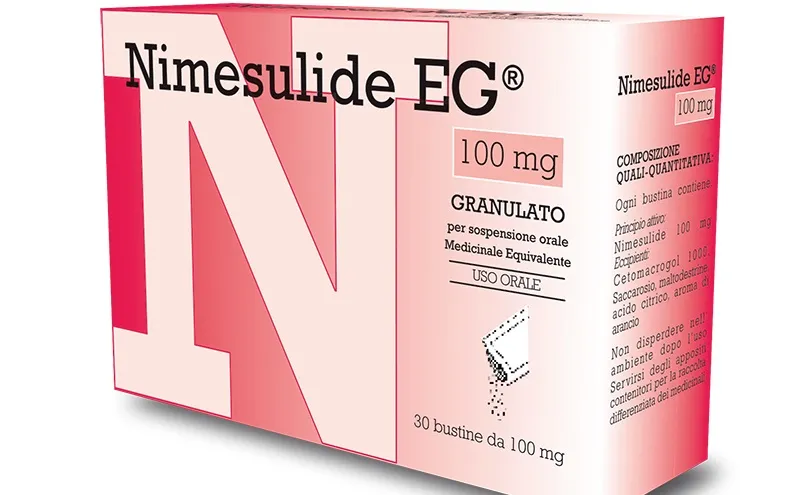
Granules for oral suspension: pack of 30 sachets of 100 mg.
Marketing Authorization Holder
EG S.p.A., Via Pavia, 6 - 20136 Milan, Italy
Manufacturers
MIPHARM S.p.A., Via B. Quaranta, 12 - 20141 Milan, Italy
DOPPEL Farmaceutici S.r.l., Via Volturno 48 – 20089 Quinto de' Stampi Rozzano (Milan, Italy) (only for granules)
Similar drugs
| Brand name | Dosage form | Active substance / Dosage | Manufacturer |
|---|---|---|---|
| AULIN | tablets | HELSINN BIREX PHARMACEUTICALS LTD | |
| EFRIDOL | tablets | AESCULAPIUS FARMACEUTICI SRL | |
| ISODOL | tablets | AESCULAPIUS FARMACEUTICI SRL | |
| NIMEDEX | tablets | ITALFARMACO S.P.A. | |
| NIMESULIDE ALMUS | tablets | ALMUS S.R.L. | |
| NIMESULIDE DOC GENERICI | tablets | DOC GENERICI SRL | |
| NIMESULIDE MYLAN GENERICS | tablets | MYLAN S.P.A. | |
| NIMESULIDE PENSA | tablets | TOWA PHARMACEUTICAL S.P.A. |
The original data is available in the language of the country of manufacture.
Data source: Italian Medicines Agency (AIFA)
Data last verified: September 21, 2026