FLUDARABINE ACCORD
ItalyIt is used for the treatment of B-cell chronic lymphocytic leukemia (B-CLL) in patients who have sufficient production of healthy blood cells and who present with symptoms or signs of disease progression.
Frequently asked questions
How should Fludarabina fosfato Injectable be taken?
The medicinal product is administered by a doctor by injection or, more commonly, via intravenous infusion (drip) lasting approximately 30 minutes. The dose is administered once daily for 5 consecutive days, and this cycle is repeated every 28 days.
Who must not take this medicine?
It must not be used if you are allergic to fludarabine phosphate or its components, if you are breastfeeding, if you suffer from severe kidney problems, or if you have a low red blood cell count due to a type of anemia (decompensated hemolytic anemia).
What are the common side effects of Fludarabina fosfato Injectable?
Very common side effects reported include infections (including lung infections), reduction in the number of platelets, white blood cells, and red blood cells, cough, vomiting, diarrhea, nausea, fever, fatigue, and weakness.
What are the serious side effects that must be reported immediately?
It is necessary to contact a doctor immediately in case of breathing difficulties, chest pain, unusual bruising or excessive bleeding, side pain, blood in the urine, severe skin reactions (such as redness, blisters, or skin lesions), or palpitations.
Are there risks to the nervous system?
Yes, disorders such as headache, nausea, vomiting, seizures, vision disturbances, confusion, or changes in mental state may occur. In rare cases and with doses higher than recommended, serious complications such as blindness or coma may occur.
Does the drug interact with other medicines?
It is important to inform the doctor if you are taking other drugs, particularly pentostatin (which can cause serious lung problems), dipyridamole (which can reduce the effectiveness of the treatment), or cytarabine.
What precautions should be taken regarding pregnancy and fertility?
The drug must not be administered during pregnancy. Men and women of childbearing age must use effective contraceptive methods during treatment and for at least 6 months after the end of therapy. Breastfeeding must be discontinued during treatment.
Instructions for use
Table of contents
- Fludarabina Accord 25 mg/ml concentrate for solution for injection or infusion
- 1. What Fludarabine Phosphate Injectable is and what it is used for
- 2. What you need to know before using Fludarabine Phosphate Injectable
- 3. How to use Fludarabine Phosphate for Injection
- 4. POSSIBLE ADVERSE REACTIONS
- 5. How to store Fludarabine Phosphate for Injection
- 6. Package contents and other information
Package leaflet: Information for the user
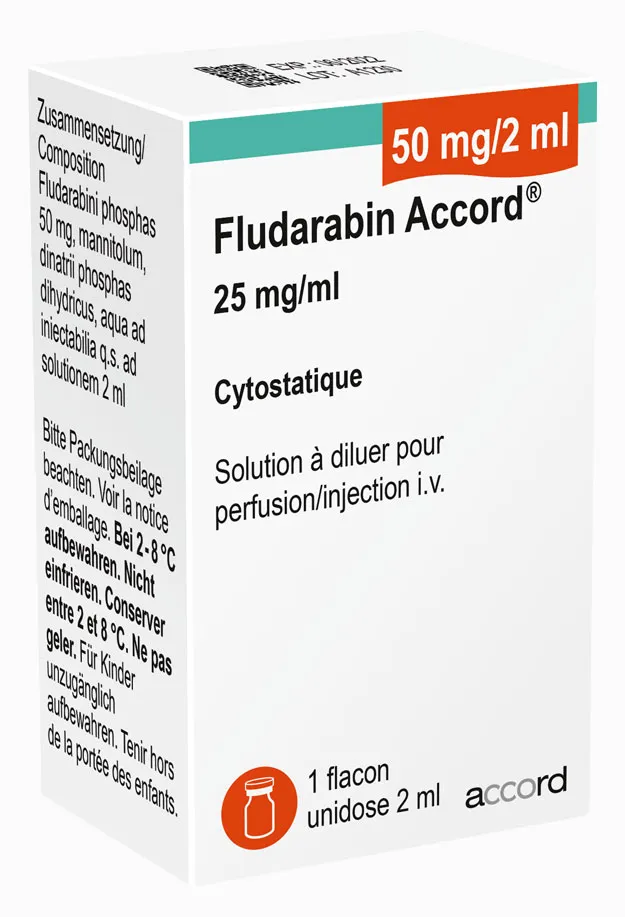
Fludarabina Accord 25 mg/ml concentrate for solution for injection or infusion
"The name of this medicine is Fludarabina Accord 25 mg/ml concentrate for solution for injection or infusion. Throughout the remainder of this leaflet, the medicine will be referred to as Injectable Fludarabine Phosphate."
Please read all of this leaflet carefully before you start using this medicine, as it contains
important information for you.
- Keep this leaflet. You may need to read it again.
- If you have any questions, ask your doctor, pharmacist, or nurse.
- This medicine has been prescribed for you only. Do not give it to other people, even if their symptoms are the same as yours, as it may be harmful.
- If you experience any adverse reactions, including those not listed in this leaflet, tell your doctor, pharmacist, or nurse. See section 4.
Contents of this leaflet
- What Injectable Fludarabine Phosphate is and what it is used for
- What you need to know before using Injectable Fludarabine Phosphate
- How to use Injectable Fludarabine Phosphate
- Possible side effects
- How to store Injectable Fludarabine Phosphate
- Contents of the pack and other information
1. What Fludarabine Phosphate Injectable is and what it is used for
Fludarabine Phosphate Injectable contains the active substance fludarabine phosphate, which blocks the growth of new tumor cells. All cells in the body produce identical new cells through division. Fludarabine Phosphate Injectable is taken up by tumor cells and stops their division.
In white blood cell cancers (such as chronic lymphocytic leukemia), the body produces many abnormal white blood cells (lymphocytes), and lymph nodes begin to enlarge in various parts of the body. The abnormal white blood cells are unable to perform their normal function of defending the body against disease and may crowd out healthy blood cells. This process can lead to infections, a reduced number of red blood cells (anemia), bruising, severe bleeding, or even organ failure.
Fludarabine Phosphate Injectable is used to treat B-cell chronic lymphocytic leukemia (B-CLL) in patients who have adequate production of healthy blood cells.
First-line treatment with this medicinal product for chronic lymphocytic leukemia should only be initiated in patients with advanced-stage disease who have disease-related symptoms or evidence of disease progression.
2. What you need to know before using Fludarabine Phosphate Injectable
Do not use Fludarabine Phosphate Injectable:
- if you are allergic to fludarabine phosphate or to any of the other ingredients of this medicine (listed in section 6)
- if you are breastfeeding
- if you have severe kidney problems
- if your red blood cell count is low due to a certain type of anemia (uncompensated hemolytic anemia). Your doctor will have informed you if you suffer from this condition.
➢ Tell your doctor if you think any of the conditions listed above apply to you.
Warnings and precautions
Talk to your doctor before taking Fludarabine Phosphate Injectable:
- if your bone marrow is not functioning properly or if your immune system is impaired or weakened, or if you have had severe infections
➢ Your doctor may decide not to administer this medicine to you or may take special precautions.
- If you feel very unwell, notice unusual bruising or excessive bleeding after a cut, or seem to develop infections more frequently.
- If, during treatment, you notice that your urine becomes red to brownish in color, or if you develop skin rashes or blisters,
These may be signs of a reduced number of blood cells, which can be caused by the disease itself or by treatment. This condition may persist for up to one year, regardless of prior fludarabine use. During treatment with Fludarabine Phosphate Injectable, your immune system may attack various parts of your body or your red blood cells (these are called "autoimmune diseases"). These conditions can be life-threatening. If this occurs, your doctor will stop treatment and may initiate additional treatments, such as irradiated blood transfusion (see below) and administration of adrenocorticosteroids.
You will undergo regular blood tests and close monitoring during treatment with this medicine.
- If you notice any unusual neurological symptoms, such as vision disturbances, headache, confusion, or seizures.
The effects of Fludarabine Phosphate Injectable on the central nervous system with long-term use are not fully known. However, patients treated with the recommended dose for up to 26 treatment cycles have generally tolerated it well.
When Fludarabine Phosphate Injectable is used at the recommended dose, either following or concurrently with other medications, the following adverse reactions have been reported: neurological disorders including headache, malaise (nausea), vomiting, seizures, visual disturbances including loss of vision, changes in mental status (abnormal thoughts, confusion, altered consciousness), and occasionally neuromuscular disorders manifesting as limb muscle weakness (including complete or irreversible partial paralysis) (symptoms of leukoencephalopathy, acute toxic leukoencephalopathy, or reversible posterior leukoencephalopathy syndrome (RPLS)).
In patients treated with doses four times higher than the recommended dose, blindness, coma, and death have occurred. Some of these symptoms appeared late, approximately 60 days or more after treatment discontinuation. In some patients who received Fludarabine Phosphate Injectable at higher-than-recommended doses, leukoencephalopathy (LE), acute toxic leukoencephalopathy (ATL), or reversible posterior leukoencephalopathy syndrome (RPLS) have been reported. The same symptoms of LE, ATL, or RPLS as described above may occur.
LE, ATL, or RPLS may be irreversible, life-threatening, or fatal.
Whenever LE, ATL, or RPLS is suspected, treatment with Fludarabine Phosphate Injectable must be interrupted for further investigations.
If the diagnosis is confirmed, your doctor will permanently discontinue treatment with Fludarabine Phosphate Injectable.
- If you experience flank pain, notice blood in your urine, or produce less urine than usual,
If your disease is very severe, your body may be unable to eliminate all waste products from cells destroyed by this medicine. This phenomenon is called tumor lysis syndrome and may lead to kidney failure and heart problems, starting within the first week of treatment. Your doctor is aware of these risks and may administer other medications to help prevent them.
- If you are scheduled to undergo stem cell collection and are currently taking or have previously taken Fludarabine Phosphate Injectable,
- If you need a blood transfusion and are currently taking or have previously taken Fludarabine Phosphate Injectable,
If a blood transfusion is needed, your doctor will ensure that you receive only irradiated blood. Transfusions with non-irradiated blood have caused severe complications and even death.
- If you notice any skin changes while taking this medicine or after treatment has ended,
- If you have or have had skin cancer, this may worsen or recur during or after treatment with Fludarabine Phosphate Injectable. You may develop skin cancer during or after treatment with Fludarabine Phosphate Injectable.
Other considerations during treatment with Fludarabine Phosphate Injectable:
- Men and women of childbearing potential must use effective contraception during treatment and for at least 6 months after treatment ends. Fludarabine Phosphate Injectable may be harmful to the fetus. Your doctor will carefully weigh the benefits of treatment against the potential risks to the fetus and will prescribe Fludarabine Phosphate Injectable during pregnancy only if strictly necessary.
- If you are breastfeeding or considering starting to breastfeed, you must not start or continue breastfeeding during treatment with Fludarabine Phosphate Injectable.
- If you need vaccination, consult your doctor, as live vaccines must be avoided during and after treatment with Fludarabine Phosphate Injectable.
- If you have kidney problems or are over 65 years of age, you will require regular blood tests and/or laboratory examinations to monitor kidney function. If your kidney problems are severe, this medicine will not be administered (see also sections 2 and 3).
Children and adolescents:
The safety and efficacy of Fludarabine Phosphate Injectable have not been established in children under 18 years of age. Therefore, the use of this medicine is not recommended in children.
Elderly patients and Fludarabine Phosphate Injectable:
Patients over 65 years of age should have regular monitoring of kidney function (see also section 3, How to use Fludarabine Phosphate Injectable).
Patients over 75 years of age must be monitored very closely.
Other medicines and Fludarabine Phosphate Injectable:
Inform your doctor or pharmacist if you are taking, have recently taken, or might take any other medicines, including those without a prescription.
It is particularly important that you inform your doctor about the following medicines:
- Pentostatin (deoxycoformycin), also used in the treatment of chronic B-cell lymphocytic leukemia (B-CLL). Concurrent use of these two medicines may cause severe lung problems.
- Dipyridamole, used to prevent excessive blood clotting, or other similar medicines that may reduce the effectiveness of Fludarabine Phosphate Injectable.
- Cytarabine (Ara-C), used in the treatment of chronic lymphocytic leukemia. When Fludarabine Phosphate Injectable is administered together with cytarabine, concentrations of the active form of Fludarabine Phosphate Injectable in leukemic cells may increase. However, overall blood concentrations and elimination from the blood are not significantly altered.
Pregnancy, breastfeeding, and fertility:
Pregnancy
Fludarabine Phosphate Injectable must not be administered to pregnant women, as animal studies and very limited human experience have shown a potential risk of fetal developmental abnormalities, including early pregnancy loss or premature birth.
- If you are pregnant or breastfeeding, think you may be pregnant, or are planning to have a baby, consult your doctor before taking this medicine.
Your doctor will carefully evaluate the benefit of treatment against the potential risks to the fetus and will prescribe this medicine during pregnancy only if strictly necessary.
Breastfeeding
You must not start or continue breastfeeding during treatment with this medicine, as it may interfere with the infant's growth and development.
Fertility
Men and women of childbearing potential must use effective contraceptive methods during treatment and for at least 6 months after treatment ends.
Driving and using machines:
Some people may feel tired, weak, experience visual disturbances, feel confused or agitated, or have seizures while being treated with this medicine. Do not drive or operate machinery until you are certain you do not experience these symptoms.
Important information about some excipients of Fludarabine Phosphate Injectable
This medicine contains less than 1 mmol of sodium per dose, i.e., essentially "sodium-free".
3. How to use Fludarabine Phosphate for Injection
Use this medicine exactly as instructed by your doctor. If you have any doubts, consult your doctor.
Fludarabine Phosphate for Injection must be administered under the supervision of a qualified physician
experienced in the use of antineoplastic therapies.
- For information on the preparation of the diluted solution, see section 6. "Contents of the pack and other information".
How much Fludarabine Phosphate for Injection will be administered:
The dose you will receive is based on your body surface area. This is measured in
square meters (m²) and is calculated by your doctor according to your height and weight.
The recommended dose is 25 mg of fludarabine phosphate per m² of body surface area.
How Fludarabine Phosphate for Injection is administered:
Fludarabine Phosphate for Injection is administered as an injectable solution or, more commonly, by
infusion.
Infusion means that the medicine is delivered directly into the bloodstream through an intravenous drip. An infusion lasts approximately 30 minutes.
Your doctor will ensure that Fludarabine Phosphate for Injection is not administered outside the vein (paravenous administration). However, if this occurs, no serious adverse reactions have been reported.
Duration of Fludarabine Phosphate for Injection treatment:
The dose will be administered once daily for 5 consecutive days.
This 5-day treatment cycle will be repeated every 28 days, until your doctor considers that the best possible response has been achieved (usually after 6 cycles).
The duration of treatment depends on the effectiveness of the therapy and your tolerance to the medicine. The repetition of the treatment cycle may be delayed if side effects become problematic.
During treatment, you will undergo regular blood tests. Your individual dose will be carefully adjusted based on your blood cell counts and your response to therapy.
The dosage may be reduced if side effects become troublesome.
If you have kidney problems or are over 65 years of age, you will undergo regular tests to monitor your kidney function. If your kidneys are not working properly, this medicine will be administered at a reduced dose. If your kidney function is severely impaired, this medicine will not be administered (see also section 2).
In case of accidental spillage of Fludarabine Phosphate for Injection:
If the Fludarabine Phosphate for Injection solution comes into contact with the skin or the lining of the nose or mouth, wash the affected area thoroughly with soap and water. In case of eye contact, rinse thoroughly with water. Avoid any inhalation exposure.
If you receive more Fludarabine Phosphate for Injection than you should:
If you have received an excessive amount of the medicine, your doctor will stop the treatment and manage any symptoms that may occur. High doses can cause a severe reduction in blood cells.
For intravenously administered Fludarabine Phosphate for Injection, overdose has been reported to cause delayed blindness, coma, and even death.
If you miss a dose of Fludarabine Phosphate for Injection:
Your doctor will set the schedule for taking this medicine. Contact your doctor as soon as possible if you think you have missed a dose.
Do not take a double dose to make up for a forgotten dose.
If you stop treatment with Fludarabine Phosphate for Injection:
You and your doctor may decide to discontinue treatment with this medicine if side effects become too severe.
If you have any questions about the use of this medicine, consult your doctor or pharmacist.
4. POSSIBLE ADVERSE REACTIONS
Like all medicines, this medicine can cause adverse reactions, although not everyone experiences them. If you are unsure about the adverse reactions listed below, ask your doctor for an explanation.
Some adverse reactions may be life-threatening.
- If you have difficulty breathing, cough, or feel chest pain with or without fever. These may be signs of a lung infection.
- If you notice unusual bruising or more severe bleeding than usual after an injury, or if you seem to be developing more infections. This may be caused by a decrease in blood cells. This condition may also lead to an increased risk of (serious) infections caused by organisms that normally do not cause disease in healthy people (opportunistic infections), for example, delayed reactivation of a virus such as herpes zoster.
- If you feel pain in your side, notice blood in your urine, or produce less urine than usual. These may be signs of tumour lysis syndrome (see section 2).
- If you notice skin and/or mucosal reactions with redness, inflammation, blistering, and tissue damage. These may be signs of a severe allergic reaction (Lyell's syndrome, Stevens-Johnson syndrome).
- If you have palpitations (sudden awareness of your heartbeat) or chest pain. These may be signs of heart problems.
➢ Contact your doctor immediately if you experience any of these reactions.
Below is a list of possible adverse reactions, classified by frequency. Rare adverse reactions (affecting fewer than 1 in 1,000 patients) have been identified mainly from post-marketing experience:
- Very common (may occur in more than 1 in 10 people)
- Infections (some serious)
- Infections due to suppression of the immune system (opportunistic infections)
- Lung infection (pneumonia) with possible symptoms such as difficulty breathing and/or cough, with or without fever
- Decreased platelet count (thrombocytopenia) with possible bruising and bleeding
- Decreased white blood cell count (neutropenia)
- Decreased red blood cell count (anaemia)
- Cough
- Vomiting, diarrhoea, feeling unwell (nausea)
- Fever
- Feeling of tiredness (fatigue)
- Weakness
- Common (may occur in 1 in 10 people)
- Other blood cancers (myelodysplastic syndrome, acute myeloid leukaemia). Most patients affected by these diseases had previously, concurrently, or subsequently been treated with other cancer medicines (alkylating agents, topoisomerase inhibitors) or radiotherapy
- Bone marrow suppression (myelosuppression)
- Severe loss of appetite leading to weight loss (anorexia)
- Numbness or weakness in limbs (peripheral neuropathy)
- Vision disorders
- Inflammation of the lining of the mouth (stomatitis)
- Skin rash
- Swelling due to excessive fluid retention (oedema)
- Inflammation of the mucous lining of the digestive tract from mouth to anus (mucositis)
- Chills
- General feeling of malaise
- Uncommon (may occur in 1 in 100 people)
- Autoimmune diseases (see section 2, ‘Warnings and precautions’)
- Tumour lysis syndrome (see section 2, ‘Warnings and precautions’)
- Confusion
- Pulmonary toxicity; development of lung lesions (pulmonary fibrosis), lung inflammation (pneumonia), shortness of breath (dyspnoea)
- Bleeding from the stomach or intestine
- Abnormal levels of liver or pancreatic enzymes
- Rare (may occur in 1 in 1,000 people)
- Lymphatic system disorders due to viral infection (EBV-associated lymphoproliferative disorders)
- Coma
- Seizures
- Agitation
- Blindness
- Inflammation or damage to the optic nerve (optic neuritis; optic neuropathy)
- Heart failure
- Irregular heartbeat (arrhythmia)
- Skin tumour
- Skin and/or mucosal reactions with redness, inflammation, blistering, and tissue damage (Lyell's syndrome, Stevens-Johnson syndrome)
- Not known (frequency cannot be estimated from the available data)
- Bladder inflammation, which may cause pain during urination and blood in the urine (haemorrhagic cystitis)
- Bleeding in brain tissue
- Bleeding in the lungs
- Neurological disorders presenting with headache, malaise (nausea), vomiting, seizures, visual disturbances including vision loss, changes in mental status (abnormal thoughts, confusion, altered consciousness), and occasionally neuromuscular disorders presenting with limb muscle weakness (including complete or irreversible partial paralysis) (symptoms of leukoencephalopathy, acute toxic leukoencephalopathy, or reversible posterior leukoencephalopathy syndrome (RPLS))
Reporting of adverse reactions
If you experience any adverse reaction, including those not listed in this leaflet, talk to your doctor. You can also report adverse reactions directly via the national reporting system at www.aifa.gov.it/content/segnalazioni-reazioni-avverse. By reporting adverse reactions, you can help provide more information on the safety of this medicine.
5. How to store Fludarabine Phosphate for Injection
Keep this medicine out of the sight and reach of children.
Do not use this medicine after the expiry date (EXP) stated on the carton and vial.
The expiry date refers to the last day of that month.
- Storage of Fludarabine Phosphate for Injection as packaged for sale
Store in a refrigerator (2 - 8°C). Do not freeze. - Storage of Fludarabine Phosphate for Injection after dilution
Chemical and physical in-use stability has been demonstrated at concentrations of 0.2 mg/ml and 6.0 mg/ml after
dilution with 0.9% sodium chloride solution and 5% glucose injection for 7 days at 2–8°C and for 5 days at 20–25°C in non-PVC bags and glass bottles.
From a microbiological standpoint, the product should be used immediately. If not used immediately, the duration and conditions of storage prior to use are the responsibility of the user and in any case should not exceed 24 hours at 2–8°C, unless dilution has taken place under controlled and validated aseptic conditions.
For information intended for physicians and healthcare professionals, see section 6, “Contents of the pack and other information”.
Do not use this medicine if you notice any visible signs of deterioration.
Do not dispose of any medicine via wastewater or household waste. Ask your pharmacist how to dispose of medicines no longer required. This will help protect the environment.
6. Package contents and other information
What Fludarabine Phosphate Injectable contains:
- The active substance is fludarabine phosphate. Each ml contains 25 mg of fludarabine phosphate.
- The other components are mannitol, disodium hydrogen phosphate dihydrate and water for injections.
Fludarabine Phosphate Injectable is supplied in 2 ml glass vials.
Description of the appearance of Fludarabine Phosphate Injectable and contents of the pack:
Fludarabine Phosphate Injectable is a sterile, clear, colourless or slightly yellowish-brown solution contained in a transparent glass vial.
Fludarabine Phosphate Injectable is available in three pack sizes, containing 1, 5 or 10 vials.
Not all pack sizes may be marketed.
Marketing Authorisation Holder
Accord Healthcare S.L.U.
World Trade Center,
Moll de Barcelona,
s/n, Edifici Est 6ª planta,
08039 Barcelona,
Spain
Manufacturer
Accord Healthcare Polska Sp.z o.o.,
ul. Lutomierska 50, 95-200 Pabianice, Poland
Accord Healthcare single member S.A.
64th Km National Road Athens, Lamia, Schimatari,
32009, Greece
This medicinal product is authorised in the European Economic Area Member States under the following
names:
| Country | Proposed Name |
| Austria | Fludarabine Accord 25 mg/ml Concentrate for Injection or Infusion Solution |
| Belgium | Fludarabine Accord Healthcare 25 mg/ml Concentrate for Injection or Infusion Solution |
| Bulgaria | Fludarabine Accord 25 mg/ml Concentrate for Solution for Injection or Infusion |
| Cyprus | Fludarabine Accord 25 mg/ml, Concentrate for Solution for Injection or Infusion |
| Germany | Fludarabine Accord 25 mg/ml Concentrate for Injection or Infusion Solution |
| Estonia | Fludarabine Accord 25 mg/ml |
| Spain | Fludarabine Accord 25 mg/ml Concentrate for Injectable or Infusion Solution |
| Finland | Fludarabine Accord 25 mg/ml Solution for Injection or Infusion |
| France | Fludarabine Accord 25 mg/ml, Concentrate for Injection or Infusion Solution |
| Hungary | Fludarabine Accord 25 mg/ml concentrate for injection or infusion solution |
| Ireland | Fludarabine 25 mg/ml Concentrate for Solution for Injection or Infusion |
| Italy | Fludarabine Accord |
| Latvia | Fludarabine Accord 25 mg/ml concentrate for preparation of injection or infusion solution |
| Lithuania | Fludarabine Accord 25 mg/ml concentrate for injectable/infusion solution |
| Malta | Fludarabine 25 mg/ml Concentrate for Solution for Injection or Infusion |
| Netherlands | Fludarabine Accord 25 mg/ml, Concentrate for Injection or Infusion Solution |
| Portugal | Fludarabine Accord |
| Sweden | Fludarabine Accord |
| United Kingdom | Fludarabine phosphate 25 mg/ml Concentrate for Solution for Injection or Infusion |
The following information is intended exclusively for physicians or healthcare professionals:
Fludarabine phosphate for injection, like other potentially cytotoxic medicinal products, must be prepared by
trained personnel in a specifically designated area. Handling and disposal of the medicinal product should
follow established guidelines for cytotoxic drugs.
For intravenous use only
Incompatibilities
In the absence of compatibility studies, this medicinal product must not be mixed with other medicinal products.
Dilution
The required dose (calculated based on the patient's body surface area) should be drawn into a syringe.
For intravenous bolus injection, this dose should be further diluted in 10 ml of sodium chloride solution 9 mg/ml (0.9%). Alternatively, for infusion, the required dose may be diluted in 100 ml of sodium chloride solution 9 mg/ml (0.9%) and administered over approximately 30 minutes.
In clinical studies, the product was diluted in 100 ml or 125 ml of 5% dextrose injection solution or in a sodium chloride solution 9 mg/ml (0.9%).
Storage
Shelf life in the original packaging: 2 years.
Chemical and physical stability during use has been demonstrated at concentrations of 0.2 mg/ml and 6.0 mg/ml after dilution with 0.9% sodium chloride solution or 5% glucose injection solution for 7 days at 2–8 °C and for 5 days at 20–25 °C in non-PVC bags and glass vials.
From a microbiological standpoint, the product should be used immediately. If not used immediately, storage times and conditions prior to use are the responsibility of the user and should not exceed 24 hours at 2–8 °C, unless dilution has been performed under controlled and validated aseptic conditions.
Inspection prior to use
The diluted solution appears clear, colorless or slightly yellowish-brown. The solution should be visually inspected before use.
Only clear, colorless or slightly yellowish-brown solutions free from particles should be used. Fludarabine phosphate for injection must not be used if the packaging is damaged.
Handling and disposal
Fludarabine phosphate for injection must not be handled by pregnant personnel.
Procedures for proper handling must be observed in accordance with applicable local regulations for cytotoxic drugs.
Care must be taken when handling and preparing the solution of Fludarabine phosphate for injection.
The use of latex gloves and protective eyewear is recommended to avoid direct contact in case of vial breakage or other accidental spills. If the solution comes into contact with skin or mucous membranes, wash the affected area thoroughly with water and soap. If the solution comes into contact with the eyes, rinse thoroughly with water. Avoid inhalation exposure.
The medicinal product is for single use only. Unused medicinal product and waste materials derived from this medicinal product must be disposed of in accordance with applicable local regulations.
The original data is available in the language of the country of manufacture.
Data source: Italian Medicines Agency (AIFA)
Data last verified: September 21, 2026