EMEND
ItalyIt is used for adults and adolescents (from 12 years onwards) for the capsule version, and for children (from 6 months to less than 12 years) for the powder version, to prevent nausea and vomiting caused by certain types of chemotherapy.
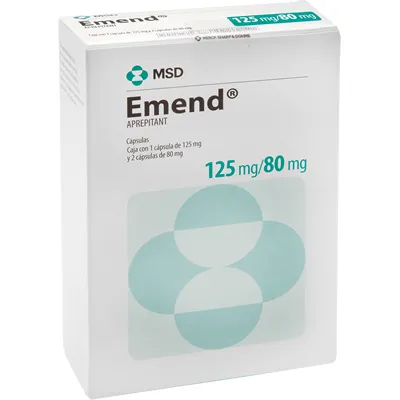
Frequently asked questions
How should EMEND be taken?
The medicine must be taken exactly according to the doctor's instructions. For capsules, one dose is taken on the first day (125 mg) one hour before chemotherapy and one dose on each of the following two days (80 mg). For the oral suspension, the dose is determined by the doctor based on the child's weight and must be administered one hour before chemotherapy on the first day, and on the following days according to the instructions received.
When should you not take EMEND?
It must not be taken if you are allergic to the active substance or to any of the other components. It is contraindicated if you are taking medicines containing pimozide, terfenadine, astemizole, or cisapride. You must inform the doctor if you have liver problems or if you are taking other drugs, such as certain immunosuppressants, contraceptives, or medicines for diabetes.
What are the side effects of EMEND?
Common side effects include constipation, indigestion, headache, fatigue, loss of appetite, hiccups, or increased liver enzymes. Dizziness and drowsiness may also occur. In rare cases, serious reactions such as breathing difficulties, skin rashes, or heart problems may occur; if signs of an allergic reaction are present, it is necessary to consult a doctor immediately.
Are there any special warnings regarding the use of other drugs?
Yes, EMEND may affect the efficacy of other medicines. For example, hormonal contraceptives may not work correctly; during treatment and up to 2 months after its end, it is necessary to use an additional or different non-hormonal contraceptive method. It is essential to inform the doctor of all medicines currently in use, including antibiotics, antifungals, or medicines for anxiety.
What do you need to know regarding pregnancy and breastfeeding?
The medicine should not be used during pregnancy or breastfeeding unless clearly necessary and after consulting a doctor. Breastfeeding is not recommended during treatment.
Instructions for use
Table of contents
- EMEND 125 mg hard capsules, 80 mg hard capsules
- 1. What EMEND is and what it is used for
- 2. What you need to know before taking or administering EMEND
- 3. How to take EMEND
- 4. Possible side effects
- 5. How to store EMEND
- 6. Package contents and other information
- Package leaflet: Information for the user
- EMEND 125 mg powder for oral suspension
- 1. What EMEND is and what it is used for
- 2. What you need to know before administering EMEND
- 3. How to administer EMEND
- 4. Possible side effects
- 5. How to store EMEND
- 6. Package contents and other information
- The following information is intended exclusively for healthcare professionals:
Package leaflet: Information for the user
EMEND 125 mg hard capsules, 80 mg hard capsules
aprepitant
Please read this leaflet carefully before taking this medicine because it contains important information for you. If you are the parent of a child being treated with EMEND, read these instructions carefully.
- Keep this leaflet. You may need to read it again.
- If you have any questions, ask your doctor, pharmacist, or nurse.
- This medicine has been prescribed for you or your child only. Do not give it to others, even if their symptoms are the same, as it may be harmful.
- If you or your child experience any side effects, including those not listed in this leaflet, tell your doctor, pharmacist, or nurse. See section 4.
Contents of this leaflet
- What EMEND is and what it is used for
- What you need to know before taking or administering EMEND
- How to take EMEND
- Possible side effects
- How to store EMEND
- Contents of the pack and other information
1. What EMEND is and what it is used for
EMEND contains the active substance aprepitant and belongs to a group of medicines called
"neurokinin 1 (NK ) receptor antagonists". The brain has a specific area that controls nausea and
vomiting. EMEND works by blocking the signals sent to this area, thereby reducing nausea and
vomiting. EMEND capsules are used in adults and adolescents from 12 years of age in combination
with other medicines to prevent nausea and vomiting caused by chemotherapy treatments
(treatments for cancer) that are highly and moderately emetogenic (for example, cisplatin,
cyclophosphamide, doxorubicin or epirubicin).
2. What you need to know before taking or administering EMEND
Do not take EMEND
- if you or the child is allergic to aprepitant or to any of the other ingredients of this medicine (listed in section 6),
- with medicines containing pimozide (a substance used to treat psychiatric disorders), terfenadine and astemizole (used for hay fever and other allergies), or cisapride (used to treat digestive problems). Tell your doctor if you or the child is taking any of these medicines, as treatment must be changed before starting EMEND.
Warnings and precautions
Talk to your doctor, pharmacist, or nurse before taking EMEND or administering this medicine to the child.
Before treatment with EMEND, inform your doctor if you or the child has liver disease, as the liver is important for metabolizing the medicine in the body. Your doctor may therefore need to check your or the child’s liver condition.
Children and adolescents
Do not administer EMEND 80 mg and 125 mg capsules to children under 12 years of age, as these 80 mg and 125 mg capsules have not been studied in this population.
Other medicines and EMEND
EMEND may affect other medicines both during and after treatment with EMEND. There are some medicines that must not be taken with EMEND (such as pimozide, terfenadine, astemizole, and cisapride), or that require dose adjustment (see also “Do not take EMEND”).
The effects of EMEND or other medicines may be altered if you or the child takes EMEND together with other medicines, including those listed below. Inform your doctor or pharmacist if you or the child is taking any of the following medicines:
- medicines for birth control, which may include oral contraceptives, contraceptive patches, implants, and certain hormone-releasing intrauterine devices (IUDs), may not work properly when taken with EMEND. During treatment with EMEND and for up to 2 months after taking EMEND, another or additional non-hormonal method of birth control should be used,
- cyclosporine, tacrolimus, sirolimus, everolimus (immunosuppressants),
- alfentanil, fentanyl (used to treat pain),
- quinidine (used to treat irregular heartbeat),
- irinotecan, etoposide, vinorelbine, ifosfamide (medicines used to treat cancer),
- medicines containing ergot alkaloids such as ergotamine and dihydroergotamine (used to treat migraine),
- warfarin, acenocoumarol (anticoagulants; blood tests may be required),
- rifampicin, clarithromycin, telithromycin (antibiotics used to treat infections),
- phenytoin (a medicine used to treat seizures),
- carbamazepine (used to treat depression and epilepsy),
- midazolam, triazolam, phenobarbital (medicines used to calm or help sleep),
- St. John’s wort (a herbal preparation used to treat depression),
- protease inhibitors (used to treat HIV infections),
- ketoconazole except shampoo (used to treat Cushing's syndrome, characterized by excessive cortisol production by the body),
- itraconazole, voriconazole, posaconazole (antifungals),
- nefazodone (used to treat depression),
- corticosteroids (such as dexamethasone and methylprednisolone),
- anti-anxiety medicines (such as alprazolam),
- tolbutamide (a medicine used to treat diabetes).
Inform your doctor or pharmacist if you or the child is taking, has recently taken, or might take any other medicines.
Pregnancy and breastfeeding
This medicine must not be used during pregnancy unless clearly necessary. If you or the child is pregnant, suspects pregnancy, plans to become pregnant, or is breastfeeding, consult your doctor before taking this medicine.
For information on birth control, see “Other medicines and EMEND”.
It is not known whether EMEND is excreted in human milk; breastfeeding is therefore not recommended during treatment with this medicine. Before taking this medicine, it is important to tell your doctor if you or the child is breastfeeding or planning to breastfeed.
Driving and using machines
It should be noted that some people may experience dizziness and drowsiness after taking EMEND. If you or the child experiences dizziness or drowsiness, avoid driving, cycling, or operating machinery or tools after taking this medicine (see “Possible side effects”).
EMEND contains sucrose
EMEND capsules contain sucrose. If your doctor has diagnosed you or the child with an intolerance to certain sugars, contact your doctor before taking this medicine.
EMEND contains sodium
This medicine contains less than 1 mmol (23 mg) of sodium per capsule, i.e., essentially “sodium-free”.
3. How to take EMEND
Always take this medicine or give this medicine to the child exactly as instructed by the doctor,
pharmacist, or nurse. If you have any doubts, consult your doctor,
pharmacist, or nurse. Always take EMEND in combination with other medicines to prevent
nausea and vomiting. After treatment with EMEND, your doctor may instruct you or the child to
continue taking other medicines, including a corticosteroid (such as dexamethasone) and a
“5-HT antagonist” (such as ondansetron), to prevent nausea and vomiting. Consult your doctor,
pharmacist, or nurse if you are unsure.
The recommended oral dose of EMEND is:
Day 1:
- one 125 mg capsule 1 hour before starting the chemotherapy session
and
Days 2 and 3:
- one 80 mg capsule each day.
- If chemotherapy is not administered, take EMEND in the morning.
- If chemotherapy is administered, take EMEND 1 hour before starting the chemotherapy session.
EMEND may be taken with or without food.
Swallow the capsule whole with liquid.
If you take more EMEND than you should
Do not take more capsules than recommended by your doctor. If you or the child has taken too
many capsules, call your doctor immediately.
If you forget to take EMEND
If you or the child forgets a dose, seek advice from your doctor.
If you have any doubts about how to use this medicine, consult your doctor or pharmacist.
4. Possible side effects
Like all medicines, this medicine can cause side effects, although not everybody gets them.
Stop taking EMEND and go immediately to a doctor if you or the child experience any of the
following side effects, which may be serious and for which you or the child may need urgent
medical treatment:
- hives, rash, itching, difficulty breathing or swallowing (frequency not known, cannot be estimated from the available data); these are signs of an allergic reaction.
Other side effects that have been reported are listed below.
Common side effects (may affect up to 1 in 10 people) are:
- constipation, indigestion,
- headache,
- tiredness,
- loss of appetite,
- hiccups,
- increased levels of liver enzymes in the blood.
Uncommon side effects (may affect up to 1 in 100 people) are:
- dizziness, drowsiness,
- acne, rash,
- anxiety,
- belching, nausea, vomiting, heartburn, stomach pain, dry mouth, passing wind,
- increased pain or burning during urination,
- weakness, general feeling of being unwell,
- hot flushes/flushing of the face or skin,
- fast or irregular heartbeat,
- fever with increased risk of infection, reduction in red blood cells.
Rare side effects (may affect up to 1 in 1,000 people) are:
- difficulty thinking, lack of energy, altered taste,
- skin sensitivity to sunlight, excessive sweating, oily skin, skin lesions, itchy rash, Stevens-Johnson syndrome/toxic epidermal necrolysis (a rare severe skin reaction),
- euphoria (feeling of extreme happiness), disorientation,
- bacterial infection, fungal infection,
- severe constipation, stomach ulcer, inflammation of the small intestine and colon, mouth sores, intestinal gas,
- frequent urination, increased volume of urine passed, presence of sugar or blood in the urine,
- chest discomfort, swelling, change in walking pattern,
- cough, mucus in the back of the throat, throat irritation, sneezing, sore throat,
- eye discharge and itching,
- ringing in the ears,
- muscle spasms, muscle weakness,
- excessive thirst,
- slowed heartbeat, heart and blood vessel disease,
- reduction in white blood cells, reduction in sodium levels in the blood, weight loss.
Reporting of side effects
If you or the child experience any side effect, including those not listed in this leaflet, talk to your doctor, pharmacist, or nurse. You can also report side effects directly via the national reporting system detailed in Annex V.
By reporting side effects, you can help provide more information on the safety of this medicine.
5. How to store EMEND
Keep this medicine out of the sight and reach of children.
Do not use this medicine after the expiry date stated on the carton after EXP. The expiry date refers to the last day of the month.
Store in the original packaging to protect it from moisture.
Do not remove the capsule from the blister until it is ready to be taken.
Do not dispose of any medicine via wastewater or household waste. Ask your pharmacist how to dispose of medicines you no longer use. This will help protect the environment.
6. Package contents and other information
What EMEND contains
- The active substance is aprepitant. Each 125 mg hard capsule contains 125 mg of aprepitant. Each 80 mg hard capsule contains 80 mg of aprepitant.
- The other ingredients are sucrose, microcrystalline cellulose (E 460), hydroxypropylcellulose (E 463), sodium lauryl sulfate, gelatin, titanium dioxide (E 171), shellac, potassium hydroxide and black iron oxide (E 172); the 125 mg hard capsule also contains red iron oxide (E 172) and yellow iron oxide (E 172).
What EMEND looks like and how it is packaged
The 125 mg hard capsule is opaque with a white body and a pink cap, with "462" and "125 mg" printed radially on the body in black ink.
The 80 mg hard capsule is opaque with a white cap and body, with "461" and "80 mg" printed radially on the body in black ink.
EMEND 125 mg and 80 mg hard capsules are available in the following pack sizes:
- Aluminium blister containing one 80 mg capsule
- 2-day treatment pack containing two 80 mg capsules
- 5 aluminium blisters each containing one 80 mg capsule
- Aluminium blister containing one 125 mg capsule
- 5 aluminium blisters each containing one 125 mg capsule
- 3-day treatment pack containing one 125 mg capsule and two 80 mg capsules.
Not all pack sizes may be marketed.
Marketing Authorisation Holder and Manufacturer
Merck Sharp & Dohme B.V.
Waarderweg 39
2031 BN Haarlem
The Netherlands
For further information about this medicine, please contact the local representative of the Marketing Authorisation Holder.
Belgique/België/Belgien Lietuva
MSD Belgium BVBA/SPRL UAB Merck Sharp & Dohme
Tél/Tel: +32(0)27766211 Tel. + 370 5278 02 47
[email protected] [email protected]
България Luxembourg/Luxemburg
Мерк Шарп и Доум България ЕООД MSD Belgium BVBA/SPRL
Тел.: +359 2 819 3737 Tél/Tel: +32(0)27766211
[email protected] [email protected]
Česká republika Magyarország
Merck Sharp & Dohme s.r.o. MSD Pharma Hungary Kft.
Tel: +420 233 010 111 Tel.: +36 1 888 5300
[email protected] [email protected]
Danmark Malta
MSD Danmark ApS Merck Sharp & Dohme Cyprus Limited
Tlf: + 45 4482 4000 Tel: 8007 4433 (+356 99917558)
[email protected] [email protected]
Deutschland Nederland
MSD SHARP & DOHME GMBH Merck Sharp & Dohme B.V.
Tel: 0800 673 673 673 (+49 (0) 89 4561 2612) Tel: 0800 9999000 (+31 23 5153153)
[email protected] [email protected]
Eesti Norge
Merck Sharp & Dohme OÜ MSD (Norge) AS
Tel.: +372 6144 200 Tlf: +47 32 20 73 00
[email protected] [email protected]
Eλλάδα Österreich
MSD Α.Φ.Β.Ε.Ε. Merck Sharp & Dohme Ges.m.b.H.
Τηλ: +30 210 98 97 300 Tel: +43 (0) 1 26 044
[email protected] [email protected]
España Polska
Merck Sharp & Dohme de España, S.A. MSD Polska Sp. z o.o.
Tel: +34 91 321 06 00 Tel: +48 22 549 51 00
[email protected] [email protected]
France Portugal
MSD France Merck Sharp & Dohme, Lda
Tél: +33 (0) 1 80 46 40 40 Tel: +351 21 4465700
[email protected]
Hrvatska România
Merck Sharp & Dohme d.o.o. Merck Sharp & Dohme Romania S.R.L.
Tel: + 385 1 6611 333 Tel: +40 21 529 29 00
[email protected] [email protected]
Ireland Slovenija
Merck Sharp & Dohme Ireland (Human Health) Limited Merck Sharp & Dohme, inovativna zdravila d.o.o.
Tel: +353 (0)1 2998700 Tel: +386 1 5204 201
[email protected] [email protected]
Ísland Slovenská republika
Vistor hf. Merck Sharp & Dohme, s. r. o.
Simi: +354 535 7000 Tel: +421 2 58282010
[email protected]
Italia Suomi/Finland
MSD Italia S.r.l. MSD Finland Oy
Tel: +39 06 361911 Puh/Tel: +358 (0)9 804 650
[email protected] [email protected]
Κύπρος Sverige
Merck Sharp & Dohme Cyprus Limited Merck Sharp & Dohme (Sweden) AB
Τηλ.: 800 00 673 (+357 22866700) Tel: +46 77 5700488
[email protected] [email protected]
Latvija United Kingdom
SIA Merck Sharp & Dohme Latvija Merck Sharp & Dohme Limited
Tel: +371 67364224 Tel: +44 (0) 1992 467272
[email protected] [email protected]
Further sources of information
More detailed information on this medicine is available on the European Medicines Agency website: http://www.ema.europa.eu .
Package leaflet: Information for the user
EMEND 125 mg powder for oral suspension
aprepitant
Please read this entire leaflet carefully before using this medicine, as it contains important information for you. This leaflet has been written for the parent or caregiver who will administer this medicine to the child: please read these instructions carefully.
- Keep this leaflet. You may need to read it again.
- If you have any questions, consult the doctor, pharmacist, or nurse.
- This medicine has been prescribed only for this child. Do not give it to others, even if they have the same symptoms, as it could be harmful.
- If the child experiences any adverse reactions, including those not listed in this leaflet, consult the doctor, pharmacist, or nurse. See section 4.
Contents of this leaflet
- What EMEND is and what it is used for
- What you need to know before administering EMEND
- How to administer EMEND
- Possible side effects
- How to store EMEND
- Contents of the pack and other information
1. What EMEND is and what it is used for
EMEND contains the active substance "aprepitant". It belongs to a group of medicines called "neurokinin 1 (NK ) receptor antagonists". The brain has a specific area that controls nausea and vomiting. EMEND works by blocking signals sent to this area, thereby reducing nausea and vomiting. The oral suspension powder formulation is used in children from 6 months to less than 12 years of age in combination with other medicines to prevent nausea and vomiting caused by chemotherapy treatments (cancer treatments) that are highly and moderately emetogenic (for example, cisplatin, cyclophosphamide, doxorubicin or epirubicin).
2. What you need to know before administering EMEND
Do not administer EMEND
- if the child is allergic to aprepitant or to any of the other ingredients of this medicine (listed in section 6),
- if the child is taking medicines containing "pimozide" (used for mental health conditions),
- if the child is taking "terfenadine" or "astemizole" (used for hay fever and other allergies),
- if the child is taking "cisapride" (used for digestive problems). Do not administer this medicine if any of the above situations apply to the child, and inform the child's doctor about the use of the medicines listed above. This is because treatment will need to be adjusted before starting this medicine. If you have any doubts, consult the doctor, pharmacist, or nurse before administering this medicine.
Warnings and precautions
Talk to the doctor, pharmacist, or nurse before administering this medicine to the child.
Liver problems
Before starting treatment with EMEND, inform the doctor if the child has any liver problems. This is because the liver plays an important role in metabolizing the medicine in the body. The doctor may need to monitor the child's liver function during treatment.
Children and adolescents
Do not administer EMEND oral suspension powder to children under 6 months of age or with a body weight below 6 kg, or to adolescents aged between 12 and 18 years, as the oral suspension powder formulation has not been studied in these populations.
Other medicines and EMEND
Inform the doctor, pharmacist, or nurse if the child is taking, has recently taken, or might take any other medicines, because EMEND may affect how other medicines work, both during and after treatment with EMEND. In addition, some other medicines may alter the effect of this medicine.
Do not administer EMEND and inform the doctor or pharmacist if the child is taking any of the following medicines (see also “Do not administer EMEND”), as treatment will need to be adjusted before starting EMEND:
- pimozide – for mental health conditions,
- terfenadine and astemizole – for hay fever and other allergies,
- cisapride – for digestive problems. Do not administer this medicine and inform the doctor or pharmacist if any of the above situations apply to the child.
Talk to the doctor, pharmacist, or nurse if the child is taking any of the following medicines:
- medicines that affect the immune system – e.g. cyclosporine, tacrolimus, sirolimus, and everolimus,
- alfentanil, fentanyl – for pain,
- quinidine – for irregular heartbeat,
- cancer medicines – e.g. irinotecan, etoposide, vinorelbine, ifosfamide,
- medicines containing “ergot-derived alkaloids” – e.g. ergotamine and dihydroergotamine – for migraine,
- blood-thinning medicines – e.g. warfarin and acenocoumarol. The child may need blood tests during treatment with EMEND,
- antibiotics for treating infections – e.g. rifampicin, clarithromycin, and telithromycin,
- phenytoin – for seizures,
- carbamazepine – for depression and epilepsy,
- midazolam, triazolam, and phenobarbital – for sedation or to help sleep,
- St. John’s wort – a herbal medicine used for depression,
- protease inhibitors – for HIV infections,
- ketoconazole (except shampoo) (used to treat Cushing's syndrome, characterized by excessive cortisol production by the body),
- antifungal medicines, e.g. itraconazole, voriconazole, posaconazole,
- nefazodone – for depression,
- corticosteroids – e.g. dexamethasone and methylprednisolone,
- medicines for anxiety, e.g. alprazolam,
- tolbutamide – for diabetes,
- hormonal contraceptives, including pills, patches, implants, and certain hormone-releasing intrauterine devices. These medicines may not work properly when taken together with this medicine. A non-hormonal contraceptive method, different or additional to the current one, should be used during treatment with this medicine and for 2 months after treatment ends. If any of the above situations apply to the child (or if you have any doubts), inform the doctor, pharmacist, or nurse before administering this medicine.
Pregnancy and breastfeeding
This medicine must not be used during pregnancy and breastfeeding unless clearly necessary.
For information regarding pregnancy, breastfeeding, and contraception, consult your doctor.
Driving and using machines
It should be noted that some people may experience dizziness and drowsiness after taking EMEND. If the child experiences dizziness or drowsiness, he/she should not ride a bicycle or operate tools or machinery.
EMEND contains sucrose and lactose
The oral suspension powder contains sucrose and lactose. If the doctor has diagnosed the child with an intolerance to certain sugars, contact the doctor before administering this medicine to the child.
EMEND contains sodium
This medicine contains less than 1 mmol (23 mg) of sodium per sachet, i.e. essentially "sodium-free".
3. How to administer EMEND
Healthcare professionals: see the instructions for preparing the oral suspension for healthcare
professionals at the end of this leaflet. This section provides guidance on how to prepare a dose of EMEND oral suspension powder.
Parents and caregivers: Always give this medicine to the child exactly as instructed by the doctor, pharmacist, or nurse. If you have any doubts, consult the child's doctor, pharmacist, or nurse.
It is very important that this medicine is administered exactly as described below.
For each dose of EMEND, you will need a pre-filled oral dosing dispenser containing the dose prescribed for the child.
Keep the dosing dispenser in the refrigerator (between 2°C and 8°C) until it is time to administer the medicine to the child.
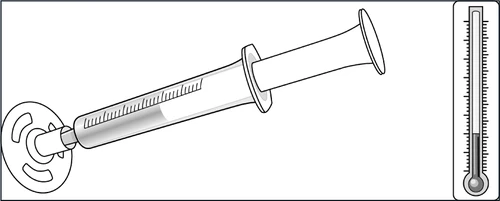
Use this medicine within 2 days after receiving it from the healthcare professional.
The medicine may be kept at room temperature (not above 30°C) for up to 3 hours before administration.
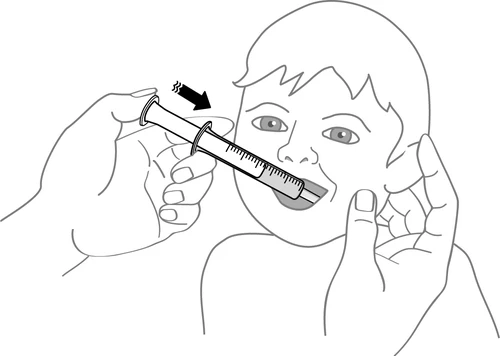
The colour of the medicine in the oral dosing dispenser may vary in different shades of pink (from light pink to dark pink). This is normal and the medicine is safe to use.
- Remove the closure device from the oral dosing dispenser.
- Place the tip of the oral dosing dispenser into the child’s mouth, inside the left or right cheek.
- Slowly push the plunger fully down to administer the entire dose contained in the oral dosing dispenser.
If the child was unable to take the full dose, contact the child’s doctor.
When finished, do not dispose of any unused medicine via wastewater or household waste. Ask your pharmacist how to dispose of medicines no longer in use. This will help protect the environment.
How much to give
- The doctor will determine the correct dose of oral suspension powder based on the child’s body weight.
- Do not change the dose or stop treatment without first consulting the doctor, pharmacist, or nurse.
When to give it
Day 1:
- Administer this medicine one hour before the start of chemotherapy session.
Day 2 and Day 3: - If the child is not undergoing chemotherapy – administer this medicine in the morning.
- If the child is undergoing chemotherapy – administer this medicine one hour before the start of chemotherapy session.
EMEND may be administered with or without food.
Always administer this medicine together with other medicines to prevent nausea and vomiting. After treatment with EMEND, the doctor may require the child to continue taking other medicines to prevent nausea and vomiting, including:
- a corticosteroid – such as dexamethasone, and
- a “5-HT__ antagonist” – such as ondansetron. Consult the doctor, pharmacist, or nurse if you have any doubts.
If you give more EMEND than you should
Do not give the child more medicine than the amount recommended by the doctor.
If you accidentally give too much medicine, contact the doctor immediately.
If you forget to give EMEND
If the child misses a dose of this medicine, consult the doctor.
If you have any doubts about how to use this medicine, speak to the doctor or pharmacist.
4. Possible side effects
Like all medicines, this medicine can cause side effects, although not everybody gets them.
Serious side effects
Stop giving this medicine and seek immediate medical attention if you or the child experience any of the following serious side effects – the child may require urgent medical treatment:
- allergic reaction – signs may include hives, rash, itching, difficulty breathing or swallowing (frequency unknown). Stop giving this medicine and seek immediate medical attention if any of the above serious side effects occur.
Other side effects
Inform your doctor, pharmacist, or nurse if you or the child experience any of the following side effects:
Common: may affect up to 1 in 10 people
- constipation or indigestion,
- headache,
- tiredness,
- loss of appetite,
- hiccups,
- increased levels of liver enzymes in the blood (detected by blood tests).
Uncommon: may affect up to 1 in 100 people
- dizziness or drowsiness,
- acne, rash,
- anxiety,
- belching, nausea, vomiting, heartburn, stomach pain, dry mouth, passing wind,
- pain or burning during urination,
- weakness, general feeling of being unwell,
- hot flushes/flushing of the face or skin,
- fast or irregular heartbeat,
- fever with increased risk of infection, low red blood cell count (detected by blood tests).
Rare: may affect up to 1 in 1,000 people
- difficulty thinking, lack of energy, changes in taste,
- skin sensitivity to sunlight, excessive sweating, oily skin, skin lesions, itchy rash, Stevens-Johnson syndrome or toxic epidermal necrolysis (rare, serious skin reactions),
- euphoria (feeling extremely happy), confusion,
- bacterial infection, fungal infection,
- severe constipation, stomach ulcer, inflammation of the small intestine and colon, mouth sores, intestinal gas,
- increased need to urinate or increased volume of urine, sugar or blood in the urine,
- chest discomfort, swelling, change in walking pattern,
- cough, mucus in the back of the throat, sore throat, sneezing, throat irritation,
- eye discharge and itching,
- ringing in the ears,
- muscle spasms, muscle weakness,
- excessive thirst,
- slow heartbeat, heart or blood vessel disease,
- low white blood cell count, low sodium levels in the blood, weight loss.
Reporting of side effects
If the child experiences any side effect, including those not listed in this leaflet, consult your doctor, pharmacist, or nurse. You may also report side effects directly through the national reporting system listed in Annex V.
Reporting side effects can help provide more information on the safety of this medicine.
5. How to store EMEND
Keep this medicine out of the sight and reach of children.
Before reconstitution:
In general, Emend will be stored by healthcare professionals. If you need to store it, the following
storage instructions apply:
Do not give this medicine to the child after the expiry date stated on the carton and sachet after EXP. The expiry date refers to the last day of that month.
This medicine does not require any special storage temperature.
Store in the original packaging to protect the medicine from moisture.
After reconstitution:
The oral suspension may be kept at room temperature (not above 30°C) for up to 3 hours before administration. Alternatively, it may be stored in the refrigerator (between 2°C and 8°C) for up to 72 hours.
Do not dispose of any medicine via wastewater or household waste. Ask your pharmacist how to dispose of medicines you no longer use. This will help protect the environment.
6. Package contents and other information
What EMEND contains
- The active substance is aprepitant. Each sachet contains 125 mg of aprepitant. After reconstitution, 1 mL of oral suspension contains 25 mg of aprepitant.
- The other ingredients are hypromellose (E 463), sodium lauryl sulfate, sucrose and lactose (see section 2, paragraph “EMEND contains sucrose and lactose”), red iron oxide (E 172) and sodium stearyl fumarate.
Description of the appearance of EMEND and contents of the pack
The oral suspension powder is a pink to pale pink powder contained in a single-dose sachet.
Single-dose pack
A pack contains one sachet, one 1 mL oral dosing device and one 5 mL oral dosing device (in polypropylene with silicone O-ring), a closure device and a mixing container (in polypropylene).
Marketing Authorisation Holder and Manufacturer
Merck Sharp & Dohme B.V.
Waarderweg 39
2031 BN Haarlem
The Netherlands
For further information about this medicinal product, please contact the local representative of the Marketing Authorisation Holder.
Belgique/België/Belgien Lietuva
MSD Belgium BVBA/SPRL UAB Merck Sharp & Dohme
Tél/Tel: +32(0)27766211 Tel.: +370 5 278 02 47
[email protected] [email protected]
България Luxembourg/Luxemburg
Мерк Шарп и Доум България ЕООД MSD Belgium BVBA/SPRL
Тел.: +359 2 819 3737 Tél/Tel: +32(0)27766211
[email protected] [email protected]
Česká republika Magyarország
Merck Sharp & Dohme s.r.o. MSD Pharma Hungary Kft.
Tel.: +420 233 010 111 Tel.: +36 1 888 53 00
[email protected] [email protected]
Danmark Malta
MSD Danmark ApS Merck Sharp & Dohme Cyprus Limited
Tlf: +45 44824000 Tel: 8007 4433 (+356 99917558)
[email protected] [email protected]
Deutschland Nederland
MSD SHARP & DOHME GMBH Merck Sharp & Dohme B.V.
Tel: 0800 673 673 673 (+49 (0) 89 4561 2612) Tel: 0800 9999000 (+31 23 5153153)
[email protected] [email protected]
Eesti Norge
Merck Sharp & Dohme OÜ MSD (Norge) AS
Tel.: +372 6144 200 Tlf: +47 32 20 73 00
[email protected] [email protected]
Ελλάδα Österreich
MSD Α.Φ.Β.Ε.Ε. Merck Sharp & Dohme Ges.m.b.H.
Τηλ: + 30 210 98 97 300 Tel: +43 (0) 1 26 044
[email protected] [email protected]
España Polska
Merck Sharp & Dohme de España, S.A. MSD Polska Sp.z o.o.
Tel: +34 91 321 06 00 Tel: +48 22 549 51 00
[email protected] [email protected]
France Portugal
MSD France Merck Sharp & Dohme, Lda
Tél: +33 (0) 1 80 46 40 40 Tel: +351 21 4465700
[email protected]
Hrvatska România
Merck Sharp & Dohme d.o.o. Merck Sharp & Dohme Romania S.R.L.
Tel: + 385 1 6611 333 Tel: + 4021 529 29 00
[email protected] [email protected]
Ireland Slovenija
Merck Sharp & Dohme Ireland (Human Health) Limited Merck Sharp & Dohme, inovativna zdravila d.o.o.
Tel: +353 (0)1 2998700 Tel: + 386 1 5204201
[email protected] [email protected]
Ísland Slovenská republika
Vistor hf. Merck Sharp & Dohme, s. r. o.
Simi: +354 535 7000 Tel.: +421 2 58282010
[email protected]
Italia Suomi/Finland
MSD Italia S.r.l. MSD Finland Oy
Tel: +39 06 361911 Puh/Tel: +358 (0)9 804650
[email protected] [email protected]
Κύπρος Sverige
Merck Sharp & Dohme Cyprus Limited Merck Sharp & Dohme (Sweden) AB
Τηλ: 80000 673 (+357 22866700) Tel: +46 (0) 77 5700488
[email protected] [email protected]
Latvija United Kingdom
SIA Merck Sharp & Dohme Latvija Merck Sharp & Dohme Limited
Tel: +371 67364 224 Tel: +44 (0) 1992 467272
[email protected] [email protected]
Other sources of information
More detailed information on this medicinal product is available on the website of the European Medicines Agency, http://www.ema.europa.eu.
The following information is intended exclusively for healthcare professionals:
Instructions for healthcare professionals on the preparation of oral suspension
Each EMEND pack contains one sachet
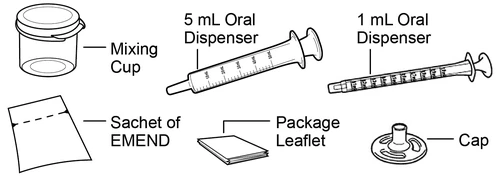
of oral suspension powder, a 1 mL oral dosing syringe, a 5 mL oral dosing syringe, a closure device, and a mixing container.
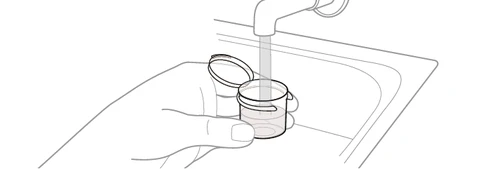
Fill the mixing container with drinking water at room temperature.
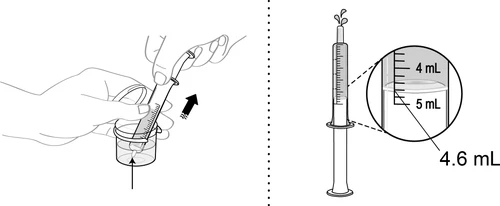
Fill the 5 mL oral dosing syringe with 4.6 mL of water drawn from the mixing container.
Ensure that there is no air in the oral dosing syringe
(if air is present, remove it).

Discard any unused water remaining in the mixing container.
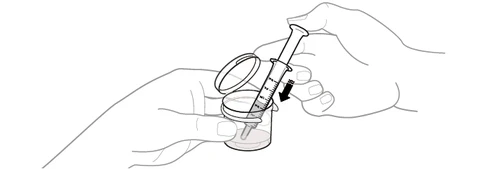
Add the 4.6 mL of water from the oral dosing syringe into the mixing container.
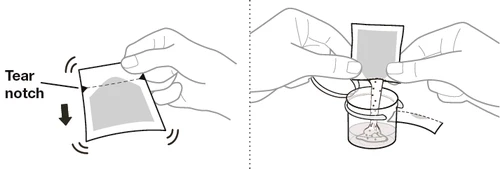
Each sachet of EMEND oral suspension contains 125 mg of aprepitant, which must be suspended in 4.6 mL of water to achieve a final concentration of 25 mg/mL.
Hold the EMEND oral suspension powder sachet in an upright position and gently shake to settle the contents at the bottom before opening.
Empty the entire contents of the sachet into the mixing container containing the 4.6 mL of water and close the lid until a click is heard.
Gently mix the EMEND suspension by rotating the container 20 times; then
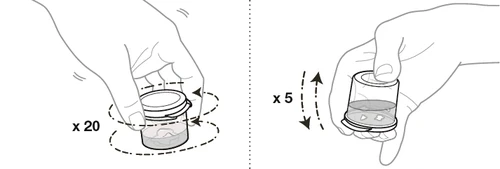
gently invert the mixing container five times.
To prevent foaming, do not shake the mixing container. The mixture will be opaque pink to light pink in color.
Inspect the EMEND mixture to check
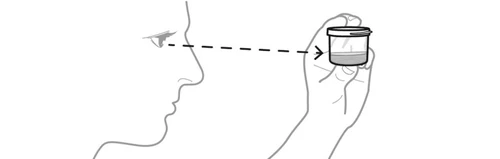
for lumps or foam:
If lumps are present, repeat step 7 until no lumps remain.
If foam is present, wait for the foam to dissipate before proceeding to step 9.
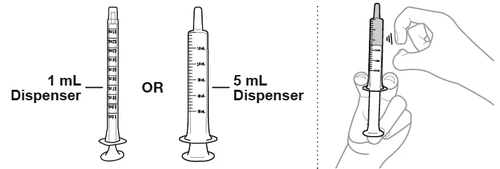
Fill the oral dosing syringe with the prescribed dose drawn from the mixing container, according to the table below.
- Select the oral dosing syringe based on the prescribed dose:
- Use the 1 mL oral dosing syringe if the dose is 1 mL or less.
- Use the 5 mL oral dosing syringe if the dose is greater than 1 mL.
- It is common to have residual medication left in the container. Ensure that there is no air in the oral dosing syringe (if air is present, remove it). Ensure that the oral dosing syringe contains the prescribed dose.
Day 1 Day 2 Day 3
EMEND oral suspension 3 mg/kg orally 2 mg/kg orally 2 mg/kg orally
25 mg/mL Maximum dose 125 mg Maximum dose 80 mg Maximum dose 80 mg
Attach the closure device to the oral dosing syringe until a click is heard.
If the dose is not administered immediately after measuring, store the filled oral dosing syringe(s) in the refrigerator at 2°C to 8°C
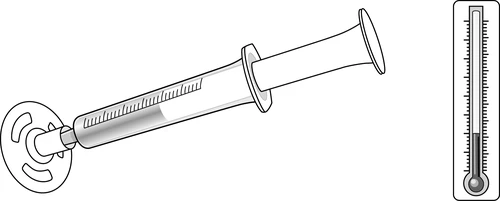
for up to 72 hours prior to use.
When handing the dose(s) to caregivers, instruct them to keep the oral dosing syringe(s) refrigerated until ready to administer.
The oral suspension may be kept at room temperature (not exceeding 30°C) for up to 3 hours prior to administration.
| Discard any unused suspension and waste materials derived from this suspension. Any unused medicinal product and waste materials derived from this medicinal product must be disposed of in accordance with local applicable regulations. |
Similar drugs
| Brand name | Dosage form | Active substance / Dosage | Manufacturer |
|---|---|---|---|
| APREPITANT TEVA | capsules, hard gelatin | TEVA B.V. | |
| ATANTO | capsules, hard gelatin | SINTESY PHARMA S.R.L. |
The original data is available in the language of the country of manufacture.
Data source: Italian Medicines Agency (AIFA)
Data last verified: September 21, 2026