CLINOLEIC
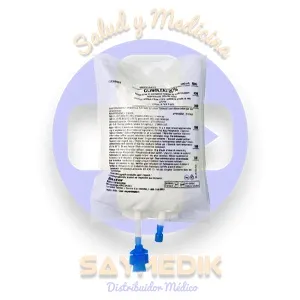
ItalyIt is used as a source of energy and essential fatty acids that the body cannot produce on its own. It is administered directly into the bloodstream when it is not possible to consume food and drinks through the digestive system for medical reasons.
Frequently asked questions
When should ClinOleic not be taken?
It must not be used if you are allergic to egg, soy, peanut proteins, or other components of the medicine. It is also contraindicated in cases of very high blood fat levels (severe dyslipidemia) or if you suffer from uncontrolled metabolic disorders, such as uncompensated diabetes or lactic acidosis.
How is the drug administered?
The medicine is administered via intravenous infusion, which means through a plastic tube connected to a needle inserted into a vein. The dose and the rate at which the liquid must flow are determined by the doctor based on the clinical condition.
What are the common side effects of ClinOleic?
The most common side effects may include nausea, vomiting, decreased blood pressure, and increased blood sugar levels.
What are the serious side effects to report?
You must contact a doctor immediately if allergic symptoms occur (such as sweating, fever, chills, headache, rash, or difficulty breathing), yellowing of the skin or eyes, abdominal pain, or breathing problems.
Are there interactions with other drugs?
Since the oils contained in the product contain vitamin K, it is important to inform the doctor if you are taking anticoagulant drugs (which reduce blood density), such as coumarin.
What happens if an excessive dose is received?
An overdose can cause fat overload syndrome. In infants and young children, administration that is too rapid or excessive can cause serious respiratory problems or excess acidity in the body.
Instructions for use
Package leaflet: Information for the patient
ClinOleic 20% Emulsion for infusion
Purified olive oil and purified soya oil
Please read all of this leaflet carefully before you start using this medicine.
- Keep this leaflet. You may need to read it again.
- If you have any questions, ask your doctor or pharmacist.
- This medicine has been prescribed for you only. Do not pass it on to others, even if their symptoms seem identical to yours, as it could be harmful.
- If you experience any side effects, including those not listed in this leaflet, inform your doctor or pharmacist.
Contents of this leaflet:
- What ClinOleic is and what it is used for
- What you need to know before using ClinOleic
- How to use ClinOleic
- Possible side effects
- How to store ClinOleic
- Contents of the pack and other information
In this leaflet, ClinOleic 20% will be referred to as ClinOleic.
1. What ClinOleic is and what it is used for
ClinOleic is an infusion emulsion containing olive oil (80%) and soybean oil (20%).
ClinOleic is provided as a source of energy and essential fatty acids (fats or lipids) that cannot
be synthesized by the body. ClinOleic is administered directly into the bloodstream, bypassing
the digestive system. This method of nutrition (parenteral nutrition) is used when food and
drinks cannot be taken directly into the digestive system for medical reasons.
2. What you need to know before using CLINOLEIC
Do not use ClinOleic
- If you are allergic (hypersensitive) to egg, soy, peanut proteins, or to any of the other components (see section 6, at the end of this leaflet).
- If you have high levels of fat in your blood (severe dyslipidemia)
- If you have uncorrected metabolic disorders including lactic acidosis and uncompensated diabetes
Warnings and precautions
Special clinical monitoring is required at the beginning of any intravenous infusion (endovenous infusion).
The infusion will be stopped immediately if any allergic symptoms occur, such as sweating, fever, chills, headache, rash, or dyspnea (difficulty breathing).
This medicine contains soybean oil and egg phospholipids. Soy and egg proteins may cause hypersensitivity reactions.
Cross-allergic reactions between soy and peanut proteins have been observed.
Your doctor will check and monitor your triglyceride levels (a type of fat in the blood) and your blood sugar levels.
Some medicines and certain diseases may increase the risk of developing an infection or sepsis (bacteria in the blood). There is a particular risk of infection or sepsis when a tube (intravenous catheter) is inserted into a vein. Your doctor will carefully examine you to detect any signs of infection. Patients requiring parenteral nutrition (nutrition delivered through a tube into a vein) may be more prone to infections due to their underlying medical conditions. The risk of infection can be reduced by using an "aseptic" ("germ-free") technique during catheter placement and maintenance, and during the preparation of the nutritional formula.
Liver disorders have been reported in patients receiving intravenous nutritional therapy. If you experience symptoms such as nausea, vomiting, abdominal pain, or yellowing of the skin or eyes (jaundice), contact your doctor immediately.
Your doctor should be informed if you have:
- Severe metabolic disorders affecting how your body processes sugars, fats, proteins, or salt
- Severe blood infection (sepsis)
- Severe liver disease (hepatopathy)
- Blood coagulation disorders
- Heart attack (myocardial infarction)
- Heart failure
- Kidney failure
- Reduced red blood cells (anemia)
- Fluid in the lungs (pulmonary edema)
If the site where the needle is inserted into a blood vessel (vein) becomes swollen, painful, and red, inform your doctor, as this may indicate inflammation (thrombophlebitis).
Serious side effects such as respiratory disorders leading to reduced oxygen in the body (respiratory distress) and conditions causing high levels of acid in the body (metabolic acidosis) have been reported in neonates and young children (infants) after rapid intravenous administration of lipids (see also section 3, If you are given more ClinOleic than you should).
Your doctor will closely monitor your condition at the start of the infusion, especially if you currently have liver, kidney, adrenal gland, heart, or circulatory problems.
To ensure ongoing efficacy and safety of treatment, your doctor will perform clinical and laboratory tests while you are receiving this medicine.
Children and adolescents
ClinOleic is suitable for use in young children provided its use is strictly controlled. ClinOleic has been used for up to 7 days in newborns (neonates) and up to 2 months in children.
When used in neonates and children under 2 years of age, the solution (in bags and administration sets) must be protected from light exposure until the end of administration. Exposure of ClinOleic to ambient light, especially after addition of trace elements and/or vitamins, may generate peroxides and other degradation products, which can be minimized by protecting from light.
Other medicines and ClinOleic
Inform your doctor or pharmacist if you are taking, have recently taken, or might take any other medicines.
The olive and soybean oils in ClinOleic contain vitamin K. Normally, this does not affect the action of blood-thinning medicines (anticoagulants) such as coumarin. However, if you are taking anticoagulants, you must inform your doctor.
Pregnancy and breastfeeding
The safety of ClinOleic during pregnancy and breastfeeding has not been established.
Therefore, you must not take ClinOleic during pregnancy or breastfeeding unless specifically advised by your doctor.
If you are pregnant, suspect you may be pregnant, are planning a pregnancy, or are breastfeeding, consult your doctor before taking this medicine.
3. How to use CLINOLEIC
Clinoleic contains 200 mg/ml of lipids.
The doctor will prescribe the dose and infusion rate.
Dose
Use in adults
The doctor will determine the appropriate dose according to your clinical condition.
The dose ranges from 1 up to a maximum of 2 g of lipids/kg/day.
Use in children
It is recommended not to exceed a daily dose of 3 g of lipids/kg.
Use in preterm infants and newborns with low birth weight
The use of ClinOleic is limited to preterm infants born at a gestational age of at least 28 weeks.
It is recommended not to exceed a daily dose of 2.0 g of lipids/kg.
Route and method of administration
You will receive ClinOleic through a plastic tube connected to a needle placed in one of your veins (intravenous infusion).
When used in newborns and children under 2 years of age, the solution (in bags and administration sets) must be protected from exposure to light until the end of administration (see section 2).
If you are given more ClinOleic than you should
An overdose may cause reduced ability of your body to eliminate the lipids from ClinOleic (fat overload syndrome). In newborn and young children (infants), an overdose and/or rapid administration of the lipids contained in ClinOleic into the bloodstream (increased infusion rate) may cause serious side effects such as respiratory disorders leading to reduced oxygen in the body (respiratory distress) and conditions leading to high levels of acid in the body (metabolic acidosis). Overdose effects are usually reversible when the infusion of ClinOleic is stopped (see also section 4. "Possible Side Effects").
If the doctor or nurse forgets to give you ClinOleic
You must not take a double dose to make up for a missed dose.
If you have further questions about the use of this medicine, ask your doctor or pharmacist.
4. POSSIBLE ADVERSE REACTIONS
Like all medicines, this medicine can cause adverse reactions, although not everyone experiences them.
If you notice any abnormal signs during the initial phases of the infusion, it must be stopped immediately.
These signs include sweating, chills, headache (cephalalgia), and difficulty breathing (dyspnoea).
Other adverse reactions have been observed with varying frequency:
The following adverse reactions are common and may occur in 1 to 10 patients out of 100:
- Feeling unwell (nausea), being sick (vomiting)
- Decrease in blood pressure
- Increase in blood sugar levels (hyperglycaemia)
The following adverse reactions are uncommon and may occur in 1 to 10 patients out of 1,000:
- Reduction in the number of white blood cells (leucopenia)
- Difficulty breathing (dyspnoea)
- Abdominal swelling (abdominal distension) or abdominal pain, and discomfort around the stomach area
- Yellowing of the skin and eyes caused by gallbladder problems (cholestasis) or increased bilirubin levels
- Increase in liver enzymes or blood triglyceride levels
The following adverse reactions have been reported at an unknown frequency (the frequency cannot be estimated from the available data):
- Reduction in the number of platelets in the blood
- Chills
- Allergic reactions including itchy red skin rash (urticaria), itching
- Diarrhoea
If you have a reduced ability to clear the lipids contained in ClinOleic, this may lead to a "fat overload syndrome". This may be caused by an overdose of ClinOleic, but it can also occur at the beginning of the infusion, even when ClinOleic is correctly administered. It may cause a sudden worsening of your clinical condition. Fat overload syndrome may result in:
- Excess lipids in the blood (hyperlipidaemia)
- Fever
- Fat infiltration of the liver
- Enlargement of the liver (hepatomegaly)
- Reduction in the number of red blood cells (anaemia)
- Reduction in the number of white blood cells and platelets
- Coagulation disorders
- Coma
All these symptoms are usually reversible when the infusion is stopped.
Reporting of adverse reactions
If you experience any adverse reaction, including those not listed in this leaflet, talk to your doctor or nurse. You can also report adverse reactions directly via the national reporting system at: https://www.aifa.gov.it/content/segnalazioni-reazioni-avverse . By reporting adverse reactions, you can help provide more information on the safety of this medicine.
5. How to store CLINOLEIC
Keep out of the sight and reach of children.
When used in neonates and children under 2 years of age, the solution (in bags and administration sets) must be protected from exposure to light until administration is complete (see section 2).
Do not use ClinOleic after the expiry date stated on the label after "Exp". The expiry date refers to the last day of that month.
Store below 25 °C.
Do not freeze.
Keep in the protective pouch.
Keep the container in the outer packaging to protect the medicine from moisture.
Do not use ClinOleic if the container is damaged or if the emulsion is not uniformly milky.
Discard partially used containers. Any remaining emulsion must not be reused and should be disposed of by healthcare professionals.
An oxygen absorber/indicator sachet is included in the outer wrapper. Before opening the outer wrapper, check the colour of the oxygen indicator on the oxygen absorber. It must match the reference colour printed next to the symbol OK and described in the printed area of the indicator label. The sachet must be discarded after opening the outer wrapper.
Once opened, use immediately.
Do not use the product if the colour of the oxygen indicator does not match the reference colour.
Do not store an opened bag for later use.
6. Package contents and other information
What ClinOleic contains
- per 100 ml the active ingredients are: Purified olive oil (80%) and purified soybean oil (20%) .............. 20.00 g corresponding to a content of essential fatty acids ....................... 4.00 g
- Characteristics Energy content 2000 kcal/L (8.36 MJ/L) Osmolarity 270 mOsm/L pH 6-8 Density 0.986
- The excipients are egg phospholipids, glycerol, sodium oleate, sodium hydroxide, water for injections
- The phospholipids provide 47 milligrams or 1.5 mmol of phosphorus per 100 ml.
Description of the appearance of ClinOleic and contents of the pack
ClinOleic is a homogeneous, milky liquid.
ClinOleic is supplied in plastic bags:
100 ml in bag: pack of 24 or 10 units.
250 ml in bag: pack of 20 or 10 units.
350 ml in bag: pack of 12 or 10 units.
500 ml in bag: pack of 12 or 10 units.
1000 ml in bag: pack of 6 units.
Not all pack sizes are marketed.
Marketing Authorization Holder
BAXTER S.p.A.
Via Del Serafico 89
00142 ROMA
Manufacturers
Baxter
Boulevard Rene Branquart 80
B-7860 Lessines
Belgium
This medicinal product is authorized in the Member States of the European Economic Area under the following names:
ClinOleic 20%
The following information is intended for healthcare professionals only:
Special warnings and precautions for use
Exposure to light of intravenous parenteral nutrition solutions, particularly after mixing with trace elements and/or vitamins, may have negative effects on clinical outcomes in neonates, due to the generation of peroxides and other degradation products. If used in neonates and children under 2 years of age, ClinOleic must be protected from light exposure until the end of administration.
Special precautions for disposal and handling
If used in neonates and children under 2 years of age, protect from light exposure until completion of administration. Exposure of ClinOleic to ambient light, especially after mixing with trace elements and/or vitamins, generates peroxides and other degradation products, which can be minimized by protecting from light exposure.
Similar drugs
| Brand name | Dosage form | Active substance / Dosage | Manufacturer |
|---|---|---|---|
| LIPOFUNDIN MCT | emulsion for intravenous infusion | B. BRAUN MELSUNGEN AG | |
| OMEGAVEN | emulsion for intravenous infusion | FRESENIUS KABI DEUTSCHLAND GMBH |
The original data is available in the language of the country of manufacture.
Data source: Italian Medicines Agency (AIFA)
Data last verified: September 21, 2026