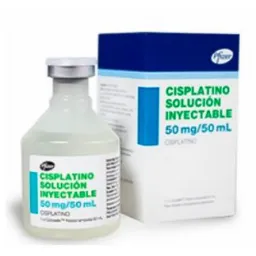
CISPLATIN PFIZER
ItalyIt is used in adults and children for the treatment of certain types of cancer: testicular (if widespread), ovarian (in advanced stages), bladder (in advanced stages), and head and neck tumors.
Frequently asked questions
How is Cisplatino Pfizer administered?
The medicinal product is administered by intravenous infusion under the supervision of experienced doctors in suitable facilities such as hospitals or clinics. It may be administered alone or in combination with other chemotherapy drugs.
When should you not take this medicine?
It must not be administered if you are allergic to cisplatin or any of its components, if you have a low blood cell count, if you are dehydrated, if you have kidney or hearing problems, if you are pregnant or breastfeeding, or if you are due to receive the yellow fever vaccine.
What are the common side effects of Cisplatino Pfizer?
Among the most frequent side effects, a reduction in the number of platelets, white blood cells, and red blood cells in the blood, reduction in sodium levels, fever, nausea, and vomiting may be observed.
Which side effects require immediate attention?
You must contact a doctor immediately for serious side effects such as bone marrow failure (reduced production of blood cells), widespread infections, pain or swelling in the legs, breathing difficulties, severe allergic reactions (facial swelling, rapid heartbeat), or kidney and liver problems.
Can the drug affect fertility?
Yes, it can have negative effects on the fertility of both men and women, in some cases causing irreversible sterility. For men, sperm banking is recommended before therapy.
Are there interactions with other medicines?
Yes, caution is necessary if taking antibiotics (cephalosporins and aminoglycosides), drugs against fungal infections (amphotericin B), contrast media, certain diuretics, or anticancer drugs such as ifosfamide. The use of certain drugs for allergies or mental disorders may also mask hearing problems caused by the treatment.
Can I drive while undergoing this therapy?
It is not recommended to drive vehicles or operate machinery during treatment cycles due to possible toxic effects on the nervous system and hearing.
Instructions for use
Table of contents
- CISPLATIN PFIZER 10 mg/10 ml solution for infusion, 50 mg/50 ml solution for infusion, 100 mg/100 ml solution for infusion
- 1. What Cisplatino Pfizer is and what it is used for
- 2. What you should know before Cisplatino Pfizer is administered
- 3. How to administer Cisplatino Pfizer
- 4. Possible side effects
- 5. How to store Cisplatino Pfizer
- 6. Package contents and other information
- The following information is intended exclusively for physicians or healthcare professionals
Package leaflet: Information for the user
CISPLATIN PFIZER 10 mg/10 ml solution for infusion, 50 mg/50 ml solution for infusion, 100 mg/100 ml solution for infusion
Equivalent medicinal product
Please read this leaflet carefully before this medicine is administered to you because
it contains important information for you.
- Keep this leaflet. You may need to read it again.
- If you have any questions, ask your doctor, the doctor treating your child, or nurse.
- If you experience any side effects, including those not listed in this leaflet, tell your doctor, the doctor treating your child, or nurse. See section 4.
Contents of this leaflet:
- What Cisplatin Pfizer is and what it is used for
- What you need to know before Cisplatin Pfizer is administered
- How Cisplatin Pfizer is administered
- Possible side effects
- How to store Cisplatin Pfizer
- Contents of the pack and other information
1. What Cisplatino Pfizer is and what it is used for
Cisplatino Pfizer contains the active substance cisplatin, which belongs to a group of medicines called antineoplastics that act against tumours. Cisplatin works by interfering with the growth of tumour cells, which are eventually destroyed.
Cisplatino Pfizer may be given alone or in combination with other medicines that prevent tumour growth (chemotherapeutic agents).
It is used in adults and children for the treatment of:
- testicular cancer that has spread to various parts of the body;
- advanced ovarian cancer that does not respond to other therapies;
- advanced bladder cancer that does not respond to other therapies;
- head and neck cancer.
2. What you should know before Cisplatino Pfizer is administered
Cisplatino Pfizer must not be administered to you or your child:
- if you are allergic to cisplatin, other medicines containing platinum, or any of the other ingredients of this medicine (listed in section 6);
- if you have a low number of blood cells (myelosuppression);
- if you are dehydrated, i.e. you have a severe lack of fluids in the body;
- if you currently have or have previously had kidney problems or hearing problems;
- if you are pregnant or breastfeeding (see section “Pregnancy, breastfeeding and fertility”);
- if you need to be vaccinated against yellow fever (see section “Other medicines and Cisplatino Pfizer”).
Warnings and precautions
Talk to your doctor, your child’s doctor, or nurse before Cisplatino Pfizer is administered to you or your child.
Inform your doctor, your child’s doctor, or nurse if any of the following conditions occur or worsen during treatment with Cisplatino Pfizer (also see section 4 “Possible side effects”):
- severe kidney problems. To reduce the medicine’s toxicity, your doctor will ensure adequate hydration before, during, and after treatment, and/or administer medicines to promote urine elimination (diuretics);
- severe nervous system problems, which may sometimes be irreversible. Symptoms include altered sensation in the limbs or other body parts, loss of reflexes, movement disorders, sensation of vibrations, and, in more severe cases, loss of motor function. Additionally, if you or your child develop low blood pressure upon standing, muscle weakness, seizures, or vision loss following prolonged treatment with Cisplatino Pfizer, treatment with this medicine must be discontinued;
- severe problems in one or both ears, especially after receiving high doses of Cisplatino Pfizer or if you have recently undergone radiotherapy to the head area. The most common symptoms are ringing in the ear (tinnitus) and hearing loss. With prolonged treatment, these symptoms may become irreversible. During treatment with Cisplatino Pfizer, your doctor will perform regular hearing and balance check-ups for you or your child;
- allergic reactions, even severe (anaphylactic-type) reactions. If you or your child develop symptoms of an allergic reaction during treatment, administration of this medicine must be stopped;
- development of a blood cancer (acute leukaemia);
- reactions at the infusion site, such as leakage of the injected solution from the vein (extravasation);
- bone marrow problems, which produces blood cells. In particular, 18–23 days after therapy, a reversible reduction in white blood cells (leucopenia) and platelets (thrombocytopenia) may occur. Therefore, before starting another treatment cycle with Cisplatino Pfizer, your doctor will perform blood tests to ensure that white blood cell and platelet counts are within normal limits;
- reduction in red blood cells (anaemia), which frequently occurs after several treatment cycles. In severe cases, blood transfusions may be required;
- nausea and vomiting. These effects are very common and may sometimes be so severe that dose reduction or discontinuation of treatment with this medicine is necessary;
- reduction in magnesium and calcium levels in the blood.
During treatment with Cisplatino Pfizer, you or your child must not receive vaccination with vaccines known as “live” or “attenuated”, as serious or fatal infections may occur due to your weakened immune defenses. However, vaccination with “killed” or “inactivated” vaccines is permitted, although the effectiveness of such vaccination may be reduced.
Laboratory tests
Before starting therapy, during treatment, and between treatment cycles with this medicine, your doctor will perform careful and regular medical checks to assess your or your child’s health status.
This medicine may cause irreversible infertility in both men and women. Therefore, your doctor should perform periodic checks both during treatment and for at least 6 months after treatment ends (see section “Pregnancy, breastfeeding and fertility”).
Children
Children are more susceptible to the ototoxic (ear-related) toxic effects of Cisplatino Pfizer (see section “Warnings and precautions”).
Other medicines and Cisplatino Pfizer
Inform your doctor, pharmacist, or nurse if you or your child are taking, have recently taken, or might take any other medicines.
Caution is required when Cisplatino Pfizer is administered together with the following medicines, as they may increase its toxicity to the kidneys and ears:
- cephalosporins and aminoglycosides (antibiotics), amphotericin B (a medicine used to treat fungal infections);
- contrast media (substances used in diagnostic imaging);
- certain types of diuretics (medicines used to promote urine elimination);
- ifosfamide (a medicine used to treat certain types of cancer).
Inform your doctor if you or your child are taking the following medicines:
- bleomycin, methotrexate, etoposide (medicines used to treat certain types of cancer). In particular, if you are receiving treatment with bleomycin and etoposide, your doctor will closely monitor blood lithium levels;
- oral anticoagulants (medicines used to prevent blood clots in veins);
- buclizine, cyclizine, loxapine, meclozine (medicines used to treat allergies), phenothiazines, thioxanthenes (medicines used to treat certain mental disorders), and trimethobenzamide (medicines used to reduce vomiting), as these medicines may mask certain ear-related side effects caused by Cisplatino Pfizer;
- anticonvulsants (used to treat epilepsy), as they may lose effectiveness;
- pyridoxine and altretamine (medicines used in combination to treat advanced ovarian cancer);
- paclitaxel (for treating certain types of cancer), as cisplatin may enhance its neurotoxic effects.
Cisplatino Pfizer must not be administered to you or your child together with the yellow fever vaccine, as this may lead to a potentially fatal condition (fatal systemic vaccine-related disease) (see section “Cisplatino Pfizer must not be administered to you or your child”). If the doctor considers it necessary, an inactivated vaccine may be administered (see section “Warnings and precautions”).
Pregnancy, breastfeeding and fertility
If you are pregnant, suspect you may be pregnant, are planning pregnancy, or are breastfeeding, consult your doctor or nurse before receiving this medicine.
Pregnancy
This medicine must not be administered during pregnancy, as it may harm the unborn baby.
If you are a woman of childbearing age, you must use effective contraceptive methods to prevent pregnancy during treatment with this medicine.
Breastfeeding
Cisplatino Pfizer passes into breast milk. Do not breastfeed while receiving this medicine.
Fertility
Cisplatino Pfizer may have negative effects on fertility in both men and women and, in severe cases, may cause irreversible infertility. Men who wish to father children in the future are advised to undergo sperm preservation procedures (cryopreservation) before starting therapy. During treatment with Cisplatino Pfizer and for at least 6 months afterwards, effective methods to prevent pregnancy (e.g. condoms or contraceptives) must be used. If you wish to have a child after treatment, it is recommended to consult a specialist (genetic counselling).
Driving and using machines
Driving vehicles or operating machinery is not recommended during treatment cycles with this medicine due to its toxic effects on the ear and brain.
Cisplatino Pfizer contains sodium
Cisplatino Pfizer 10 mg/10 ml solution for infusion contains 1.54 mmol (or 35.4 mg) of sodium per vial.
Cisplatino Pfizer 50 mg/50 ml solution for infusion contains 7.7 mmol (or 177.1 mg) of sodium per vial.
Cisplatino Pfizer 100 mg/100 ml solution for infusion contains 15.4 mmol (or 354.2 mg) of sodium per vial.
This should be taken into account for patients with impaired kidney function or those on a low-sodium diet.
The container of this medicine is made of latex rubber. It may cause severe allergic reactions.
3. How to administer Cisplatino Pfizer
Take this medicine exactly as your doctor, the doctor treating your child, or nurse has instructed you. If you have any doubts, consult your doctor, the doctor treating your child, or the nurse.
This medicine must be administered to you or your child under the supervision of physicians experienced in cancer therapy and only in appropriate medical facilities (hospitals, clinics, or healthcare centers).
If the doctor considers it necessary, Cisplatino Pfizer may be given in combination with other anticancer medicines for the treatment of testicular, ovarian, head and neck cancers.
When Cisplatino Pfizer is used as a single agent for cancer treatment, the recommended dose is:
- a single infusion lasting 6–8 hours, every 3–4 weeks, or
- a slow infusion over 5 consecutive days, every 3–4 weeks.
If you or your child have liver, kidney or bone marrow problems
If you or your child have liver or kidney problems or reduced bone marrow activity, this medicine must be administered with great caution. The doctor will carefully evaluate these conditions.
If more Cisplatino Pfizer has been administered than prescribed
If you think that you or your child have been given more Cisplatino Pfizer than prescribed, inform your doctor, the doctor treating your child, or the nurse immediately, as the following symptoms may occur:
severe kidney and liver problems;
hearing loss;
toxic effects on the eye (including retinal detachment);
reduction in the number of all blood cells (significant myelosuppression);
intractable nausea and vomiting;
nervous system problems (neuritis).
In severe cases, these symptoms may even lead to death. The doctor will take the most appropriate measures to manage these symptoms depending on your condition.
4. Possible side effects
Like all medicines, this medicine can cause side effects, although not everybody gets them.
Contact your doctor immediately if you or your child experience any of the following side effects, as they may be serious:
Very common side effects (may affect more than 1 in 10 people):
- severely reduced or absent production of all blood cells by the bone marrow (bone marrow failure)
Common side effects (may affect up to 1 in 10 people):
- widespread infection affecting the entire body (sepsis)
- severe pain or swelling in one of the legs, chest pain or difficulty breathing (may indicate the presence of dangerous blood clots in a vein)
Uncommon side effects (may affect up to 1 in 100 people):
- severe allergic reactions (anaphylactoid reactions) such as swelling of the face, difficulty breathing, increased heart rate, skin rashes, drop in blood pressure
Rare side effects (may affect up to 1 in 1,000 people):
- blood cancer (acute leukaemia)
- heart attack
Very rare side effects (may affect up to 1 in 10,000 people):
- cessation of heart activity (cardiac arrest)
Side effects with unknown frequency (frequency cannot be estimated from the available data):
- infections which, in the most severe cases, have led to death
- problems and inflammation of blood vessels in the brain, including stroke with or without haemorrhage
- sensation of an electric shock running down the spine and into the legs following neck movement (Lhermitte's sign)
- problems affecting the spinal cord
- blindness and damage to the retina of the eye
- deafness (may be more severe in children)
- blockage of a blood vessel carrying blood to the lungs (pulmonary embolism)
- severe kidney problems
- leakage of the injected solution from the vein (extravasation), leading to damage of the surrounding tissue at the injection site such as inflammation, hardening, cell death, pain, swelling and redness. In case of extravasation, administration of Cisplatino Pfizer must be immediately stopped (see section 2 “Warnings and precautions”)
The following side effects may also occur:
Very common side effects (may affect more than 1 in 10 people)
- reduction in the number of platelets, white blood cells and red blood cells in the blood
- reduced levels of sodium in the blood
- fever (pyrexia)
Common side effects (may affect up to 1 in 10 people)
- changes in heart rhythm, including increased or decreased heart rate
Uncommon side effects (may affect up to 1 in 100 people)
- reduced levels of magnesium in the blood
- male fertility disorders
Rare side effects (may affect up to 1 in 1,000 people)
- seizures
- nerve and brain problems
- inflammation of the mouth (stomatitis)
Side effects with unknown frequency (frequency cannot be estimated from the available data)
- reduction in the number of red blood cells in the blood (Coombs-positive haemolytic anaemia)
- changes in the results of certain laboratory tests (increased blood amylase, inappropriate antidiuretic hormone secretion)
- reduced body fluids (dehydration)
- reduced levels of potassium, phosphate or calcium in the blood
- increased levels of uric acid in the blood
- muscle cramps, spasms and involuntary muscle contractions (tetany)
- nervous system disorders (autonomic neuropathy)
- inability to perceive taste (ageusia)
- blurred vision
- loss of colour vision
- inflammation of the optic nerve
- damage to eye structures (papilledema)
- ringing in the ears (tinnitus)
- heart problems
- formation of blood clots in small blood vessels
- a disease characterised by blood and kidney disorders (haemolytic uraemic syndrome)
- tingling, sensation of heat and pain in the fingers due to circulation problems (Raynaud's phenomenon)
- nausea
- vomiting
- loss of appetite (anorexia)
- hiccups
- diarrhoea
- changes in certain laboratory tests measuring liver function (increased liver enzymes, increased bilirubinaemia)
- skin rashes
- hair loss
- muscle spasms
- weakness
- malaise
Reporting of side effects
If you experience any side effects, including those not listed in this leaflet, talk to your doctor, the doctor caring for your child, or to your pharmacist. You can also report side effects directly via the national reporting system at www.agenziafarmaco.gov.it/content/come-segnalare-una-sospetta-reazione-avversa.
By reporting side effects, you can help provide more information on the safety of this medicine.
5. How to store Cisplatino Pfizer
Keep this medicine out of the sight and reach of children.
Do not use this medicine after the expiry date stated on the carton and vial after "Exp.". The expiry date refers to the last day of that month.
Store this medicine at a temperature between 15°C and 25°C.
Do not freeze.
Keep the medicine in its original packaging to protect it from light.
Do not dispose of any medicine via wastewater or household waste. Healthcare professionals know how to properly dispose of unused medicines. This will help protect the environment.
6. Package contents and other information
What Cisplatino Pfizer contains
The active substance is cisplatin.
Each 10 ml vial contains 10 mg of cisplatin.
Each 50 ml vial contains 50 mg of cisplatin.
Each 100 ml vial contains 100 mg of cisplatin.
The other components are: sodium chloride (see section 2 “Cisplatino Pfizer contains sodium”),
mannitol, water for injections.
Description of the appearance of Cisplatino Pfizer and contents of the pack
Cisplatino Pfizer 10 mg/10 ml solution for infusion is available in a pack containing 1
polypropylene vial of 10 ml with a rubber stopper, aluminium seal and plastic “flip-off” cap.
Cisplatino Pfizer 50 mg/50 ml solution for infusion is available in a pack containing 1
polypropylene vial of 50 ml with a rubber stopper, aluminium seal and plastic “flip-off” cap.
Cisplatino Pfizer 100 mg/100 ml solution for infusion is available in a pack containing 1
polypropylene vial of 100 ml with a rubber stopper, aluminium seal and plastic “flip-off” cap.
Marketing Authorisation Holder and Manufacturer
Marketing Authorisation Holder
Pfizer Italia S.r.l.
Via Isonzo, 71
04100 Latina
Italy
Manufacturer
Pfizer Service Company bvba
Hoge Wei 10
1930 Zaventem (Belgium)
The following information is intended exclusively for physicians or healthcare professionals
DOSAGE AND ADMINISTRATION
i) Monotherapy for adults and children
The recommended dosage is:
50–100 mg/m² as a single intravenous infusion lasting 6–8 hours, every 3–4 weeks;
or, 15–20 mg/m² as a slow intravenous infusion for 5 consecutive days, every 3–4 weeks.
Dosage should be reduced in patients with bone marrow suppression.
ii) Combination therapy with other drugs
Cisplatino Pfizer is commonly used in combination with the following cytotoxic agents:
- For testicular tumors: vinblastine, bleomycin, actinomycin D;
- For ovarian tumors: cyclophosphamide, doxorubicin (adriamycin), hexamethylmelamine, fluorouracil;
- For head and neck tumors: bleomycin, methotrexate.
iii) Subsequent cisplatin treatment
The next dose of cisplatin should not be administered until:
a) serum creatinine is less than 140 µmol/L and/or blood urea nitrogen (BUN) is less than 9 mmol/L,
and
b) blood cellular elements have returned to acceptable levels (platelets at least 100,000/mm³, white blood cells at least 4,000/mm³).
An audiogram is recommended before starting treatment, and patients should undergo periodic monitoring to detect any hearing impairment.
iv) Hepatic function alterations
Clinical studies in humans have shown significant hepatic uptake of cisplatin. Elevated levels of AST and alkaline phosphatase have been reported, along with clinical signs of hepatic toxicity. Cisplatin should be administered with caution in patients with a history of hepatic dysfunction.
v) Renal function alterations
Cisplatin is extensively taken up by the kidneys and causes dose-dependent and cumulative nephrotoxicity. The drug is primarily excreted in urine. The plasma half-life of cisplatin is prolonged and plasma levels are markedly elevated in renal impairment.
Cisplatin should be administered with caution in patients with a history of renal insufficiency. Cisplatino Pfizer is contraindicated in patients with creatinine levels exceeding 200 µmol/L. Repeating treatment is not recommended until serum creatinine levels fall below 140 µmol/L and/or blood urea levels are less than 9 mmol/L.
Adequate hydration of the patient before and for 24 hours after cisplatin administration is recommended to ensure adequate urine output and minimize nephrotoxicity.
a) Pre-treatment: the patient may be hydrated with an intravenous infusion of 2 liters of 5% dextrose in 1/2 to 1/3 normal saline over 2–4 hours.
b) Administration: Cisplatino Pfizer may be diluted in 1 liter of normal saline and administered by intravenous infusion over the desired time period.
c) Post-treatment: it is important to maintain adequate hydration and urine output for 24 hours after infusion.
Instructions for preparation and use
As with all other antineoplastic agents, Cisplatino Pfizer should be handled by trained personnel in a specially designated area (preferably within a laminar flow biological safety cabinet suitable for handling cytotoxic compounds). Personnel should wear protective gloves. In case of accidental contact of the solution with skin or mucous membranes, the affected area should be immediately washed thoroughly with copious amounts of water and soap.
Use of Luer-Lock syringes is recommended. Wide-bore needles are preferred to minimize pressure and the potential for aerosol formation.
Cisplatin reacts with aluminum, forming a black precipitate. Needles, syringes, catheters, or intravenous administration sets containing aluminum must not be used for cisplatin administration.
Materials used in the preparation of Cisplatino Pfizer solutions or for the collection of body waste should be disposed of in double-sealed polyethylene bags and incinerated at 1100°C.
Procedure in case of spillage
In the event of solution spillage, access to the affected area must be restricted. Personnel should wear two pairs of gloves (latex rubber), a respiratory mask, protective gown, and safety goggles. Contain the spilled solution using absorbent material such as paper, sawdust, or absorbent gravel (e.g., animal bedding). Sodium hypochlorite 5% may also be used. Used absorbent materials and any other waste should be collected, placed in plastic containers, sealed, and appropriately labeled. Cytotoxic waste must be considered hazardous or toxic and clearly labeled: "CYTOTOXIC WASTE – INCINERATE AT 1100°C". Waste must be incinerated at 1100°C for at least 1 second. Clean the spill area thoroughly with abundant water.
INCOMPATIBILITIES
Cisplatin reacts with aluminum, forming a black precipitate. No other incompatibilities have been reported.
Needles, syringes, catheters, or intravenous administration sets containing aluminum must not be used for cisplatin administration.
SHELF LIFE
Cisplatino Pfizer does not contain preservatives or bacteriostatic agents. To reduce the risk of microbiological contamination, further dilutions should be performed immediately before use, and infusion should begin as soon as possible after solution preparation. The infusion must be completed within 24 hours of preparation, and any unused residue must be discarded.
For further information, please refer to the Summary of Product Characteristics.
The original data is available in the language of the country of manufacture.
Data source: Italian Medicines Agency (AIFA)
Data last verified: September 21, 2026