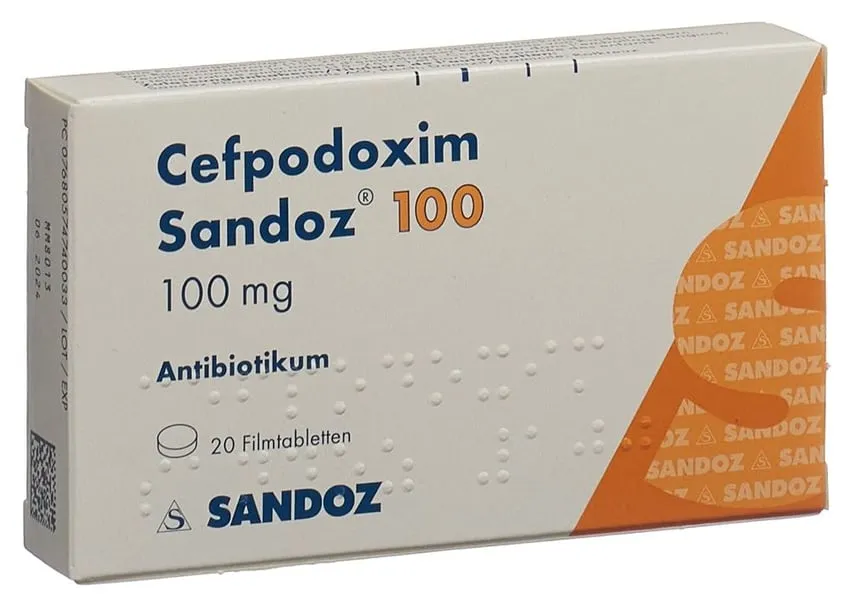
CEFODOXIME SANDOZ
ItalyIt is an antibiotic that kills bacteria and is used to treat sinusitis, throat infections, and some lung infections such as bronchitis and certain types of pneumonia.
Frequently asked questions
How should I take Cefpodoxima Sandoz?
Tablets or oral suspension should be taken during meals to promote absorption. It is essential to strictly follow the doctor's instructions regarding the amount and frequency of the doses.
What are the main side effects of Cefpodoxima Sandoz?
Common side effects include stomach disturbances (nausea, vomiting, diarrhea, bloating, stomach ache), loss of appetite, and flatulence. Headaches, dizziness, ringing in the ears, or skin reactions may also occur. In very rare cases, severe allergic reactions, liver damage, or changes in kidney function may occur.
When should I not take this medicine?
You must not take it if you are allergic to cefpodoxime, other cephalosporins, or if you have previously had a severe allergic reaction to penicillins. It should be used with caution if you have kidney problems, severe intestinal diseases, or intolerance to lactose (for tablets) or sucrose (for the suspension).
Can I take this medicine if I am pregnant or breastfeeding?
The medicine can be used during pregnancy only if strictly necessary. However, it should not be taken during breastfeeding because small amounts may pass into breast milk.
Are there interactions with other medicines?
Caution is required if you are taking aminoglycoside antibiotics or diuretics. The medicine should not be taken together with antacids or medicines for stomach acidity (such as ranitidine, famotidine, or cimetidine); in such cases, it is necessary to wait two or three hours between taking Cefpodoxima Sandoz and the other medicines.
What should I do if I forget a dose or if I take too much?
If you forget a dose, take it as soon as you remember, but do not take a double dose to compensate. If you have taken more medicine than intended, consult a doctor immediately or go to the emergency room, bringing the medicine packaging with you.
Can I drive while taking this medicine?
Since the treatment may cause dizziness, you must refrain from driving vehicles and using machinery if you experience these symptoms.
Instructions for use
Table of contents
- Cefpodoxime Sandoz 100 mg film-coated tablets
- 1. WHAT CEFPODOXIME SANDOZ 100 MG FILM-COATED TABLETS IS AND WHAT IT IS USED FOR
- 2. BEFORE TAKING CEFPODOXIME Sandoz 100 MG FILM-COATED TABLETS
- 3. HOW TO TAKE CEFPODOXIME Sandoz 100 MG FILM-COATED TABLETS
- 4. POSSIBLE ADVERSE REACTIONS
- 5. HOW TO STORE CEFPODOXIME SANDOZ 100 MG FILM-COATED TABLETS
- 6. OTHER INFORMATION
- PACKAGE LEAFLET: INFORMATION FOR THE USER
- Cefpodoxime Sandoz 200 mg film-coated tablets
- 1. WHAT IS CEFPODOXIME SANDOZ 200 MG FILM-COATED TABLETS AND
- 2. BEFORE TAKING CEFPODOXIME Sandoz 200 MG FILM-COATED TABLETS
- 3. HOW TO TAKE CEFPODOXIME SANDOZ 200 MG FILM-COATED TABLETS
- 4. POSSIBLE ADVERSE REACTIONS
- 5. HOW TO STORE CEFPODOXIME SANDOZ 200 MG FILM-COATED TABLETS
- 6. OTHER INFORMATION
- PACKAGE LEAFLET: INFORMATION FOR THE USER
- Cefpodoxima Sandoz 40 mg/5 ml powder for oral suspension
- 1. WHAT CEFPODOXIME SANDOZ 40 MG/5ML POWDER FOR
- 2. BEFORE TAKING CEFPODOXIME SANDOZ 40 MG/5 ML POWDER FOR
- 3. HOW TO TAKE CEFPODOXIME SANDOZ 40 MG/5 ML POWDER FOR
- 4. POSSIBLE ADVERSE REACTIONS
- 5. HOW TO STORE CEFPODOXIME SANDOZ 40 MG/5ML POWDER FOR
- 6. OTHER INFORMATION
PACKAGE LEAFLET: INFORMATION FOR THE USER
Cefpodoxime Sandoz 100 mg film-coated tablets
Generic medicine
Read this leaflet carefully before using this medicine
- Keep this leaflet. You may need to read it again.
- If you have any questions, consult your doctor or pharmacist.
- This medicine has been prescribed for you personally. Never give it to others. It may be harmful to other people, even if their symptoms are the same as yours.
- If any of the side effects worsen, or if you notice any side effects not listed in this leaflet, inform your doctor or pharmacist.
Contents of this leaflet:
- What Cefpodoxime Sandoz 100 mg film-coated tablets are and what they are used for
- Before taking Cefpodoxime Sandoz 100 mg film-coated tablets
- How to take Cefpodoxime Sandoz 100 mg film-coated tablets
- Possible side effects
- How to store Cefpodoxime Sandoz 100 mg film-coated tablets
- Further information
1. WHAT CEFPODOXIME SANDOZ 100 MG FILM-COATED TABLETS IS AND WHAT IT IS USED FOR
Cefpodoxime Sandoz is an antibiotic belonging to a group of antibiotics called
cephalosporins. These types of antibiotics are similar to penicillin.
Cefpodoxime kills bacteria and can be used against various types of infections.
Like all antibiotics, cefpodoxime is effective only against certain types of bacteria and is therefore
suitable only for the treatment of certain types of infection.
Cefpodoxime may be used to treat:
- sinusitis
- throat infections
- lung infections, such as bronchitis and certain types of pneumonia
2. BEFORE TAKING CEFPODOXIME Sandoz 100 MG FILM-COATED TABLETS
DO NOT TAKE CEFPODOXIME SANDOZ FILM-COATED TABLETS
- if you are allergic (hypersensitive) to cefpodoxime proxetil or to any of the excipients of Cefpodoxime Sandoz film-coated tablets (see “Other information”, section 6)
- if you are allergic (hypersensitive) to any other antibiotic of the cephalosporin class
- if you have previously experienced a severe allergic reaction to any type of penicillin antibiotic.
Not all individuals who are allergic to penicillins are also allergic to cephalosporins.
However, if you have previously had a severe allergic reaction to any penicillin, you must not
take this medicine, as you may also be allergic to cephalosporins.
If you have any doubts, consult your doctor or pharmacist.
BE CAREFUL WHEN TAKING CEFPODOXIME SANDOZ FILM-COATED TABLETS, especially in the following cases
- if you have previously experienced an allergic reaction to any antibiotic, inform your doctor or pharmacist before taking this medicine
- if your doctor has informed you that your kidneys do not function properly and you are currently undergoing treatment for renal failure (such as dialysis), you may take Cefpodoxime Sandoz, but you may require a lower dose
- if you have previously suffered from intestinal inflammation (colitis) or any other serious intestinal disease
- this medicine may alter the results of certain blood tests (such as the cross-matching blood compatibility test and the Coombs test). If you are scheduled to undergo any of these tests, inform your doctor that you are taking this medicine.
- this medicine may also alter the results of urine sugar tests (such as Benedict’s and Fehling’s tests). If you are diabetic and regularly undergo such tests, inform your doctor: during treatment with this medicine, it may be advisable to use alternative types of tests to monitor your diabetes.
If any of the above conditions apply to you, consult your doctor or pharmacist.
Taking this medicine with other medicines
If you are currently taking or have recently taken any other medicines, including those obtained without a prescription, inform your doctor or pharmacist.
The effects of this medicine may be influenced by other medicines that are eliminated through the kidneys, particularly if such medicines may impair kidney function. Many medicines can have this effect; therefore, consult your doctor or pharmacist before taking this medicine.
In particular, inform your doctor or pharmacist if you are taking:
- antibiotics known as aminoglycosides (e.g. gentamicin)
- diuretic tablets or injections, such as furosemide: during treatment, it may be necessary to frequently monitor your kidney function through blood and urine tests.
Do not take Cefpodoxime Sandoz together with medications that reduce stomach acid.
These include:
- antacids
- medications such as ranitidine, famotidine or cimetidine (known as H\₂ receptor antagonists). After taking Cefpodoxime Sandoz, wait two or three hours before taking any of these other medications.
Taking Cefpodoxime Sandoz 100 mg film-coated tablets with food and drink
Take Cefpodoxime Sandoz with meals to enhance the absorption of the medicine by your body.
Pregnancy and breastfeeding
- Are you pregnant or think you may be pregnant? Although this medicine is not known to harm the unborn child, it should be given to pregnant women only if clearly needed.
- Are you breastfeeding? This medicine should not be given to breastfeeding women, as small amounts may pass into breast milk.
Ask your doctor or pharmacist for advice before taking any medicine.
Driving and using machines
During treatment with this medicine, you may experience dizziness, which could impair your ability to drive or operate machinery. In this case, refrain from driving or using machinery.
Important information about some excipients in Cefpodoxime Sandoz film-coated tablets
Cefpodoxime Sandoz 100 mg film-coated tablets contain lactose monohydrate. If your doctor has diagnosed you with an intolerance to certain sugars, consult him or her before taking this medicine.
3. HOW TO TAKE CEFPODOXIME Sandoz 100 MG FILM-COATED TABLETS
FILM-COATED TABLETS
Always take this medicine exactly as instructed by your doctor. If you have any doubts, you must consult your doctor or pharmacist.
The package leaflet contains instructions regarding the amount of medicine to take and how often to take it: please read it carefully. The dose prescribed by your doctor depends on the type and severity of the infection, as well as on your kidney function. Your doctor will be able to provide more precise information.
The package leaflet provides specific information about the number of tablets to take and the frequency of administration: please read it carefully.
The tablets should be taken during meals to improve the body's absorption of cefpodoxime.
The following are the recommended doses. However, your doctor may prescribe a different dosage: in such case, ask for clarification if you have not already done so. The prescribed dose depends on the type and severity of the infection.
The usual dose is as follows:
Adults and elderly patients without kidney problems
- Sinusitis: 200 mg twice daily.
- Throat infections: 100 mg twice daily.
- Lung infections: 100–200 mg twice daily, depending on the severity of the infection.
Children
For the treatment of infants over two weeks of age and children, Cefpodoxime Sandoz oral suspension powder is available.
Adults with kidney problems
Depending on the severity of kidney impairment, the usual dose of Cefpodoxime Sandoz for your type of infection might require only one daily dose, or even one dose every two days, instead of twice daily. Your doctor will determine the most appropriate dosage for your condition.
If you are undergoing haemodialysis, you will generally be given a dose after each dialysis session. Your doctor will advise you each time on how much medicine to take.
If you take more Cefpodoxime Sandoz film-coated tablets than you should
If you have taken more medicine than you should, contact your doctor immediately or go to the nearest hospital emergency department. Take the medicine with you in its original packaging so that healthcare professionals can identify exactly what you have taken.
If you forget to take Cefpodoxime Sandoz film-coated tablets
If you forget to take a dose at your usual time, take it as soon as you remember. Do not take a double dose to make up for the missed dose.
If you stop taking Cefpodoxime Sandoz film-coated tablets
It is important that you continue taking this medicine for the full duration of the prescribed treatment. Do not stop taking the medicine just because you feel better, as the infection could return. If you still feel unwell at the end of the treatment, or if you feel worse during treatment, inform your doctor.
If you have any questions about the use of Cefpodoxime Sandoz, consult your doctor or pharmacist.
4. POSSIBLE ADVERSE REACTIONS
Like all medicines, Cefpodoxima Sandoz may cause adverse reactions, although not everyone experiences them.
Severe allergic reactions to this medicine are very rare (affecting fewer than 1 in 10,000 people). These may include:
- sudden shortness of breath and chest tightness
- swelling of the eyelids, face or lips
- severe skin rashes, possibly with blisters, which may involve the eyes, mouth, throat and genitals
- loss of consciousness (fainting). All these allergic reactions require urgent medical attention. If you think you are experiencing any of these reactions, stop taking this medicine and consult your doctor or go immediately to the nearest hospital emergency department.
Common adverse reactions (affect fewer than 1 in 10 people)
Gastrointestinal disorders: abdominal bloating, nausea, vomiting, stomach pain, flatulence and diarrhoea.
If you develop severe diarrhoea or notice blood in your stools, stop taking this medicine and consult your doctor immediately.
Eating disorders: loss of appetite.
Uncommon adverse reactions (affect fewer than 1 in 100 people)
Immune system disorders: hypersensitivity reactions (less severe skin reactions than the allergic reactions described above, skin rashes with eruptions [urticaria] and itching).
Nervous system disorders: headache, tingling, dizziness.
Ear disorders: tinnitus (ringing in the ears).
General disorders: nausea or vomiting, weakness and general malaise.
Rare adverse reactions (affect fewer than 1 in 1,000 people)
Hepatobiliary disorders: changes in blood tests monitoring liver function.
Blood disorders: anaemia, reduced numbers of different blood cells (symptoms may include fatigue, new infections and increased tendency to bruising or bleeding), increased numbers of certain types of white blood cells, increased platelet count (small cells necessary for blood clotting).
Very rare adverse reactions (affect fewer than 1 in 10,000 people):
Immune system disorders: anaphylactic reactions (e.g. bronchospasm, purpura and facial and extremity oedema).
Renal disorders: changes in kidney function.
Hepatobiliary disorders: liver damage, leading to jaundice (symptoms may include yellowing of the skin or whites of the eyes).
Infections: during a course of treatment with cefpodoxime, there may be a temporary increased risk of infections caused by other types of microorganisms. For example, oral candidiasis may develop.
Blood and lymphatic system disorders: a type of anaemia caused by the breakdown of red blood cells, which may be severe. If you are to undergo a blood test for any reason, inform the person taking the sample that you are taking this medicine, as test results may be affected.
If any of the adverse reactions worsen, or if you notice any adverse reaction not listed in this leaflet, inform your doctor or pharmacist.
5. HOW TO STORE CEFPODOXIME SANDOZ 100 MG FILM-COATED TABLETS
KEEP OUT OF THE REACH AND SIGHT OF CHILDREN.
Do not use this medicine after the expiry date which is stated on the label and on the packaging. The expiry date refers to the last day of the month. Do not use this medicine after the expiry date.
Do not store above 25°C. Store in the original packaging.
Medicines should not be disposed of via wastewater or household waste. Ask your pharmacist how to dispose of medicines you no longer use. This will help protect the environment.
6. OTHER INFORMATION
What Cefpodoxima Sandoz 100 mg film-coated tablets contains
The active substance is: cefpodoxime proxetil, equivalent to 100 mg of cefpodoxime.
The excipients are: calcium carboxymethylcellulose, monohydrate lactose, crospovidone,
hydroxypropylcellulose, magnesium stearate, sodium lauryl sulfate, hypromellose, talc and titanium dioxide (E171).
Description of the appearance of Cefpodoxima Sandoz 100 mg film-coated tablets and
pack contents
Cefpodoxima Sandoz tablets are round, white to yellowish in colour, with a diameter of approximately 9 mm.
Cefpodoxima Sandoz is available in blister packs containing 10, 12, 20 and 30 tablets.
Not all pack sizes may be marketed.
Marketing Authorization Holder and Manufacturer
Marketing Authorization Holder
Sandoz Spa – Largo U. Boccioni, 1 – 21040 Origgio (VA)
Manufacturer responsible for batch release
Sandoz GmbH, Biochemiestrasse 10, 6250 Kundl, Austria
This Patient Information Leaflet was last approved in January 2011
PACKAGE LEAFLET: INFORMATION FOR THE USER
Cefpodoxime Sandoz 200 mg film-coated tablets
Generic medicine
Please read this leaflet carefully before using this medicine
- Keep this leaflet. You may need to read it again.
- If you have any questions, ask your doctor or pharmacist.
- This medicine has been prescribed for you personally. Never give it to others. It may be harmful to other people, even if their symptoms are the same as yours.
- If any of the side effects worsens, or if you notice any side effects not listed in this leaflet, inform your doctor or pharmacist.
Contents of this leaflet:
- What Cefpodoxime Sandoz 200 mg film-coated tablets are and what they are used for
- Before taking Cefpodoxime Sandoz 200 mg film-coated tablets
- How to take Cefpodoxime Sandoz 200 mg film-coated tablets
- Possible side effects
- How to store Cefpodoxime Sandoz 200 mg film-coated tablets
- Further information
1. WHAT IS CEFPODOXIME SANDOZ 200 MG FILM-COATED TABLETS AND
WHAT IT IS USED FOR
Cefpodoxime Sandoz is an antibiotic belonging to a group of antibiotics called
cephalosporins. These types of antibiotics are similar to penicillin.
Cefpodoxime kills bacteria and can be used against various types of infections.
Like all antibiotics, cefpodoxime is effective only against certain types of bacteria and is therefore
suitable only for the treatment of specific types of infection.
Cefpodoxime may be used to treat:
- sinusitis
- throat infections
- lung infections, such as bronchitis and certain types of pneumonia
2. BEFORE TAKING CEFPODOXIME Sandoz 200 MG FILM-COATED TABLETS
DO NOT TAKE CEFPODOXIME Sandoz FILM-COATED TABLETS
- if you are allergic (hypersensitive) to cefpodoxime proxetil or to any of the excipients of Cefpodoxime Sandoz film-coated tablets (see “Other information”, section 6)
- if you are allergic (hypersensitive) to any other antibiotic of the cephalosporin class
- if you have previously had a severe allergic reaction to any antibiotic of the penicillin class.
Not all individuals who are allergic to penicillins are also allergic to cephalosporins.
However, if you have previously experienced a severe allergic reaction to any penicillin, you must not
take this medicine, as you may also be allergic to cephalosporins.
If you have any doubts, consult your doctor or pharmacist.
BE CAREFUL WHEN TAKING CEFPODOXIME Sandoz FILM-COATED TABLETS, ESPECIALLY IN THE FOLLOWING CASES
- if you have previously had an allergic reaction to any antibiotic, inform your doctor or pharmacist before taking this medicine
- if your doctor has informed you that your kidneys do not function properly and you are currently undergoing treatment for kidney failure (such as dialysis), you may take Cefpodoxime Sandoz, but you may require a lower dose
- if you have previously suffered from intestinal inflammation (colitis) or any other serious intestinal disease
- this medicine may alter the results of certain blood tests (such as blood cross-matching compatibility tests and the Coombs test). If you need to undergo any of these tests, inform your doctor that you are taking this medicine.
- this medicine may also alter the results of urine sugar tests (such as Benedict’s and Fehling’s tests). If you are diabetic and regularly undergo such tests, inform your doctor: during treatment with this medicine, it may be advisable to use alternative types of tests to monitor diabetes.
If any of the above situations apply to you, consult your doctor or
pharmacist.
Taking this medicine with other medicines
If you are currently taking or have recently taken any other medicines, including those without a prescription,
inform your doctor or pharmacist.
The effects of this medicine may be influenced by other medicines that are eliminated through the kidneys, particularly if such medicines may impair kidney function. Many medicines can have this effect; therefore, consult your
doctor or pharmacist before taking this medicine.
In particular, inform your doctor or pharmacist if you are taking:
- antibiotics known as aminoglycosides (e.g. gentamicin)
- diuretic tablets or injections, for example furosemide: during treatment, it may be necessary to monitor your kidney function frequently through blood and urine tests.
Do not take Cefpodoxime Sandoz together with medicines that act against stomach acidity.
These include:
- antacids
- medicines such as ranitidine, famotidine or cimetidine (known as H-_receptor antagonists). After taking Cefpodoxime Sandoz, wait two or three hours before taking any of these other medicines.
Taking Cefpodoxime Sandoz 200 mg film-coated tablets with food and drink
Take Cefpodoxime Sandoz during meals to enhance the absorption of the medicine by the body.
Pregnancy and breastfeeding
- Are you pregnant or do you think you might be pregnant? Although this medicine is not known to harm the unborn baby, it should only be given to pregnant women if clearly needed.
- Are you breastfeeding? This medicine should not be given to breastfeeding women, as small amounts may pass into breast milk.
Ask your doctor or pharmacist for advice before taking any medicine.
Driving and using machines
During treatment with this medicine, you may experience dizziness, which could impair your ability to drive or operate machinery. In such cases, refrain from driving vehicles and using machinery.
Important information about some excipients in Cefpodoxime Sandoz film-coated tablets
Cefpodoxime Sandoz 200 mg film-coated tablets contain lactose monohydrate. If your doctor has diagnosed you with an intolerance to certain sugars, consult him before taking this medicine.
3. HOW TO TAKE CEFPODOXIME SANDOZ 200 MG FILM-COATED TABLETS
Take this medicine exactly as directed by your doctor. If you have any doubts, you must consult your doctor or pharmacist.
This patient information leaflet provides instructions on the amount of medicine to take and how often to take it. Please read it carefully. The dose prescribed by your doctor depends on the type and severity of the infection, as well as on your kidney function. Your doctor will be able to provide more specific guidance.
The leaflet contains precise information regarding the number of tablets to take and the frequency of administration: please read it carefully.
The tablets should be taken with meals to improve the body's absorption of cefpodoxime.
The following are the recommended doses. However, your doctor may prescribe a different dosage: if so, please ask for clarification if you have not already done so. The prescribed dose depends on the type and severity of the infection.
The usual dose is as follows:
Adults and elderly patients without kidney problems
- Sinusitis: 200 mg twice daily.
- Throat infections: 100 mg twice daily.
- Lung infections: 200 mg twice daily.
Children
For the treatment of neonates over two weeks of age and children, Cefpodoxime Sandoz oral suspension powder is available.
Adults with kidney problems
Depending on the severity of kidney impairment, the usual dose of Cefpodoxime Sandoz for your type of infection may need to be reduced to once daily, or even once every two days, instead of twice daily. Your doctor will determine the most appropriate dosage for your condition.
If you are undergoing haemodialysis, you will usually be given a dose after each dialysis session. Your doctor will advise you each time on how much medicine to take.
If you take more Cefpodoxime Sandoz film-coated tablets than you should
If you have taken more medicine than prescribed, contact your doctor immediately or go to the nearest hospital emergency department. Take the medicine and its packaging with you so that healthcare professionals can identify exactly what you have taken.
If you forget to take Cefpodoxime Sandoz film-coated tablets
If you forget to take a dose at the usual time, take it as soon as you remember. Do not take a double dose to make up for the missed dose.
If you stop taking Cefpodoxime Sandoz film-coated tablets
It is important that you continue taking this medicine for the full duration of the prescribed treatment. Do not stop taking the medicine just because you feel better, as the infection may return. If you still feel unwell after completing the treatment, or if you feel worse during treatment, inform your doctor.
If you have any questions about the use of Cefpodoxime Sandoz, consult your doctor or pharmacist.
4. POSSIBLE ADVERSE REACTIONS
Like all medicines, Cefpodoxima Sandoz may cause adverse reactions, although not everyone experiences them.
Severe allergic reactions to this medicine are very rare (affecting fewer than 1 in 10,000 people). These may include:
- sudden shortness of breath and chest tightness
- swelling of the eyelids, face or lips
- severe skin rashes, possibly with blisters, which may affect the eyes, mouth, throat and genitals
- loss of consciousness (fainting). All these allergic reactions require urgent medical attention. If you think you are experiencing any of these reactions, stop taking this medicine immediately and consult your doctor or go to the nearest hospital emergency department.
Common adverse reactions (affect fewer than 1 in 10 people)
Stomach disturbances: abdominal bloating, nausea, vomiting, stomach pain, flatulence and diarrhoea.
If you develop severe diarrhoea or notice blood in your stools, stop taking this medicine and contact your doctor immediately.
Eating disturbances: loss of appetite.
Uncommon adverse reactions (affect fewer than 1 in 100 people)
Immune system disorders: hypersensitivity reactions (less severe skin rashes than the allergic reactions described above, skin rashes with raised lumps [urticaria], and itching).
Nervous system disorders: headache, tingling, dizziness.
Ear disorders: ringing in the ears (tinnitus).
General disorders: nausea or vomiting, weakness and general malaise.
Rare adverse reactions (affect fewer than 1 in 1,000 people)
Hepatobiliary disorders: changes in blood tests monitoring liver function.
Blood disorders: anaemia, decreased number of various blood cells (symptoms may include fatigue, new infections, and increased tendency to bruising or bleeding), increased number of certain types of white blood cells, increased platelet count (small cells necessary for blood clotting).
Very rare adverse reactions (affect fewer than 1 in 10,000 people):
Immune system disorders: anaphylactic reactions (e.g. bronchospasm, purpura, and swelling of the face and extremities).
Renal disorders: changes in kidney function.
Hepatobiliary disorders: liver damage leading to jaundice (symptoms may include yellowing of the skin or whites of the eyes).
Infections: during treatment with cefpodoxime, there may be a temporary increased risk of infections caused by other types of microorganisms. For example, oral candidiasis may develop.
Blood and lymphatic system disorders: a type of anaemia caused by the breakdown of red blood cells, which may be severe. If you are to have a blood test for any reason, inform the person taking the sample that you are taking this medicine, as test results may be affected.
If any of the adverse reactions worsen, or if you notice any adverse reaction not listed in this leaflet, inform your doctor or pharmacist.
5. HOW TO STORE CEFPODOXIME SANDOZ 200 MG FILM-COATED TABLETS
KEEP OUT OF REACH AND SIGHT OF CHILDREN.
Do not use this medicine after the expiry date stated on the label and packaging. The expiry date refers to the last day of the month. Do not use this medicine after the expiry date.
Do not store above 25°C. Store in the original packaging.
Medicines should not be disposed of via wastewater or household waste. Ask your pharmacist how to dispose of medicines no longer required. This will help protect the environment.
6. OTHER INFORMATION
What Cefpodoxima Sandoz 200 mg film-coated tablets contains
The active substance is: cefpodoxime proxetil, equivalent to 200 mg of cefpodoxime.
The excipients are: calcium carboxymethylcellulose, monohydrate lactose, crospovidone,
hydroxypropylcellulose, magnesium stearate, sodium lauryl sulfate, hypromellose, talc and titanium dioxide (E171).
Description of the appearance of Cefpodoxima Sandoz 200 mg film-coated tablets and
pack contents
Cefpodoxima Sandoz tablets are oblong, white to yellowish in colour, approximately 6.5 x 16 mm in size, with a break line on both sides. The tablets can be divided into two equal parts.
Cefpodoxima Sandoz is available in packs of 6, 10, 14 or 15 tablets.
Not all pack sizes may be marketed.
Marketing Authorisation Holder and Manufacturer
Marketing Authorisation Holder
Sandoz Spa – Largo U. Boccioni, 1 – 21040 Origgio (VA)
Responsible manufacturer for batch release
Sandoz GmbH, Biochemiestrasse 10, 6250 Kundl, Austria
This leaflet was last approved in January 2011.
PACKAGE LEAFLET: INFORMATION FOR THE USER
Cefpodoxima Sandoz 40 mg/5 ml powder for oral suspension
Generic medicine
Please read this leaflet carefully before taking this medicine
- Keep this leaflet. You may need to read it again.
- If you have any questions, ask your doctor or pharmacist.
- This medicine has been prescribed for you personally. Never give it to others. It could be harmful to other people, even if their symptoms are the same as yours.
- If any of the side effects worsens, or if you notice any side effects not listed in this leaflet, inform your doctor or pharmacist.
Contents of this leaflet:
- What Cefpodoxima Sandoz 40 mg/5 ml Powder for Oral Suspension is and what it is used for
- Before taking Cefpodoxima Sandoz 40 mg/5 ml Powder for Oral Suspension
- How to take Cefpodoxima Sandoz 40 mg/5 ml Powder for Oral Suspension
- Possible side effects
- How to store Cefpodoxima Sandoz 40 mg/5 ml Powder for Oral Suspension
- Further information
1. WHAT CEFPODOXIME SANDOZ 40 MG/5ML POWDER FOR
ORAL SUSPENSION IS AND WHAT IT IS USED FOR
Cefpodoxime Sandoz is an antibiotic belonging to a group of antibiotics called
cephalosporins. These types of antibiotics are similar to penicillin.
Cefpodoxime kills bacteria and can be used against various types of infections.
Like all antibiotics, cefpodoxime is effective only against certain types of bacteria and is therefore
suitable only for the treatment of certain types of infection.
Cefpodoxime Sandoz may be used to treat:
- acute inflammation of the middle ear
- sinusitis
- throat infections
- lung infections, such as bronchitis and certain types of pneumonia
2. BEFORE TAKING CEFPODOXIME SANDOZ 40 MG/5 ML POWDER FOR
ORAL SUSPENSION
Do not take Cefpodoxime Sandoz
- if you are allergic (hypersensitive) to cefpodoxime Sandoz or to any of the excipients in Cefpodoxime Sandoz (see “Other information”, section 6)
- if you are allergic (hypersensitive) to any other antibiotic of the cephalosporin class
- if you have previously had a severe allergic reaction to any type of penicillin antibiotic.
Not all people who are allergic to penicillins are also allergic to cephalosporins.
However, if you have previously had a severe allergic reaction to any penicillin, you must not
take this medicine, as you may also be allergic to this medicine.
If you have any doubts, consult your doctor or pharmacist.
Take special care in the following cases
- if you have previously had an allergic reaction to any antibiotic, inform your doctor or pharmacist before taking this medicine.
- if your doctor has diagnosed you with any kidney disorder and you are currently undergoing treatment for kidney failure (such as dialysis). You may take Cefpodoxime Sandoz, but you may require a lower dose.
- if you have previously suffered from intestinal inflammation (colitis) or any other serious intestinal disease.
- this medicine may alter the results of certain blood tests (such as blood cross-matching tests and the Coombs test). If you need to undergo any of these tests, inform your doctor that you are taking this medicine.
- this medicine may also alter the results of urine sugar tests (such as Benedict's and Fehling's tests). If you are diabetic and regularly undergo such tests, inform your doctor: during treatment with this medicine, it may be advisable to use other types of tests to monitor diabetes.
If any of the above situations apply to you, consult your doctor or
pharmacist.
Taking other medicines
If you are currently taking or have recently taken any other medicines, including those without a
prescription, inform your doctor or pharmacist.
The effects of this medicine may be influenced by other medicines that are eliminated through the
kidneys, particularly if such medicines may impair kidney function. Many drugs can have this
effect, so consult your doctor or pharmacist before taking this medicine.
In particular, inform your doctor or pharmacist if you are taking:
- antibiotics called aminoglycosides (e.g. gentamicin)
- diuretic tablets or injections, such as furosemide: during treatment, kidney function may need to be monitored frequently through blood and urine tests. Do not take Cefpodoxime Sandoz together with medicines that act against stomach acidity. These include:
- antacids
- medicines such as ranitidine, famotidine or cimetidine (called H\₂-receptor antagonists).
After taking Cefpodoxime Sandoz, wait two or three hours before taking any of these other
medicines.
Taking Cefpodoxime Sandoz 40 mg/5 ml powder for oral suspension with food and
drinks
Take Cefpodoxime Sandoz with meals, to improve absorption of the medicine by the body.
Pregnancy and breastfeeding
- Are you pregnant, or do you think you might be pregnant? Although this medicine is not known to harm the unborn baby, it should be given to pregnant women only if clearly needed.
- Are you breastfeeding? This medicine should not be given to women who are breastfeeding, as it may pass into breast milk in small amounts.
Ask your doctor or pharmacist for advice before taking any medicine.
Driving and using machines
During treatment with this medicine, you may experience dizziness, which may impair your ability
to drive or use machinery. In this case, refrain from driving and using machines.
Important information about some excipients in Cefpodoxime Sandoz
Cefpodoxime Sandoz 40 mg/5 ml powder for oral suspension contains sucrose. If your doctor has
diagnosed you with an intolerance to certain sugars, consult your doctor before taking this
medicine.
Cefpodoxime Sandoz 40 mg/5 ml powder for oral suspension contains aspartame (E 951), which
in turn contains a source of phenylalanine. This medicine may be harmful to people suffering from
a disorder called phenylketonuria.
3. HOW TO TAKE CEFPODOXIME SANDOZ 40 MG/5 ML POWDER FOR
ORAL SUSPENSION
Always take Cefpodoxime Sandoz exactly as directed by your doctor. If you have
any doubts, consult your doctor or pharmacist.
The package leaflet provides instructions regarding the amount of medicine to take and the
frequency of doses: read it carefully. The dose prescribed by your doctor depends on the
type of infection and its severity, as well as on renal function. Your doctor will provide
specific guidance.
Adults: adolescents and adults requiring treatment with Cefpodoxime Sandoz
usually receive the medicine in tablet form, which comes with a separate Package Leaflet.
Children over 15 days of age:
The daily dose is calculated based on the child's body weight.
- Generally, the total daily dose is 8 mg per kilogram of body weight.
- This dose is usually divided into two administrations.
- Administer each dose every 12 hours, with food. The exact dose will be determined by the doctor and indicated on the label.
The following table lists the recommended doses.
Body weight in kg Cefpodoxime dose in mg to be Cefpodoxime dose in ml of
administered twice daily suspension to be administered
twice daily
5 20 mg 2.5 ml
10 40 mg 5 ml
15 60 mg 7.5 ml
20 80 mg 10 ml
25 100 mg 12.5 ml
How to measure the dose
This medicine comes with a 10 ml syringe graduated in 0.5 ml increments and equipped with
an adapter to be placed on the neck of the bottle. To measure the medicine:
- Shake the bottle.
- Insert the adapter into the neck of the bottle.
- Insert the tip of the syringe into the adapter.
- Invert the bottle.
- Pull back the plunger to measure the required dose. If you need advice on how to dose the medicine, ask your doctor or pharmacist.
Children weighing at least 25 kg may receive 12.5 ml of suspension twice daily.
Alternatively, they may receive one 100 mg tablet twice daily.
Cefpodoxime Sandoz must not be administered to children under 15 days of age.
If the child has renal impairment, the doctor may prescribe a different dose than usual. This usually means less frequent administration than twice daily.
How to prepare the medicine
This medicine will be prepared by your doctor or pharmacist.
To open the bottle, press the child-resistant cap downwards and then turn it.
Before preparing the suspension, the silica gel desiccant contained in a capsule inside the cap must be removed and discarded.
If you need to prepare the medicine yourself, fill the bottle with cold water up to just below the mark, then shake well immediately.
Then add water up to the mark and shake the bottle again.
Measure the medicine as follows:
For 50 ml of oral suspension, use 20 g of granules and 37 ml of water.
For 100 ml of oral suspension, use 40 g of granules and 74 ml of water.
Each time you perform this procedure, shake the bottle well before taking the medicine.
Always remember to shake the bottle well before measuring each dose.
If you take more Cefpodoxime Sandoz than you should
If you or your child have taken more Cefpodoxime Sandoz than prescribed,
contact your doctor immediately or go to the nearest hospital emergency department. Take the
medicine and its packaging with you so that healthcare professionals can clearly see what has been taken.
If you forget to take Cefpodoxime Sandoz
If you forget to take a dose of this medicine at the usual time, take it as soon as you
remember. Do not take a double dose to make up for the missed dose.
If you stop taking Cefpodoxime Sandoz
It is important that you take this medicine for the full duration of the prescribed treatment. Do not
stop taking the medicine just because you feel better, as the infection may return. If you still feel unwell at the end of treatment, or if you feel worse during treatment, inform your doctor.
If you have any questions about the use of Cefpodoxime Sandoz, consult your doctor or pharmacist.
4. POSSIBLE ADVERSE REACTIONS
Like all medicines, Cefpodoxima Sandoz can cause adverse reactions, although not everyone experiences them.
Severe allergic reactions to this medicine are very rare (affecting fewer than 1 in 10,000 people). These may include:
- sudden shortness of breath and chest tightness
- swelling of the eyelids, face or lips
- severe skin rashes, possibly with blisters, which may affect the eyes, mouth, throat and genitals
- loss of consciousness (fainting). All these allergic reactions require urgent medical attention. If you think you are experiencing any of these reactions, stop taking this medicine and consult a doctor or go immediately to the nearest hospital emergency department.
Common adverse reactions (affect fewer than 1 in 10 people)
Gastrointestinal disorders: abdominal bloating, nausea, vomiting, stomach pain, flatulence and diarrhoea.
If you develop severe diarrhoea or notice blood in your stools, stop taking this medicine and contact your doctor immediately.
Nutritional disorders: loss of appetite.
Uncommon adverse reactions (affect fewer than 1 in 100 people)
Immune system disorders: hypersensitivity reactions (less severe skin rashes than the allergic reactions described above, skin rashes with raised lumps [urticaria], and itching).
Nervous system disorders: headache, tingling, dizziness.
Ear disorders: ringing in the ears.
General disorders: nausea or vomiting, weakness and general malaise.
Rare adverse reactions (affect fewer than 1 in 1,000 people)
Hepatobiliary disorders: changes in blood tests assessing liver function.
Blood disorders: anaemia, reduced number of different blood cells (symptoms may include fatigue, new infections and increased tendency to bruise or bleed), increased number of certain types of white blood cells, increased number of platelets (small cells necessary for blood clotting).
Very rare adverse reactions (affect fewer than 1 in 10,000 people) include:
Immune system disorders: anaphylactic reactions (e.g. bronchospasm, purpura, and facial and extremity oedema).
Renal disorders: changes in kidney function.
Hepatobiliary disorders: liver damage causing jaundice (symptoms may include yellowing of the skin or whites of the eyes).
Infections: during a course of treatment with Cefpodoxima Sandoz, there may be a temporary increase in the risk of infections caused by other types of germs. For example, oral candidiasis may develop.
Blood and lymphatic system disorders: a type of anaemia caused by the breakdown of red blood cells, which may be severe. If you are to have a blood test for any reason, inform the person taking the sample that you are taking this medicine, as test results may be affected.
If any of the adverse reactions worsen, or if you notice any adverse reaction not listed in this leaflet, inform your doctor or pharmacist.
5. HOW TO STORE CEFPODOXIME SANDOZ 40 MG/5ML POWDER FOR
ORAL SUSPENSION
Keep out of the reach and sight of children.
Do not use Cefpodoxime Sandoz after the expiry date stated on the label and on the
packaging. The expiry date refers to the last day of the month. Do not use this medicinal product
after the expiry date.
Do not store above 25°C. Keep the container tightly closed.
Store the medicine in the refrigerator (2-8°C) and do not use any remaining medicine after 14 days.
Medicines must not be disposed of via wastewater or household waste. Ask your
pharmacist how to dispose of medicines no longer required. This will help protect
the environment.
6. OTHER INFORMATION
What Cefpodoxima Sandoz 40 mg/5 ml powder for oral suspension contains
The active substance is: cefpodoxime proxetil, equivalent to 40 mg of cefpodoxime per 5 ml.
The excipients are: sucrose, guar gum, aspartame, orange flavour, sodium benzoate, sodium chloride, anhydrous citric acid, lemon flavour, sorbitan trioleate, talc, yellow iron oxide (E172), silica dioxide.
Description of the appearance of Cefpodoxima Sandoz 40 mg/5 ml powder for oral suspension and
pack contents
Cefpodoxima Sandoz 40 mg/5 ml powder for oral suspension is a yellow-orange powder with a slight cream tint; after reconstitution with water, the resulting suspension is yellow-orange in colour.
Cefpodoxima Sandoz 40 mg/5 ml powder for oral suspension is available in 50 ml, 100 ml or 2 x 100 ml brown glass bottles.
Not all pack sizes may be marketed.
Marketing Authorisation Holder and Manufacturer
Marketing Authorisation Holder
Sandoz Spa – Largo U. Boccioni, 1 – 21040 Origgio (VA), Italy
Manufacturer responsible for batch release
Sandoz GmbH, Biochemiestrasse 10, 6250 Kundl, Austria
This Patient Information Leaflet was last approved in June 2013.
Similar drugs
| Brand name | Dosage form | Active substance / Dosage | Manufacturer |
|---|---|---|---|
| CEFODOX | tablets, film-coated | SCHARPER S.P.A. | |
| CEFUROXIME MYLAN | tablets, film-coated | MYLAN S.P.A. | |
| PROXEDOX | tablets, film-coated | SO.SE.PHARM S.R.L. SOCIETA' DI SERVIZIO PER L'INDUSTRIA FARMACEUTICA ED AFFINI |
The original data is available in the language of the country of manufacture.
Data source: Italian Medicines Agency (AIFA)
Data last verified: September 21, 2026