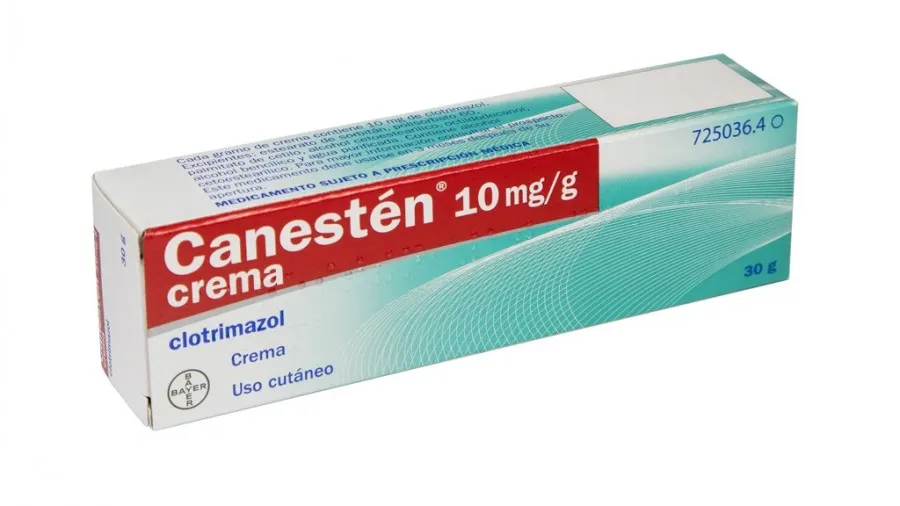
CANESTEN
ItalyCanesten is an antifungal that acts locally to eliminate fungi on the skin and in skin folds. It is used to treat fungal infections such as pityriasis versicolor, cutaneous candidiasis, athlete's foot (tinea pedis), and tinea corporis.
Frequently asked questions
When should you not use the medicine?
Do not use the product if you are allergic to clotrimazole or any of the other ingredients. It is necessary to consult a doctor before use if you have suffered from recurrent fungal infections in the past or if you are pregnant (especially during the first 3 months).
How should Canesten be applied?
The method depends on the formulation: the cream should be applied by rubbing gently 2-3 times a day on washed and dry areas; the spray should be sprayed evenly 2 times a day; the powder should be applied 2-3 times a day after washing and drying the area. For athlete's foot, when using the powder, it is recommended to also sprinkle it inside socks and shoes.
How long should the treatment last?
Generally, the treatment lasts 3-4 weeks. It is important to continue application for at least another 2 weeks after the symptoms disappear to prevent the fungus from returning.
What are the possible side effects of Canesten?
Skin reactions such as redness (erythema), itching, burning, peeling, hives, pain, swelling (edema), or irritation at the application site may occur. Other less common effects have also been reported, such as allergic reactions, shortness of breath, low blood pressure, or syncope.
Are there any special precautions for breastfeeding?
Yes, the medicine can be used during breastfeeding, but if it is applied locally to the nipple area, it is necessary to wash the breast before breastfeeding the baby.
What should I do if I miss an application?
Continue the treatment following the dose prescribed by the doctor. Do not use a double dose to make up for the missed one.
What should I do in case of accidental ingestion?
In case of accidental ingestion, inform a doctor immediately or go to the nearest hospital.
Instructions for use
Table of contents
- Canesten 1% cream
- 1. What Canesten is and what it is used for
- 2. What you need to know before using Canesten
- 3. How to use Canesten
- 4. Possible side effects
- 5. How to store Canesten
- 6. Contents of the pack and other information
- Patient Information Leaflet
- Canesten 1% cutaneous spray, solution
- 1. What Canesten is and what it is used for
- 2. What you need to know before using Canesten
- 3. How to use Canesten
- 4. Possible adverse reactions
- 5. How to store Canesten
- 6. Package contents and other information
- Canesten 1% cutaneous powder
- 1. What Canesten is and what it is used for
- 2. What you need to know before using Canesten
- 3. How to use Canesten
- 4. Possible adverse reactions
- 5. How to store Canesten
- 6. Package contents and other information
Package leaflet: Information for the patient
Canesten 1% cream
clotrimazole
Please read this leaflet carefully before using this medicine because it contains important information for you.
Use this medicine exactly as described in this leaflet or as your doctor or pharmacist has instructed you.
- Keep this leaflet. You may need to read it again.
- If you need more information or advice, consult your pharmacist.
- If you experience any side effects, including those not listed in this leaflet, contact your doctor or pharmacist. See section 4.
- Contact your doctor if you do not notice any improvement or if your symptoms worsen after 3-4 weeks.
Contents of this leaflet:
- What Canesten is and what it is used for
- What you need to know before using Canesten
- How to use Canesten
- Possible side effects
- How to store Canesten
- Contents of the pack and other information
1. What Canesten is and what it is used for
Canesten contains clotrimazole, which is an antifungal agent for dermatological use, meaning it acts locally to eliminate skin fungi.
Canesten is used to treat fungal infections of the skin and skin folds, such as pityriasis versicolor, cutaneous candidiasis, tinea pedis (athlete's foot), and tinea corporis.
2. What you need to know before using Canesten
Do not use Canesten
- if you are allergic to clotrimazole or to any of the other ingredients of this medicine (listed in section 6).
Warnings and precautions
Consult your doctor or pharmacist before using Canesten if you have previously suffered from these
conditions (recurrent fungal infections).
The use of non-breathable diapers after application of the medicine is not recommended in diaper dermatitis.
Avoid contact with the eyes. Do not ingest.
The use, especially if prolonged, of topical skin products may lead to sensitization reactions such as erythema (localized redness in the area of skin where the medicine is applied) and itching. If this occurs, discontinue treatment and consult your doctor or pharmacist.
Other medicines and Canesten
Inform your doctor or pharmacist if you are taking, have recently taken, or might take any other medicines.
There are no known medicines that may alter the effect of Canesten.
Canesten and food
There are no known foods that may alter the effect of Canesten.
Pregnancy and breastfeeding
If you are pregnant, suspect you may be pregnant, planning a pregnancy, or are breastfeeding, consult your doctor or pharmacist before using this medicine.
Pregnancy
During the first 3 months of pregnancy, you should consult your doctor before using Canesten.
Breastfeeding
Canesten may be used during breastfeeding. If applied locally to the nipple area, wash the breast before breastfeeding.
Driving and using machines
This medicine does not affect or affects negligibly the ability to drive vehicles or operate machinery.
Canesten contains cetyl stearyl alcohol
It may cause local skin reactions (e.g. contact dermatitis).
Canesten contains 20 mg/g of benzyl alcohol:
- may cause allergic reactions;
- may cause mild local irritation
3. How to use Canesten
Use this medicine exactly as stated in this leaflet or as directed by your doctor or pharmacist. If you have any doubts, consult your doctor or pharmacist.
The cream is particularly suitable for treating hairless (glabrous) skin areas.
Apply Canesten cream in small amounts 2–3 times a day to the affected areas.
Due to the high fungicidal activity of Canesten, a small amount of cream is usually sufficient to treat an area the size of the palm of the hand.
Apply Canesten cream by gently rubbing it in, after thoroughly washing and drying the affected area.
Warning: Do not exceed the recommended doses without medical advice.
Duration of treatment
In general, a treatment period of three to four weeks is sufficient for symptoms to disappear.
Continue treatment with Canesten cream for at least 2 weeks after symptoms have resolved, in order to consolidate the therapeutic results achieved and prevent reinfection.
If no noticeable improvement occurs after 3–4 weeks of continuous use, consult your doctor.
Consult your doctor if the condition recurs repeatedly or if you have noticed any recent changes in its characteristics.
Health education notes
To prevent fungal infections and their recurrence, it is helpful to follow certain hygienic and preventive measures, such as:
- Avoid walking barefoot in public places such as swimming pools, gyms, hotel rooms, etc.
- If you practise sports, wear breathable and comfortable footwear, and periodically replace or wash the insoles.
- Limit the use of clothing containing synthetic fibres.
- Change the newborn’s diaper frequently to avoid urine or faeces remaining in contact with the skin.
- Have dogs and cats examined by a veterinarian before introducing them into the household.
- Observe additional hygienic precautions, such as keeping clothes separate and washing them at high temperatures, if a family member has a fungal infection.
If you use more Canesten than you should
Acute intoxication is unlikely, as it is improbable that this would occur following a single excessive topical application (extensive application under conditions favourable to absorption) or after accidental oral ingestion. There is no specific antidote.
In case of accidental ingestion or swallowing of Canesten cream, contact your doctor immediately or go to the nearest hospital.
If you forget to use Canesten
Continue treatment as prescribed by your doctor. Do not use a double dose to make up for the missed dose.
If you have any doubts about how to use this medicine, consult your doctor or pharmacist.
4. Possible side effects
Like all medicines, this medicine can cause side effects, although not everybody gets them.
The following side effects have been reported with Canesten, with frequency not known:
Immune system disorders: angioedema (swelling), anaphylactic reaction, hypersensitivity
Vascular disorders: hypotension (low blood pressure), syncope
Respiratory, thoracic and mediastinal disorders: dyspnoea
Skin and subcutaneous tissue disorders: blisters, contact dermatitis, erythema (redness of the skin), paresthesia, desquamation (loss of cells from the outermost layer of the skin), pruritus, rash, urticaria, stinging pain of the skin, burning sensation of the skin.
General disorders and administration site conditions: irritation at the application site, reaction at the application site, edema, pain.
Following the instructions in this leaflet reduces the risk of side effects.
Reporting of side effects
If you experience any side effects, including those not listed in this leaflet, talk to your doctor or pharmacist. You can also report side effects directly via the national reporting system at https://www.aifa.gov.it/content/segnalazioni-reazioni-avverse.
By reporting side effects, you can help provide more information on the safety of this medicine.
5. How to store Canesten
Keep this medicine out of the sight and reach of children.
Do not use this medicine after the expiry date stated on the packaging. The expiry date refers to the last day of that month. The expiry date applies to the product in its original, unopened packaging, correctly stored.
Do not use Canesten 1% cream after 3 months from first opening.
Do not dispose of any medicine via wastewater or household waste. Ask your pharmacist how to dispose of medicines you no longer use. This will help protect the environment.
It is important to always keep the medicine information available; therefore, retain both the box and the package leaflet.
6. Contents of the pack and other information
What Canesten contains
- The active substance is: clotrimazole. 100 g of cream contains 1 g of clotrimazole.
- The other components are: sorbitan monostearate, polysorbate 60, cetyl palmitate, cetyl alcohol, octyldodecanol, benzyl alcohol, purified water.
Description of the appearance of Canesten and contents of the pack
Canesten is a cream for topical use.
The pack contains 30 g.
Marketing Authorisation Holder and Manufacturer
Marketing Authorisation Holder
Bayer S.p.A. - Viale Certosa 130 - Milan
Manufacturer
Kern Pharma S.L. – Terrassa - Spain
or
GP Grenzach Produktions GmbH - Germany
Patient Information Leaflet
Canesten 1% cutaneous spray, solution
clotrimazole
Please read this leaflet carefully before using this medicine because it contains important information for you.
Always use this medicine exactly as described in this leaflet or as your doctor or pharmacist has instructed you.
- Keep this leaflet. You may need to read it again.
- If you need more information or advice, consult your pharmacist.
- If you experience any of the side effects, including those not listed in this leaflet, consult your doctor or pharmacist. See section 4.
- Consult your doctor if you do not notice any improvement or if your symptoms worsen after 3-4 weeks of treatment.
Contents of this leaflet:
- What Canesten is and what it is used for
- What you need to know before using Canesten
- How to use Canesten
- Possible side effects
- How to store Canesten
- Contents of the pack and other information
1. What Canesten is and what it is used for
Canesten contains clotrimazole, which is an antifungal agent for dermatological use, meaning it acts locally to eliminate skin fungi.
Canesten is used to treat fungal skin infections and skin folds, such as pityriasis versicolor, cutaneous candidiasis, tinea pedis (athlete's foot), and tinea corporis.
2. What you need to know before using Canesten
Do not use Canesten
- if you are allergic to clotrimazole or to any of the other ingredients of this medicine (listed in section 6).
Warnings and precautions
Consult your doctor or pharmacist before using Canesten if you have previously suffered from these
conditions (recurrent fungal infections).
The use of non-breathable diapers after application of the medicine is not recommended in diaper dermatitis.
Avoid contact with the eyes. Do not swallow.
Prolonged or repeated use of topical products (applied to the skin) may lead to sensitization reactions such as erythema (localized redness in the area of skin where the medicine is applied) and itching. If this occurs, discontinue treatment and consult your doctor or pharmacist.
Other medicines and Canesten
Inform your doctor or pharmacist if you are taking, have recently taken, or might take any other medicines.
No medicines are known to interfere with the effect of Canesten spray.
Canesten and food
No foods are known to interfere with the effect of Canesten spray.
Pregnancy and breastfeeding
If you are pregnant, think you may be pregnant, are planning a pregnancy, or are breastfeeding, consult your doctor or pharmacist before using this medicine.
Pregnancy
.
During the first 3 months of pregnancy, you should consult your doctor before using Canesten.
Breastfeeding
Canesten may be used during breastfeeding. If applied locally to the nipple area, wash the breast before feeding the baby.
Driving and using machines
This medicine does not affect or affects negligibly the ability to drive or operate machinery.
Canesten Cutaneous Spray contains propylene glycol
Canesten spray contains 546 mg/g of propylene glycol.
- may cause skin irritation.
Since this medicine contains propylene glycol, do not use it on open wounds or large areas of damaged skin (such as burns) without first consulting your doctor or pharmacist.
3. How to use Canesten
Use this medicine exactly as stated in this leaflet or as directed by your doctor or pharmacist. If you are in doubt, consult your doctor or pharmacist.
The spray is particularly useful for treating hairy skin areas and skin folds.
It is also indicated for application on large body areas (back, abdomen, chest).
Apply a small amount of Canesten spray twice daily to the affected areas.
Due to the high fungicidal activity of Canesten, a small quantity of the solution is usually sufficient to treat an area the size of the palm of the hand.
After thoroughly washing and drying the affected area, spray Canesten spray evenly over it.
Caution: Do not exceed the recommended doses without medical advice.
Duration of treatment
In general, a treatment period of three to four weeks is sufficient for symptoms to disappear.
Continue treatment with Canesten spray for at least two weeks after symptoms have resolved, in order to consolidate the therapeutic results achieved and prevent reinfection.
If no noticeable improvement occurs after 3–4 weeks of continuous use, consult your doctor.
Consult your doctor if the condition recurs repeatedly or if you have noticed any recent changes in its characteristics.
Health education notes
To prevent fungal infections and their recurrence, it is helpful to follow certain hygienic measures, such as:
- Avoid walking barefoot in public places such as swimming pools, gyms, hotel rooms, etc.;
- If you practice sports, wear breathable and comfortable footwear, and periodically replace or wash the insoles;
- Limit the use of clothing made from synthetic fibres;
- Change the baby’s diaper frequently to avoid urine or faeces remaining in contact with the skin;
- Have dogs and cats examined by a veterinarian before introducing them into the household;
- Observe further hygienic precautions, such as keeping clothes separate and washing them at high temperatures if a family member has a fungal infection.
If you use more Canesten than you should
Acute intoxication is unlikely, as it is improbable that this would occur following a single excessive topical application (extensive application under conditions favourable to absorption) or accidental oral ingestion. There is no specific antidote.
In case of accidental ingestion/ingestion of Canesten spray, inform your doctor immediately or go to the nearest hospital.
If you forget to use Canesten
Continue treatment as recommended, using the prescribed dose. Do not use a double dose to make up for a forgotten dose.
If you have any doubts about how to use this medicine, consult your doctor or pharmacist.
4. Possible adverse reactions
Like all medicines, this medicine may cause adverse reactions, although not everyone experiences them.
The following adverse reactions have been reported with Canesten, with frequency not known:
Immune system disorders: angioedema (swelling), anaphylactic reaction, hypersensitivity.
Vascular disorders: hypotension (low blood pressure), syncope.
Respiratory, thoracic and mediastinal disorders: dyspnoea.
Skin and subcutaneous tissue disorders: blistering, contact dermatitis, erythema (skin redness), paresthesia, desquamation (shedding of the outermost layer of skin cells), pruritus, rash, urticaria, stinging skin pain, burning sensation of the skin.
General disorders and administration site conditions: irritation at application site, reaction at application site, edema, pain.
Following the instructions provided in this leaflet reduces the risk of adverse reactions.
Reporting of adverse reactions
If you experience any adverse reaction, including those not listed in this leaflet, consult your doctor or pharmacist. You may also report adverse reactions directly through the national reporting system at the following website: https://www.aifa.gov.it/content/segnalazioni-reazioni-avverse.
By reporting adverse reactions, you can help provide further information on the safety of this medicine.
5. How to store Canesten
Keep this medicine out of sight and reach of children.
Do not use this medicine after the expiry date stated on the packaging. The expiry date refers to the last day of that month. The expiry date applies to the product kept in its original, undamaged packaging and stored correctly.
Do not dispose of any medicine via wastewater or household waste. Ask your pharmacist how to dispose of medicines you no longer use. This will help protect the environment.
It is important to always keep the medicine information available; therefore, retain both the carton and the leaflet.
Do not use Canesten cutaneous spray solution in multi-dose bottle more than 3 months after first opening.
6. Package contents and other information
What Canesten Cutaneous Spray, solution in multidose polyethylene bottle with dosing pump contains
- The active substance is clotrimazole. 100 ml contain 1 g of clotrimazole.
- The other components are: macrogol, isopropyl alcohol, propylene glycol.
Description of the appearance of Canesten and contents of the package
Canesten is presented as a cutaneous spray solution.
The content is 40 ml.
Marketing Authorization Holder and Manufacturer
Marketing Authorization Holder
Bayer S.p.A. - Viale Certosa 130 - Milan
Manufacturer
KVP Pharma+Veterinar Produkte Gmbh - Kiel - Germany
Package leaflet: information for the patient
Canesten 1% cutaneous powder
clotrimazole
Please read this leaflet carefully before using this medicine because it contains important information for you.
Always use this medicine exactly as described in this leaflet or as your doctor or pharmacist has instructed.
- Keep this leaflet. You may need to read it again.
- If you need more information or advice, consult your pharmacist.
- If any of the side effects occur, including those not listed in this leaflet, consult your doctor or pharmacist. See section 4.
- Consult your doctor if you do not notice improvement or if you experience worsening of symptoms after 3-4 weeks.
Contents of this leaflet:
- What Canesten is and what it is used for
- What you need to know before using Canesten
- How to use Canesten
- Possible side effects
- How to store Canesten
- Contents of the pack and other information
1. What Canesten is and what it is used for
Canesten contains clotrimazole, which is an antifungal agent for dermatological use, meaning it acts locally to eliminate skin fungi.
Canesten powder is used to treat moist fungal infections (fungal infections) of the skin and skin folds, especially when located in covered or poorly aerated areas (for example: tinea pedis or athlete's foot, tinea cruris, tinea inguinalis).
2. What you need to know before using Canesten
Do not use Canesten
- if you are allergic to clotrimazole or to any of the other ingredients of this medicine (listed in section 6).
Warnings and precautions
Consult your doctor or pharmacist before using Canesten if you have previously suffered from fungal infections (recurrent mycosis).
The use of non-breathable diapers after application of the medicine is not recommended in diaper dermatitis.
Avoid contact with the eyes. Do not swallow.
The use, especially if prolonged, of topical products (applied to the skin) may lead to sensitization reactions such as erythema (localized redness in the area of skin where the medicine is applied) and itching. If this occurs, discontinue treatment and consult your doctor or pharmacist.
Other medicines and Canesten
Inform your doctor or pharmacist if you are taking, have recently taken, or might take any other medicines.
No medicines are known to affect the action of Canesten powder.
Canesten and food
No foods are known to affect the action of Canesten powder.
Pregnancy and breastfeeding
If you are pregnant, suspect you may be pregnant, planning a pregnancy, or are breastfeeding, ask your doctor or pharmacist for advice before using this medicine.
Pregnancy
During the first 3 months of pregnancy, you must consult your doctor before using Canesten.
Breastfeeding
Canesten may be used during breastfeeding. If applied locally to the nipple area, wash the breast before feeding the baby.
Driving and using machines
This medicine does not alter, or alters negligibly, the ability to drive or operate machinery.
3. How to use Canesten
Use this medicine exactly as described in this leaflet or as directed by your doctor or pharmacist. If you have any doubts, consult your doctor or pharmacist.
Canesten powder is particularly suitable for the treatment of covered or poorly aerated skin areas and skin folds.
Apply Canesten powder in small amounts 2–3 times daily to the affected areas.
Apply Canesten powder after thoroughly washing and drying the affected area.
In athlete’s foot, it is advisable to sprinkle Canesten powder inside socks and shoes as well.
Warning: Do not exceed the recommended doses without medical advice.
Duration of treatment
Generally, a treatment period of 3–4 weeks is sufficient for symptoms to disappear.
Continue treatment with Canesten powder for at least 2 weeks after symptoms have disappeared, in order to consolidate the therapeutic results achieved and to prevent reinfection.
If, after 3–4 weeks of continuous use, you do not notice any significant improvement, consult your doctor.
Consult your doctor if the condition recurs repeatedly or if you have noticed any recent changes in its characteristics.
Health education notes To prevent fungal infections and their recurrence, it is helpful to follow certain hygienic and preventive measures, such as:
- Avoid walking barefoot in public places such as swimming pools, gyms, hotel rooms, etc.
- If you practice sports, wear breathable and comfortable footwear, and change or wash insoles periodically.
- Limit the use of clothing made of synthetic fibres.
- Change the baby’s diaper frequently to avoid prolonged contact with urine or faeces on the skin.
- Have dogs and cats examined by a veterinarian before introducing them into the household.
- Observe additional hygiene precautions, such as keeping clothing separate and washing it at high temperatures, if a family member has a fungal infection.
If you use more Canesten than you should
Acute intoxication is unlikely, as it is improbable to occur after a single excessive topical application (extensive application under conditions favourable to absorption) or after accidental oral ingestion. There is no specific antidote.
In case of accidental ingestion or swallowing of Canesten powder, contact your doctor immediately or go to the nearest hospital.
If you forget to use Canesten
Continue treatment as directed by your doctor, using the next dose as scheduled. Do not use a double dose to make up for a missed dose.
If you have any doubts about how to use this medicine, consult your doctor or pharmacist.
4. Possible adverse reactions
Like all medicines, this medicine can cause adverse reactions, although not everyone experiences them.
The following adverse reactions have been reported with Canesten, with frequency not known:
Immune system disorders: angioedema (swelling), anaphylactic reaction, hypersensitivity
Vascular disorders: hypotension (low blood pressure), syncope
Respiratory, thoracic and mediastinal disorders: dyspnoea
Skin and subcutaneous tissue disorders: blistering, contact dermatitis, erythema (skin redness), paresthesia, desquamation (loss of cells from the outermost layer of the skin), pruritus, skin rash, urticaria, stinging skin pain, skin burning sensation.
General disorders and administration site conditions: irritation at application site, reaction at application site, oedema, pain.
Following the instructions provided in this leaflet reduces the risk of adverse reactions.
Reporting of adverse reactions
If you experience any adverse reaction, including those not listed in this leaflet, consult your doctor or pharmacist. You may also report adverse reactions directly via the national reporting system at https://www.aifa.gov.it/content/segnalazioni-reazioni-avverse.
By reporting adverse reactions, you can help provide more information on the safety of this medicine.
5. How to store Canesten
Keep this medicine out of the sight and reach of children.
Do not use this medicine after the expiry date stated on the packaging. The expiry date refers to the last day of that month. The expiry date applies to the product in its original, undamaged packaging and properly stored.
Do not dispose of any medicine via wastewater or household waste. Ask your pharmacist how to dispose of medicines no longer required. This will help protect the environment.
It is important to always keep the medicine information available; therefore, retain both the carton and the package leaflet.
6. Package contents and other information
What Canesten contains
- The active substance is clotrimazole. 100 g of cutaneous powder contain 1 g of clotrimazole.
- The other component is: rice starch.
Description of the appearance of Canesten and contents of the pack
Canesten is available as a powder for topical use.
The pack contains 30 g.
Marketing Authorisation Holder and manufacturer
Marketing Authorisation Holder
Bayer S.p.A. - Viale Certosa 130 - Milan, Italy
Manufacturer
KVP Pharma + Veterinar Produkte GmbH, Projensdorfer Strasse 324, 24106 Kiel, Germany
Sigmar Italia S.p.A., Via Sombreno, 11, 24011 Almè (BG), Italy
Similar drugs
| Brand name | Dosage form | Active substance / Dosage | Manufacturer |
|---|---|---|---|
| ANTIFUNGAL SAME | cream | SAVOMA MEDICINALI S.P.A. | |
| CANGIL | cream | EPIFARMA S.R.L | |
| CLOTRIMAZOLE DOC GENERICI | cream | DOC GENERICI SRL | |
| LENIL ANTIFUNGAL | cream | ZETA FARMACEUTICI S.P.A. | |
| LENIRIT MICOSI | cream | EG S.P.A. |
The original data is available in the language of the country of manufacture.
Data source: Italian Medicines Agency (AIFA)
Data last verified: September 21, 2026