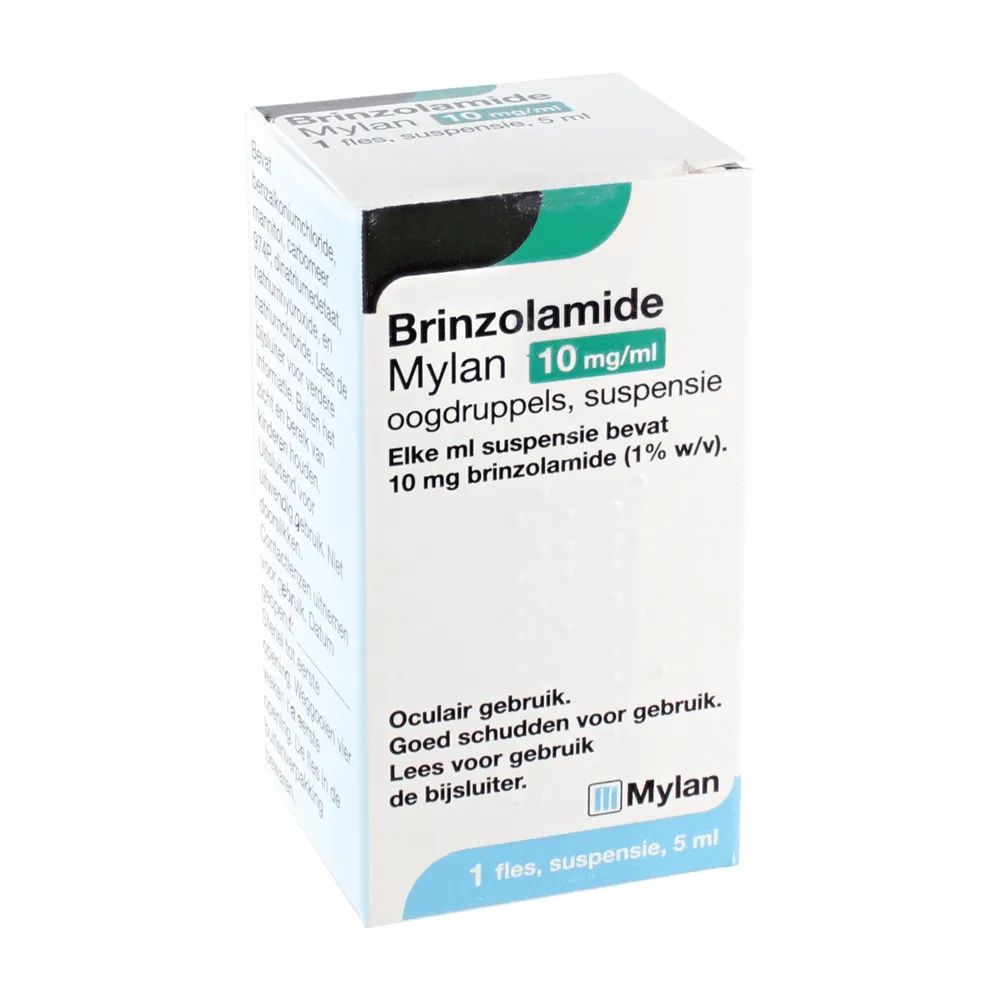
BRINZOLAMIDE MYLAN
ItalyIt is used to treat high pressure in the eye, a condition that can lead to glaucoma and damage vision.
Frequently asked questions
When should you not use Brinzolamide Mylan?
It must not be used if you have severe kidney problems, if you suffer from hyperchloremic acidosis, or if you are allergic to brinzolamide, to any of its components, or to sulfonamide drugs (such as certain diuretics or diabetes medications).
How should the medicine be taken?
The recommended dose is one drop in the affected eye, twice a day (morning and evening). It is important not to swallow the medicine and to follow the doctor's instructions exactly.
What are the common side effects of Brinzolamide Mylan?
Common side effects may include eye pain or redness, blurred vision, increased tearing, sensitivity to light, a sensation of a foreign body in the eye, a bad taste in the mouth, and eye irritation.
What should I do if I wear contact lenses?
Since the medicine contains benzalkonium chloride, which can damage soft contact lenses, they must be removed before application and you should wait at least 15 minutes before reinserting them.
Can I drive after using the eye drops?
Vision may appear blurred immediately after use. It is not advisable to drive or operate machinery until vision becomes clear again.
How long is the bottle good for after opening?
To avoid infection, the bottle must be discarded four weeks after the first opening.
Instructions for use
Table of contents
Patient Information Leaflet: Information for the Patient
Brinzolamide Mylan 10 mg/ml eye drops, suspension
Generic medicine
Please read this leaflet carefully before using this medicine as it contains
important information for you.
- Keep this leaflet. You may need to read it again.
- If you have any questions, ask your doctor or pharmacist.
- This medicine has been prescribed for you only. Do not give it to others, even if their symptoms are the same as yours, as it could be harmful.
- If you experience any side effects, including those not listed in this leaflet, talk to your doctor or pharmacist. See section 4.
Contents of this leaflet:
- What Brinzolamide Mylan is and what it is used for
- What you need to know before using Brinzolamide Mylan
- How to use Brinzolamide Mylan
- Possible side effects
- How to store Brinzolamide Mylan
- Contents of the pack and other information
1. What Brinzolamide Mylan is and what it is used for
Brinzolamide Mylan contains brinzolamide, which belongs to a group of medicines called
carbonic anhydrase inhibitors. It reduces pressure in the eye.
Brinzolamide Mylan is used to treat elevated intraocular pressure. This condition
can lead to glaucoma.
If the pressure in the eye is too high, it may damage vision.
2. What you need to know before using Brinzolamide Mylan
Do not use Brinzolamide Mylan
- if you have severe kidney problems
- if you are allergic to any of the ingredients of Brinzolamide Mylan (listed in section 6)
- if you are allergic to sulphonamide medicines. Examples include drugs used to treat diabetes and infections, as well as diuretics (tablets). Brinzolamide Mylan may cause the same reaction
- if you have too much acid in your blood (a condition called hyperchloremic acidosis).
If you have further questions, consult your doctor.
Warnings and precautions
Talk to your doctor or pharmacist before using Brinzolamide Mylan
- if you have kidney or liver problems
- if you have dry eyes or corneal problems
- if you are taking other sulphonamide medicines
- if you have been diagnosed with any of the following eye conditions: pseudoexfoliative glaucoma, pigmentary glaucoma, or narrow-angle glaucoma.
Children and adolescents
Brinzolamide Mylan must not be used in newborns, children, or adolescents under 18 years of age, unless advised by a doctor.
Other medicines and Brinzolamide Mylan
Tell your doctor or pharmacist if you are taking, have recently taken, or might take any other medicines, including those not requiring a prescription.
- If you are taking another carbonic anhydrase inhibitor (acetazolamide or dorzolamide), discuss this with your doctor.
Pregnancy and breastfeeding
If you are pregnant, think you might be pregnant, planning to become pregnant, or breastfeeding, ask your doctor or pharmacist for advice before using this medicine.
You must not use Brinzolamide Mylan during pregnancy or if you suspect you are pregnant.
Your doctor will advise you whether you can use brinzolamide while breastfeeding, as it is not known whether it is excreted in breast milk.
Driving and using machines
Your vision may be blurred for a short time immediately after using Brinzolamide Mylan.
Do not drive or operate machinery until your vision is clear.
Brinzolamide Mylan may reduce your ability to perform tasks requiring mental alertness and/or physical coordination. If you experience such symptoms, take care when driving or using machinery.
Brinzolamide Mylan contains benzalkonium chloride
Benzalkonium chloride may cause ocular irritation and is known to discolour soft contact lenses. Contact with soft contact lenses should be avoided. If you wear contact lenses, remove them before applying Brinzolamide Mylan and wait at least 15 minutes after instillation of the dose before reinserting them.
3. How to use Brinzolamide Mylan
Always use this medicine exactly as instructed by your doctor or pharmacist. If
you have any doubts, consult your doctor or pharmacist.
The recommended dose is 1 drop in the affected eye(s), twice daily – morning and evening.
Use this amount unless your doctor tells you otherwise. Use
Brinzolamide Mylan in both eyes only if your doctor has instructed you to do so. Use the
medicine for as long as your doctor recommends.
Use Brinzolamide Mylan only in your eyes – do not swallow it.
How to use it
- Take the bottle. Do not use the bottle if the tamper-evident seal on the neck of the bottle is broken before first use.
- Wash your hands.
- Shake the bottle and unscrew the cap.
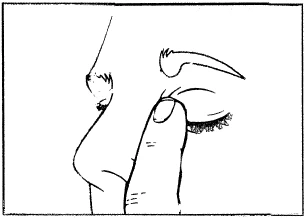
- Tilt your head backwards. Pull down the lower eyelid with a clean finger to form a "pocket" between the eyelid and the eye (figure 1). Looking in a mirror may be helpful.
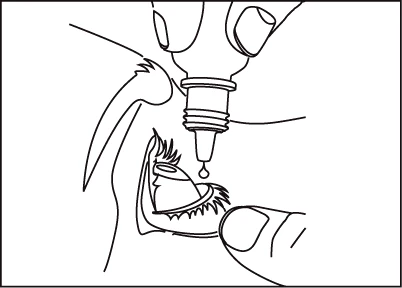
- Hold the bottle upside down between your thumb and index finger, above one eye. Instil one drop of eye drops into the pocket. Do not touch the eye, eyelid, surrounding areas, or any other surfaces with the tip of the bottle (figure 2).
- If the drop misses the eye, try again.
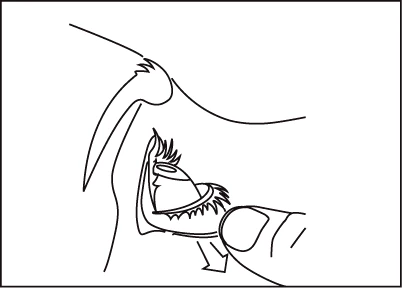
- Release the eyelid and gently press with a finger at the inner corner of the eye, near the nose. This helps prevent Brinzolamide Mylan from spreading into the rest of the body (figure 3).
- If you need to apply the eye drops to both eyes, repeat steps 4 to 7 for the other eye.
- Replace the cap immediately after use.
- Finish one bottle before opening the next.
If you are using other eye drops or eye ointments, wait at least 5 minutes between instilling Brinzolamide Mylan and the other eye drops. Ophthalmic ointments should be administered last.
If you use more Brinzolamide Mylan than you should
If you have instilled too many drops, immediately rinse the eye with lukewarm water. Do not use the eye drops again until it is time for your next dose.
If you forget to use Brinzolamide Mylan
Use one drop as soon as you remember, then continue with your regular dosing schedule. Do not
use a double dose to make up for a missed dose.
If you stop using Brinzolamide Mylan
If you stop using Brinzolamide Mylan without consulting your doctor, your intraocular pressure may not be controlled and could lead to loss of vision.
If you have any questions about how to use this medicine, consult your doctor, pharmacist, or nurse.
4. Possible side effects
Like all medicines, this medicine can cause side effects, although not everybody gets them.
Stop using Brinzolamide Mylan immediately if you experience any of the following effects
and go to hospital straight away or consult your doctor:
Common: may affect up to 1 in 10 people
- eye pain, eye redness, blurred vision, increased tearing with possible sensitivity to light, or a sensation of having something in the eye
Uncommon: may affect up to 1 in 100 people
- breathing difficulties, increased breathing rate with sweating, laboured or rattling breathing. You may also have blue lips, pale or greyish skin. This may indicate insufficient oxygen in the body.
Rare: may affect up to 1 in 1,000 people
- feeling of heaviness or pressure in the chest with chest pain. These could be signs of heart problems such as angina.
Not known (frequency cannot be estimated from the available data)
- allergic reactions which may appear as skin rashes, swelling of the eyes, eyelids, lips, tongue, face, hands or throat, which may cause breathing difficulties
Other side effects include:
Common: may affect up to 1 in 10 people
- bad or unusual taste in the mouth, eye irritation
Uncommon: may affect up to 1 in 100 people
- redness, peeling and inflammation of the eyelids
- light sensitivity in the eyes, difficulty seeing in very bright light
- inflammation or infection of the eye
- dry or itchy eyes
- eye discharge
- inflammation of the eyelid glands
- abnormal sensation in the eyes
- new growth on the surface of the eye
- increased eye pigmentation or appearance of a grey ring around the eye
- deposits of fat or minerals inside or around the eye
- tired eyes
- crusting at the edge of the eyelid
- increased tearing
- decreased heart rate, palpitations, which you may feel as pounding heartbeats
- shortness of breath or tightness in the chest with breathlessness, sometimes caused by physical exertion
- decrease in red blood cells in the blood. This may cause fatigue, shortness of breath, cold hands and feet, pale skin, and poor healing after a cut
- increased blood chloride levels detected by blood tests
- dizziness
- depression or lack of enthusiasm or interest
- tingling or "pins and needles" sensations in the hands and feet
- nightmares
- nervousness
- fatigue
- decreased sexual desire or problems achieving or maintaining an erection
- cold-like symptoms
- difficulty breathing through the nose with facial pain (these may be signs of sinus problems)
- throat irritation, pain or sore throat
- mucus formation at the back of the nose or throat
- abnormal or reduced sensation in the mouth
- inflammation of the inside of the oesophagus with pain
- abdominal pain, nausea, vomiting, stomach discomfort or indigestion
- frequent bowel movements, diarrhoea or intestinal gas
- digestive disturbances
- kidney pain
- headache
- muscle pain or muscle spasms
- back pain
- difficulty walking or standing up
- nosebleeds, runny nose or sneezing
- red skin rash or red skin area with small bumps
- skin tightness
- sensation of a foreign body in the eye
- dry mouth
Rare: may affect up to 1 in 1,000 people
- sleep disorders
- drowsiness
- increased pressure in the eye
- optic nerve damage
- abnormal, double or reduced vision
- seeing flashes with discomfort or pain
- reduced eye sensation
- swollen eyes or swelling around the eyes
- irregular heartbeat
- dry or blocked nose
- chest congestion or cough
- itchy skin rash or hives
- itching
- hair loss
- generalized weakness
- feeling of nervousness or irritability
- chest pain
- memory difficulties
- ringing in the ears
Not known: frequency cannot be estimated from the available data
- eyelid abnormalities or redness around the eye
- reduced growth or number of eyelashes
- sensation of dizziness with loss of balance (known as vertigo)
- increase or decrease in blood pressure, increased heart rate
- abnormalities in liver function blood tests
- frequent urination
- swelling of the hands or feet
- decreased sensation (also known as numbness)
- reduced sense of taste
- joint pain or pain in the hands and feet
- tremors
- general feeling of malaise
- decreased appetite
Reporting of side effects
If you experience any side effects, including those not listed in this leaflet, talk to your doctor or pharmacist. You can also report side effects directly via the national reporting system at www.agenziafarmaco.gov.it/it/responsabili. By reporting side effects, you can help provide more information on the safety of this medicine.
5. How to store Brinzolamide Mylan
Keep this medicine out of the sight and reach of children.
Do not use this medicine after the expiry date stated on the bottle and carton after "Exp.".
The expiry date refers to the last day of the month.
Store the bottle in the outer packaging.
The bottle must be discarded four weeks after first opening, to prevent infection.
Write the opening date in the space below, and in the space on the bottle label and carton, for each bottle.
For the pack containing a single bottle, write only one date.
Date of opening (1):
Date of opening (2):
Date of opening (3):
Do not dispose of any medicine via wastewater or household waste.
Ask your pharmacist how to dispose of medicines you no longer use.
This will help protect the environment.
6. Package contents and other information
What Brinzolamide Mylan contains
The active substance is brinzolamide. Each millilitre of eye drops, suspension contains 10 mg of
brinzolamide.
The other components are: benzalkonium chloride, carbomer 974P, edetate disodium, mannitol
(E421), purified water, sodium chloride, hydrochloric acid or sodium hydroxide to adjust the pH.
Description of the appearance of Brinzolamide Mylan and contents of the pack
Brinzolamide Mylan eye drops, suspension is a white to almost white liquid.
Brinzolamide Mylan is available in a 5 ml plastic bottle (low-density polyethylene) containing 5 ml of Brinzolamide Mylan eye drops, suspension, with a plastic dropper and a plastic cap.
Brinzolamide Mylan is available in the following pack sizes:
single pack containing 1 bottle of 5 ml
single pack containing 3 bottles of 5 ml
Not all pack sizes may be marketed.
Marketing Authorisation Holder
Mylan S.p.A. Via Vittor Pisani 20, 20124 Milan, Italy
Manufacturer
Lusomedicamenta Sociedade Técnica Farmacêutica, S.A., Rua Norberto de Oliveira, no 1/5,
Póvoa de Santo Adrião, 2620-111, Portugal
Similar drugs
| Brand name | Dosage form | Active substance / Dosage | Manufacturer |
|---|---|---|---|
| AICISI | drops, suspension | OMNIVISION ITALIA SRL | |
| AZOPT | drops, suspension | NOVARTIS EUROPHARM LIMITED | |
| BRINZOLAMIDE EG | drops, suspension | EG S.P.A. |
The original data is available in the language of the country of manufacture.
Data source: Italian Medicines Agency (AIFA)
Data last verified: September 21, 2026