BETMIGA
ItalyThe medicine is used to treat the symptoms of an overactive bladder in adults (such as urgency to urinate, increased frequency, and incontinence) and to treat neurogenic detrusor overactivity in children aged 3 to 18 years, helping them to hold more urine and reduce leakage.
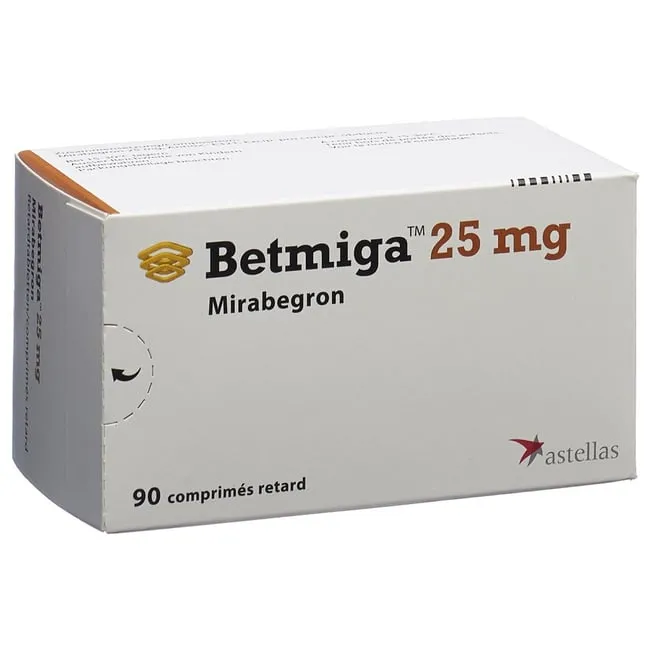
Frequently asked questions
When should you not take Betmiga?
You must not take this medicine if you are allergic to the active substance or to any of the other ingredients, or if you suffer from very high, uncontrolled blood pressure. It must not be used during pregnancy.
How to take Betmiga?
Tablets should be swallowed whole with liquids, once a day, with or without food. For the oral suspension (granules), the dose should be taken once a day with food, following the precise instructions of the doctor and pharmacist for preparation and measurement.
What are the common side effects?
The most frequent side effects include urinary tract infections, headache, dizziness, tachycardia (fast heartbeat), nausea, constipation, and diarrhea.
What are the most serious side effects of Betmiga?
Serious side effects may include an irregular heartbeat (atrial fibrillation). It is important to consult a doctor immediately if you experience a sudden, throbbing headache, which could indicate a sharp increase in blood pressure.
Are there interactions with other medicines?
Yes, Betmiga can interact with several medicines, including some used for heart rhythm, antipsychotics, anti-infectives (such as clarithromycin), drugs for depression, or for reducing the risk of blood clots (such as dabigatran etexilate). It is essential to inform your doctor about all the medicines you are currently taking.
What to do in case of a missed dose or overdose?
If you forget a dose, take it as soon as you remember, unless it is less than 12 hours before the next dose (in which case do not take it). In case of overdose, contact a doctor or hospital immediately, as a rapid heartbeat or increased blood pressure may occur.
Instructions for use
Table of contents
- Betmiga 25 mg prolonged-release tablets, 50 mg prolonged-release tablets
- 1. What Betmiga is and what it is used for
- 2. What you should know before taking Betmiga
- 3. How to take Betmiga
- 4. Possible side effects
- 5. How to store Betmiga
- 6. Contents of the pack and other information
- Package leaflet: Information for the user
- Betmiga 8 mg/mL prolonged-release oral suspension granules
- 1. What Betmiga is and what it is used for
- 2. What you need to know before taking Betmiga
- 3. How to take Betmiga
- 4. Possible side effects
- 5. How to store Betmiga
- 6. Package contents and other information
Package leaflet: Information for the user
Betmiga 25 mg prolonged-release tablets, 50 mg prolonged-release tablets
mirabegron
Please read all of this leaflet carefully before you start using this medicine because it contains important information for you.
- Keep this leaflet. You may need to read it again.
- If you have any questions, ask your doctor or pharmacist.
- This medicine has been prescribed for you only. Do not give it to other people, even if their symptoms are the same as yours, as it may be harmful.
- If you experience any adverse reaction, including those not listed in this leaflet, talk to your doctor or pharmacist. See section 4.
Contents of this leaflet
- What Betmiga is and what it is used for
- What you need to know before taking Betmiga
- How to take Betmiga
- Possible side effects
- How to store Betmiga
- Contents of the pack and other information
1. What Betmiga is and what it is used for
Betmiga contains the active substance mirabegron. It is a relaxant of the bladder muscle (a so-called beta 3-adrenergic receptor agonist), which reduces the activity of an overactive bladder, treats the associated symptoms, and reduces neurogenic detrusor overactivity.
Betmiga is used for:
- the treatment of symptoms of a condition called overactive bladder in adults. These symptoms include: sudden need to empty the bladder (urgency); need to empty the bladder more frequently than normal (increased urinary frequency); inability to control bladder emptying (urge incontinence).
- the treatment of a condition called neurogenic detrusor overactivity in children aged 3 to less than 18 years. Neurogenic detrusor overactivity is a condition in which involuntary contractions of the bladder occur due to a congenital condition or nerve damage affecting bladder control. If left untreated, neurogenic detrusor overactivity may cause damage to the bladder and/or kidneys. Betmiga is used to increase the amount of urine that can be stored in the bladder and to reduce urine leakage.
2. What you should know before taking Betmiga
Do not take Betmiga
- if you are allergic to mirabegron or to any of the other ingredients of this medicine (listed in section 6);
- if you have uncontrolled, severely high blood pressure.
Warnings and precautions
Talk to your doctor or pharmacist before taking Betmiga
- if you have difficulty emptying your bladder or have a weak urine flow, or if you are taking other medicines for overactive bladder or neurogenic detrusor overactivity, such as antimuscarinic drugs.
- if you have kidney or liver problems. Your doctor may need to reduce your dose or may advise you not to take Betmiga, especially if you are taking other medicines such as itraconazole, ketoconazole (for fungal infections), ritonavir (for HIV/AIDS), or clarithromycin (for bacterial infections). Inform your doctor if you are taking any other medicines.
- if you have an abnormality on your ECG (electrocardiogram) known as QT prolongation, or if you are taking a medicine known to cause this abnormality, such as: medicines used to treat heart rhythm disorders, such as quinidine, sotalol, procainamide, ibutilide, flecainide, dofetilide, and amiodarone; medicines used to treat allergic rhinitis; antipsychotics (medicines used to treat mental illnesses), such as thioridazine, mesoridazine, haloperidol, and chlorpromazine; anti-infectives, such as pentamidine, moxifloxacin, erythromycin, and clarithromycin. If you have a history of high blood pressure, Betmiga may increase or worsen your blood pressure. Your doctor is advised to monitor your blood pressure while you are taking this medicine.
Children and adolescents
Do not give this medicine to children and adolescents under 18 years of age for the treatment of overactive bladder, as the safety and efficacy of Betmiga in this population have not been established. Betmiga must not be used in children under 3 years of age for the treatment of neurogenic detrusor overactivity.
Other medicines and Betmiga
Inform your doctor or pharmacist if you are taking, have recently taken, or might take any other medicines. Betmiga may affect the action of other medicines, and other medicines may affect how this medicine works.
- Inform your doctor if you are taking thioridazine (a medicine used to treat mental illnesses), propafenone or flecainide (medicines used to treat heart rhythm disorders), imipramine or desipramine (medicines used to treat depression). These specific medicines may require your doctor to adjust the dose.
- Inform your doctor if you are taking digoxin (a medicine used to treat heart failure or heart rhythm disorders). Your doctor will monitor the blood levels of this medicine. If blood levels are outside the normal range, your doctor may adjust the dose of digoxin.
- Inform your doctor if you are taking dabigatran etexilate (a medicine used to reduce the risk of blood vessel blockage in the brain or body caused by blood clots in patients with heart rhythm disorders (atrial fibrillation) and additional risk factors). This medicine may require a dose adjustment by your doctor.
Pregnancy and breastfeeding
If you are pregnant, think you might be pregnant, or are planning to become pregnant, do not take Betmiga.
If you are breastfeeding, ask your doctor or pharmacist for advice before taking this medicine. This medicine may pass into breast milk. Together with your doctor, you will need to decide whether to take Betmiga or breastfeed. You should not do both.
Driving and using machines
There are no data indicating that this medicine impairs the ability to drive or use machinery.
3. How to take Betmiga
Take this medicine exactly as instructed by your doctor. If you have any doubts, consult your doctor or pharmacist.
Use in adults with overactive bladder
The recommended dose is one 50 mg tablet taken orally once daily. If you have kidney or liver problems, your doctor may need to reduce your dose to one 25 mg tablet taken orally once daily. Take this medicine with liquid and swallow the tablet whole. Do not break or chew the tablet. Betmiga can be taken with or without food.
Use in children and adolescents (aged 3 to less than 18 years) with neurogenic detrusor overactivity
Take this medicine orally once daily. You must take this medicine with liquid and swallow the tablet whole. Do not break or chew the tablet. Betmiga must be taken with food. Your doctor will tell you what dose to take/what dose your child should take. The doctor will calculate the correct dose for a patient based on body weight. You must follow the doctor's instructions exactly.
If you take more Betmiga than you should
If you have taken more tablets than prescribed, or if someone else has accidentally taken your tablets, contact your doctor, pharmacist, or hospital immediately.
Symptoms of overdose may include increased heart rate, increased pulse, or increased blood pressure.
If you forget to take Betmiga
If you forget to take a dose, take it as soon as you remember, unless there are 12 hours or less before your next dose. Then continue taking the medicine at your usual time.
Do not take a double dose to make up for a forgotten dose. If you forget to take several doses, contact your doctor and follow their advice.
If you stop taking Betmiga
Do not stop treatment with Betmiga prematurely if you do not see an immediate effect. Your bladder may need some time to adjust. Continue taking the tablets. Do not stop treatment when your bladder condition improves. Stopping treatment may cause symptoms of overactive bladder syndrome or neurogenic detrusor overactivity to return.
Do not stop treatment with Betmiga without first talking to your doctor, as symptoms of overactive bladder syndrome or neurogenic detrusor overactivity may recur.
If you have any questions about the use of this medicine, consult your doctor or pharmacist.
4. Possible side effects
Like all medicines, this medicine can cause side effects, although not everybody gets them.
Among the more serious side effects is irregular heartbeat (atrial fibrillation). This is an uncommon side effect (may affect up to 1 in 100 people), but if this side effect occurs, stop taking the medicine immediately and consult a doctor without delay.
If you develop a headache, especially if sudden or migraine-like (pulsating), contact your doctor. These may be symptoms of a severe increase in blood pressure.
Other side effects include:
Common (may affect up to 1 in 10 people)
- Urinary tract infections (infections of the urinary channels)
- Headache
- Dizziness
- Increased heart rate (tachycardia)
- Feeling unwell (nausea)
- Constipation
- Diarrhoea
Uncommon (may affect up to 1 in 100 people)
- Vaginal infection
- Bladder infection (cystitis)
- Awareness of heartbeat (palpitations)
- Heart rhythm problems (atrial fibrillation)
- Indigestion (dyspepsia)
- Stomach infection (gastritis)
- Itching, rash or hives (urticaria, rash, macular rash, papular rash, pruritus)
- Joint swelling
- Itching of the vulva or vagina (vulvovaginal pruritus)
- Increased blood pressure
- Increased liver enzymes (GGT, AST and ALT)
Rare (may affect up to 1 in 1,000 people)
- Swelling of the eyelid (eyelid oedema)
- Swelling of the lips (lip oedema)
- Inflammation of small blood vessels, mainly affecting the skin (leucocytoclastic vasculitis)
- Small purple skin spots (purpura)
- Swelling of deeper layers of the skin due to fluid accumulation, which may affect any part of the body including the face, tongue or throat, and may cause breathing difficulties (angioedema)
- Inability to completely empty the bladder (urinary retention)
Very rare (may affect up to 1 in 10,000 people)
- Severely high blood pressure (hypertensive crisis)
Frequency not known (frequency cannot be estimated from the available data)
- Insomnia
- Confusion
Betmiga may increase the difficulty of emptying the bladder if you have a bladder obstruction or are taking other medicines for overactive bladder. Contact your doctor immediately if you are unable to empty your bladder.
- Reporting of side effects
If you experience any side effect, including those not listed in this leaflet, talk to your doctor or pharmacist. You can also report side effects directly via the national reporting system referred to in Annex V. By reporting side effects, you can help provide more information on the safety of this medicine.
5. How to store Betmiga
Keep this medicine out of the sight and reach of children.
Do not use this medicine after the expiry date stated on the carton or blister after
Exp. The expiry date refers to the last day of that month.
This medicine does not require any special storage conditions.
Do not dispose of any medicine via wastewater or household waste. Ask your pharmacist how to
dispose of medicines you no longer use. This will help protect the environment.
6. Contents of the pack and other information
What Betmiga contains
-
The active substance is mirabegron.
Betmiga 25 mg prolonged-release tablets: Each tablet contains 25 mg of mirabegron.
Betmiga 50 mg prolonged-release tablets: Each tablet contains 50 mg of mirabegron. -
The other components are:
Tablet core: Macrogol, hypromellose, butylated hydroxytoluene, magnesium stearate.
Coating: hypromellose, macrogol, yellow iron oxide (E172), red iron oxide (E172) (only in the 25 mg tablets).
Description of the appearance of Betmiga and pack contents
Betmiga 25 mg film-coated prolonged-release tablets are brown, oval-shaped tablets, with the company logo and “325” engraved on one side.
Betmiga 50 mg film-coated prolonged-release tablets are yellow, oval-shaped tablets, with the company logo and “355” engraved on one side.
Betmiga is available in alu-alu blisters containing 10, 20, 30, 50, 60, 90, 100 or 200 tablets. Not all pack sizes may be marketed.
Marketing Authorisation Holder
Astellas Pharma Europe B.V.
Sylviusweg 62
2333 BE Leiden
The Netherlands
Manufacturer
Delpharm Meppel B.V.
Hogemaat 2
7942 JG Meppel
The Netherlands
For further information on this medicinal product, please contact the local representative of the Marketing Authorisation Holder in your country:
België/Belgique/Belgien
Astellas Pharma B.V. Branch
Tél/Tel: +32 (0)2 5580710
България
Астелас Фарма ЕООД
Teл.: +359 2 862 53 72
Česká republika
Astellas Pharma s.r.o.
Tel: +420 221 401 500
Danmark
Astellas Pharma a/s
Tlf.: +45 43 430355
Deutschland
Astellas Pharma GmbH
Tel: +49 (0)89 454401
Eesti
Astellas Pharma d.o.o.
Tel: +372 6 056 014
Ελλάδα
Astellas Pharmaceuticals AEBE
Τηλ: +30 210 8189900
España
Astellas Pharma S.A.
Tel: +34 91 4952700
France
Astellas Pharma S.A.S.
Tél: +33 (0)1 55917500
Hrvatska
Astellas d.o.o.
Tel: +385 1670 0102
Ireland
Astellas Pharma Co. Ltd.
Tel: +353 (0)1 4671555
Ísland
Vistor
Sími: +354 535 7000
Italia
Astellas Pharma S.p.A.
Tel: +39 (0)2 921381
Κύπρος
Astellas Pharmaceuticals AEBE
Τηλ: +30 210 8189900
Latvija
Astellas Pharma d.o.o.
Tel: +371 67 619365
Lietuva
Astellas Pharma d.o.o.
Tel: +370 37 408 681
Luxembourg/Luxemburg
Astellas Pharma B.V. Branch Belgique/Belgien
Tél/Tel: +32 (0)2 5580710
Magyarország
Astellas Pharma Kft.
Tel.: +36 1 577 8200
Malta
Astellas Pharmaceuticals AEBE
Tel: +30 210 8189900
Nederland
Astellas Pharma B.V.
Tel: +31 (0)71 5455745
Norge
Astellas Pharma
Tlf: +47 66 76 46 00
Österreich
Astellas Pharma Ges.m.b.H.
Tel: +43 (0)1 8772668
Polska
Astellas Pharma Sp.z.o.o.
Tel.: +48 225451 111
Portugal
Astellas Farma, Lda.
Tel: +351 21 4401300
România
S.C. Astellas Pharma SRL
Tel: +40 (0)21 361 04 95
Slovenija
Astellas Pharma d.o.o.
Tel: +386 14011400
Slovenská republika
Astellas Pharma s.r.o.
Tel: +421 2 4444 2157
Suomi/Finland
Astellas Pharma
Puh/Tel: +358 (0)9 85606000
Sverige
Astellas Pharma AB
Tel: +46 (0)40-650 15 00
More detailed information on this medicinal product is available on the website of the European Medicines Agency: https://www.ema.europa.eu.
Package leaflet: Information for the user
Betmiga 8 mg/mL prolonged-release oral suspension granules
mirabegron
Please read this leaflet carefully before taking this medicine because it contains
important information for you.
- Keep this leaflet. You may need to read it again.
- If you have any questions, ask your doctor or pharmacist.
- This medicine has been prescribed for you only. Do not give it to other people, even if their symptoms are the same as yours, because it may be harmful.
- If you experience any side effect, including those not listed in this leaflet, contact your doctor or pharmacist. See section 4.
Contents of this leaflet
- What Betmiga is and what it is used for
- What you need to know before taking Betmiga
- How to take Betmiga
- Possible side effects
- How to store Betmiga
- Contents of the pack and other information
1. What Betmiga is and what it is used for
Betmiga contains the active substance mirabegron. It is a bladder muscle relaxant (a so-called beta-3 adrenergic receptor agonist) that reduces neurogenic detrusor overactivity.
Betmiga is used to treat a condition called neurogenic detrusor overactivity in children aged 3 to less than 18 years. Neurogenic detrusor overactivity is a condition in which involuntary bladder contractions occur due to a congenital condition or nerve damage affecting bladder control. If left untreated, neurogenic detrusor overactivity may cause damage to the bladder and/or kidneys. Betmiga is used to increase the amount of urine the bladder can hold and to reduce urinary leakage.
2. What you need to know before taking Betmiga
Do not take Betmiga
- if you are allergic to mirabegron or any of the other ingredients of this medicine (listed in section 6);
- if you have uncontrolled high blood pressure.
Warnings and precautions
Talk to your doctor or pharmacist before taking Betmiga:
- if you have problems emptying your bladder or have a weak urine flow, or if you are taking other medicines for the treatment of neurogenic detrusor overactivity, such as antimuscarinic drugs.
- if you have kidney or liver problems. Your doctor may need to reduce your dose or may advise you not to take Betmiga, especially if you are taking other medicines such as itraconazole, ketoconazole (fungal infections), ritonavir (HIV/AIDS), or clarithromycin (bacterial infections). Inform your doctor if you are taking any other medicines.
- if you have an abnormality on your ECG (electrocardiogram) known as QT prolongation, or if you are taking a medicine known to cause this abnormality, such as:
- medicines used to treat heart rhythm disorders, such as quinidine, sotalol, procainamide, ibutilide, flecainide, dofetilide, and amiodarone;
- medicines used to treat allergic rhinitis;
- antipsychotic medicines (used to treat mental illnesses), such as thioridazine, mesoridazine, haloperidol, and chlorpromazine;
- anti-infective agents, such as pentamidine, moxifloxacin, erythromycin, and clarithromycin.
If you have a history of high blood pressure, Betmiga may increase or worsen your blood pressure. Your doctor is advised to monitor your blood pressure while you are taking this medicine.
Children and adolescents
Do not give this medicine to children and adolescents under 18 years of age for the treatment of overactive bladder, as the safety and efficacy of Betmiga in this age group have not been established. Betmiga must not be used in children under 3 years of age for the treatment of neurogenic detrusor overactivity.
Other medicines and Betmiga
Inform your doctor or pharmacist if you are taking, have recently taken, or might take any other medicines. Betmiga may affect the action of other medicines, and other medicines may affect how this medicine works.
- Inform your doctor if you are taking thioridazine (a medicine used to treat mental illnesses), propafenone or flecainide (medicines used to treat heart rhythm disorders), imipramine or desipramine (medicines used to treat depression). These specific medicines may require your doctor to adjust your dose.
- Inform your doctor if you are taking digoxin (a medicine used to treat heart failure or heart rhythm disorders). Your doctor will monitor the blood levels of this medicine. If blood levels are outside the normal range, your doctor may adjust your digoxin dose.
- Inform your doctor if you are taking dabigatran etexilate (a medicine used to reduce the risk of blood vessel blockage in the brain or body caused by blood clots in patients with heart rhythm abnormalities (atrial fibrillation) and additional risk factors). This medicine may require dose adjustment by your doctor.
Pregnancy and breastfeeding
If you are pregnant, think you might be pregnant, or are planning to become pregnant, you must not take Betmiga.
If you are breastfeeding, consult your doctor or pharmacist before taking this medicine. This medicine is likely to pass into breast milk. Together with your doctor, you will need to decide whether to take Betmiga or to breastfeed. You cannot do both.
Driving and using machines
There are no data indicating that this medicine impairs the ability to drive or use machinery.
Betmiga contains ethyl hydroxybenzoate (E214), methyl hydroxybenzoate (E218), and sodium
May cause allergic reactions (including delayed reactions).
This medicine contains less than 1 mmol (23 mg) of sodium per 10 mL of oral suspension, i.e. essentially ‘sodium-free’.
3. How to take Betmiga
Take this medicine exactly as your doctor has told you. If you are unsure, consult your doctor or pharmacist.
Take this medicine by mouth once daily. Betmiga must be taken with food. Your doctor will tell you what dose to take / what dose your child should take. The doctor will calculate the correct dose for a patient based on body weight. You must follow their instructions carefully.
How to take Betmiga using an oral dosing syringe
Reconstitution should be performed by a pharmacist, except in situations where pharmacists are unable to do so. In situations where pharmacists cannot perform reconstitution, use the dosing cup provided to measure the volume of water required for reconstitution.
Use the oral dosing syringe and adapter supplied with Betmiga prolonged-release oral suspension granules to measure the correct dose. If you need to take a dose greater than 5 mL per day, you will need to use the oral dosing syringe twice to administer the total amount of each dose. The pack contains the following items:
5 mL oral administration syringe Adapter Package leaflet Box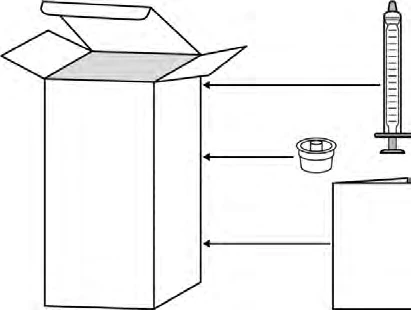 | Dosing cup (if supplied) Bottle Desiccant Desiccant bag DO NOT INGEST •--......__I I 11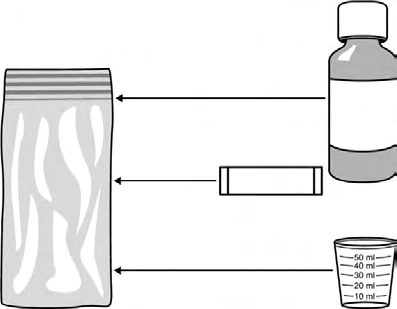 |
Note: The bag contains a dosing cup (if supplied), the bottle and the desiccant. The bag is included in the box together with the oral administration syringe, the adapter and the instruction leaflet.
Preparation for first use of a Betmiga prolonged-release oral suspension granulate bottle (with dosing cup)
Note: If reconstitution has already been performed by the pharmacist, skip this section and proceed to the next section (Before each oral administration).
- • Open the box and remove the bag,
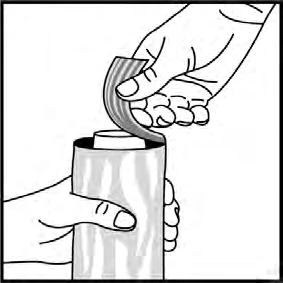
the syringe and the adapter.
- Keep the bottle in the sealed bag until the time of reconstitution.
- Open the bag and remove the bottle and the dosing cup.
- • Discard the empty bag and the desiccant. Do not
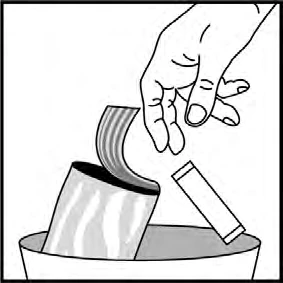
ingest the desiccant.
- • Tap the closed bottle several times on the top
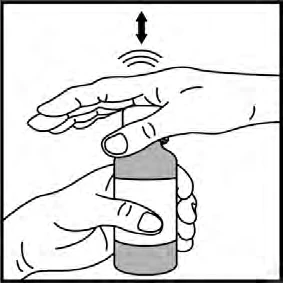
to loosen the granules.
- Place the bottle on a flat surface and remove the cap.
- • Use the dosing cup to
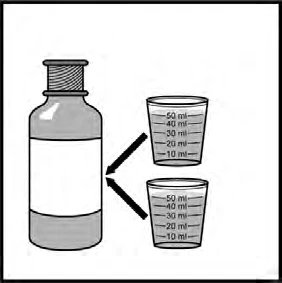
2 x 50 mL
measure 50 mL of water and pour it into the
bottle.
- Use the dosing cup again to measure another 50 mL of water and pour it into the bottle, adding a total of 50 mL of 100 mL of water.
50 mL
- • Replace the cap on the bottle.
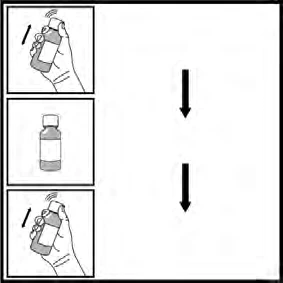
- Immediately shake vigorously for 1 minute, then let stand for 10–30 minutes.
- Shake again vigorously for 1 minute.
- • Mark 28 days from the date of
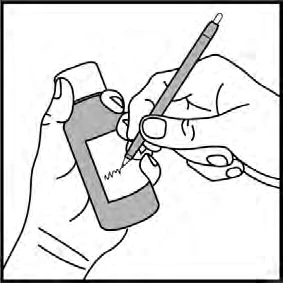
reconstitution on the bottle label.
- • Place the bottle on a flat surface
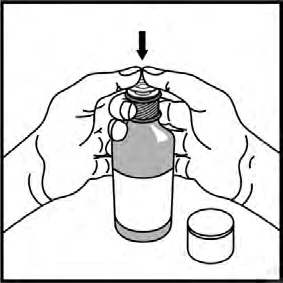
and remove the cap.
- Press the adapter firmly into the neck of the bottle.
- Ensure the top of the adapter is aligned with the top of the bottle neck. The adapter must remain in the bottle neck for the entire 28-day shelf life.
- Replace the cap on the bottle.
Before each oral administration
Note: Shake the bottle vigorously for 1 minute every day to ensure the granules are suspended.
- • Shake the bottle vigorously
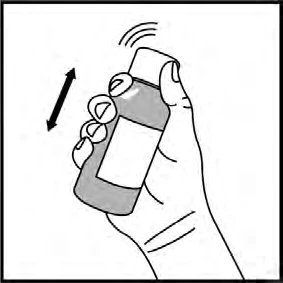
for 1 minute.
- Let it stand until foam disappears from the surface of the suspension (approximately 1–2 minutes).
- • Remove the bottle cap.
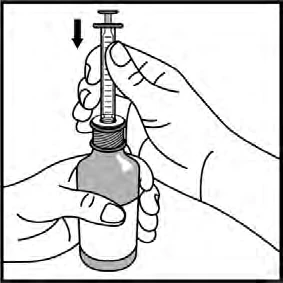
- Insert the tip of the oral administration syringe into the central opening of the bottle adapter until it is securely in place.
- Do not pull back the syringe plunger.
- • Carefully invert the bottle and
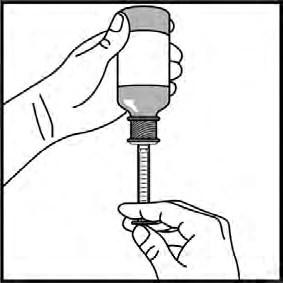
the syringe.
- • Slowly pull back the syringe plunger
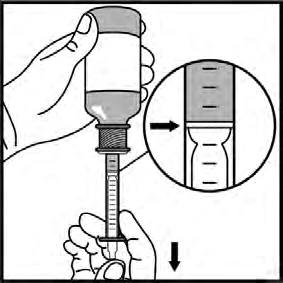
to draw the prescribed amount from the inverted bottle. The medicine must be taken within 1 hour after transferring it into the syringe.
- If the prescribed dose is more than 5 mL, the syringe must be used twice. For example, if the dose is 8 mL, draw up 5 mL first and administer the medicine, then draw up 3 mL and administer again.
- • Keep the syringe in place and rotate the
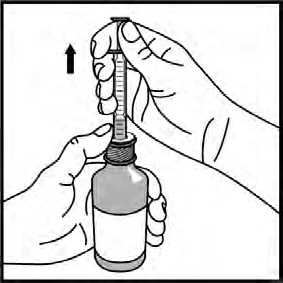
bottle upright, making sure the syringe plunger does not move.
- Gently remove the syringe from the adapter.
- After administration, close the bottle with the cap.
- • Discard any excess if you have accidentally
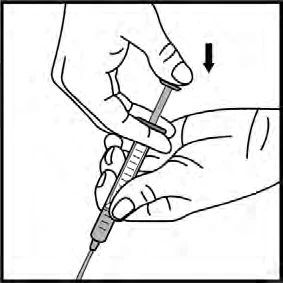
drawn up too much medicine.
- • Check that the correct amount has been
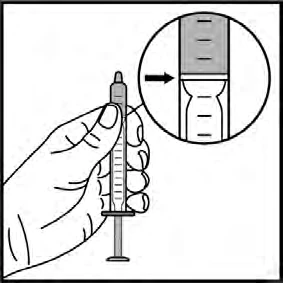
measured.
- • Place the syringe in the mouth and gently
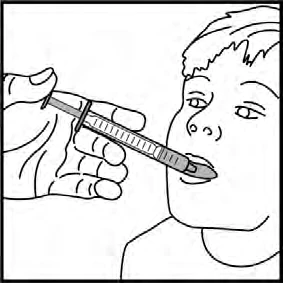
press the plunger down to administer the medicine.
- • Disassemble the syringe and rinse it with
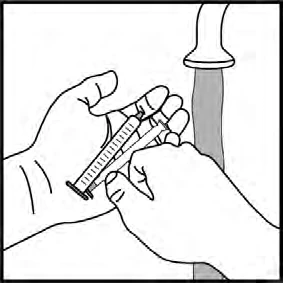
lukewarm water.
- Allow it to dry before reusing.
This medicine must not be mixed with other medicines.
If you take more Betmiga than you should
If you have taken too much Betmiga, or if someone else has accidentally taken Betmiga, contact your doctor, pharmacist or hospital immediately.
Symptoms of overdose may include rapid heartbeat, increased pulse or increased blood pressure.
If you forget to take Betmiga
If you forget to take your dose, take it as soon as you remember, unless more than 12 hours have passed since the missed dose. If more than 12 hours have passed, skip the missed dose and continue taking the medicine at your usual time.
Do not take a double dose to make up for a forgotten dose. If you miss more than one dose, contact your doctor and follow their advice.
If you stop taking Betmiga
Do not stop treatment with Betmiga if you do not see an immediate effect. The bladder may need some time to adjust. Continue taking the medicine. Do not stop taking the medicine when your bladder condition improves. Stopping treatment may lead to recurrence of neurogenic detrusor overactivity.
Do not stop treatment with Betmiga without first talking to your doctor, as neurogenic detrusor overactivity may return.
If you have any doubts about how to use this medicine, consult your doctor or pharmacist.
4. Possible side effects
Like all medicines, this medicine can cause side effects, although not everybody gets them.
Among the more serious side effects is irregular heartbeat (atrial fibrillation). This is an uncommon side effect (may affect up to 1 in 100 people), but if this side effect occurs, stop taking the medicine and consult a doctor immediately.
If you experience headache, especially sudden, migraine-type headache (pulsating), contact your doctor. These may be symptoms of a severe increase in blood pressure.
Other side effects include:
Common (may affect up to 1 in 10 people)
- Infection of the tubes that carry urine (urinary tract infection)
- Headache
- Dizziness
- Increased heart rate (tachycardia)
- Feeling unwell (nausea)
- Constipation
- Diarrhoea
Uncommon (may affect up to 1 in 100 people)
-
Vaginal infection
-
Bladder infection (cystitis)
-
Awareness of heartbeat (palpitations)
-
Problems with heart rhythm (atrial fibrillation)
-
Indigestion (dyspepsia)
-
Stomach infection (gastritis)
-
Itching, rash or hives (urticaria, rash, macular rash, papular rash, pruritus)
-
Swelling of the joints
-
Itching of the vulva or vagina (vulvovaginal pruritus)
-
Increased blood pressure
-
Increased liver enzymes (GGT, AST and ALT) Rare (may affect up to 1 in 1,000 people)
-
Swelling of the eyelid (eyelid oedema)
-
Swelling of the lips (lip oedema)
-
Inflammation of small blood vessels, mainly affecting the skin (leucocytoclastic vasculitis)
-
Small purple skin spots (purpura)
-
Swelling of deeper layers of the skin caused by fluid accumulation, which may affect any part of the body including the face, tongue or throat and may cause breathing difficulties (angioedema)
-
Inability to completely empty the bladder (urinary retention) Very rare (may affect up to 1 in 10,000 people)
-
Severely high blood pressure (hypertensive crisis) Frequency not known (frequency cannot be estimated from the available data)
-
Insomnia
-
Confusion Betmiga may increase the difficulty of emptying the bladder if you have a bladder obstruction or if you are taking other medicines for overactive bladder. Contact your doctor immediately if you are unable to empty your bladder.
-
Reporting of side effects If you get any side effects, including ones not listed in this leaflet, talk to your doctor or pharmacist. You can also report side effects directly via the national reporting system detailed in Annex V. By reporting side effects, you can help provide more information on the safety of this medicine.
5. How to store Betmiga
Keep this medicine out of the sight and reach of children.
Do not use this medicine after the expiry date which is stated on the carton, sachet, or bottle after Exp. The expiry date refers to the last day of that month.
This medicine does not require any special storage temperature. Store the bottle in the sealed sachet to protect it from moisture until reconstitution.
Store the oral syringe in clean and dry conditions, protected from sunlight and heat.
Store the reconstituted suspension below 25 °C for a maximum of 28 days from the date of suspension preparation. Do not refrigerate or freeze.
Discard any unused medicine 28 days after reconstitution.
Do not dispose of medicines via wastewater or household waste. Ask your pharmacist how to dispose of medicines you no longer use. This will help protect the environment.
6. Package contents and other information
What Betmiga contains
- The active substance is mirabegron. One bottle of prolonged-release oral granules contains 830 mg of mirabegron. After reconstitution, one bottle contains 105 mL of oral suspension. Each mL of oral suspension contains 8 mg of mirabegron.
- The other components are methyl hydroxybenzoate (E218), ethyl hydroxybenzoate (E214), sodium polystyrene sulfonate, diluted hydrochloric acid, xanthan gum, hypromellose, mannitol (E421), magnesium stearate, acesulfame potassium, simethicone, and hydrated colloidal silica. See section 2 “Betmiga contains ethyl hydroxybenzoate (E214), methyl hydroxybenzoate (E218) and sodium”.
Description of the appearance of Betmiga and contents of the pack
Betmiga prolonged-release oral granules are yellowish-white granules. After reconstitution, the oral suspension is a pale yellowish-brown suspension.
There are two pack sizes of Betmiga prolonged-release oral granules, both supplied with various components for reconstitution. One pack contains:
- In the box: sachet, 5 mL oral administration syringe, adapter, and patient information leaflet
- In the sachet: dosing cup, bottle (118 mL) made of amber-coloured polyethylene terephthalate (PET) with a polypropylene (PP) screw cap and desiccant
The other pack contains:
- In the box: sachet, 5 mL oral administration syringe, adapter, and patient information leaflet
- In the sachet: bottle (118 mL) made of amber-coloured polyethylene terephthalate (PET) with a polypropylene (PP) screw cap and desiccant
Not all pack sizes may be marketed.
Marketing Authorisation Holder
Astellas Pharma Europe B.V.
Sylviusweg 62
2333 BE Leiden
The Netherlands
Manufacturer
Delpharm Meppel B.V.
Hogemaat 2
7942 JG Meppel
The Netherlands
For further information about this medicinal product, please contact the local representative of the Marketing Authorisation Holder:
België/Belgique/Belgien
Astellas Pharma B.V. Branch
Tél/Tel: + 32 (0)2 5580710
Lietuva
Astellas Pharma d.o.o.
Tel: + 370 37 408 681
България
Астелас Фарма ЕООД
Teл.: + 359 2 862 53 72
Luxembourg/Luxemburg
Astellas Pharma B.V. Branch Belgique/Belgien
Tél/Tel: + 32 (0)2 5580710
Česká republika
Astellas Pharma s.r.o.
Tel: + 420 221 401 500
Magyarország
Astellas Pharma Kft.
Tel.: + 36 1 577 8200
Danmark
Astellas Pharma a/s
Tlf.: + 45 43 430355
Malta
Astellas Pharmaceuticals AEBE
Tel: + 30 210 8189900
Deutschland
Astellas Pharma GmbH
Tel: + 49 (0)89 454401
Nederland
Astellas Pharma B.V.
Tel: + 31 (0)71 5455745
Eesti
Astellas Pharma d.o.o.
Tel: + 372 6 056 014
Norge
Astellas Pharma
Tlf: + 47 66 76 46 00
Ελλάδα
Astellas Pharmaceuticals AEBE
Τηλ: + 30 210 8189900
Österreich
Astellas Pharma Ges.m.b.H.
Tel: + 43 (0)1 8772668
España
Astellas Pharma S.A.
Tel: + 34 91 4952700
Polska
Astellas Pharma Sp.z.o.o.
Tel.: + 48 225451 111
France
Astellas Pharma S.A.S.
Tél: + 33 (0)1 55917500
Portugal
Astellas Farma, Lda.
Tel: + 351 21 4401300
Hrvatska
Astellas d.o.o.
Tel: + 385 1670 0102
România
S.C. Astellas Pharma SRL
Tel: + 40 (0)21 361 04 95
Ireland
Astellas Pharma Co. Ltd.
Tel: + 353 (0)1 4671555
Slovenija
Astellas Pharma d.o.o.
Tel: + 386 14011400
Ísland
Vistor
Sími: + 354 535 7000
Slovenská republika
Astellas Pharma s.r.o.
Tel: + 421 2 4444 2157
Italia
Astellas Pharma S.p.A.
Tel: + 39 (0)2 921381
Suomi/Finland
Astellas Pharma
Puh/Tel: + 358 (0)9 85606000
Κύπρος
Astellas Pharmaceuticals AEBE
Τηλ: + 30 210 8189900
Latvija
Astellas Pharma d.o.o.
Tel: + 371 67 619365
Sverige
Astellas Pharma AB
Tel: + 46 (0)40-650 15 00
More detailed information on this medicinal product is available on the website of the European Medicines Agency: https://www.ema.europa.eu.
Similar drugs
| Brand name | Dosage form | Active substance / Dosage | Manufacturer |
|---|---|---|---|
| IRETIG | tablets, prolonged-release | ZENTIVA ITALIA S.R.L. | |
| MIRABEGRON DOC GENERICI | tablets, prolonged-release | DOC GENERICI SRL |
The original data is available in the language of the country of manufacture.
Data source: Italian Medicines Agency (AIFA)
Data last verified: September 21, 2026