BENUR
ItalyIt is used to treat symptoms caused by an enlarged prostate, such as a weak or overly frequent urine flow, by acting on the relaxation of the bladder and prostate muscles.
Frequently asked questions
When should you not take Benur?
You must not take it if you are allergic to doxazosin or any other ingredients, if you suffer from low blood pressure (hypotension), orthostatic hypotension, urinary tract infections or obstructions, or if you present specific forms of urinary incontinence.
How should Benur be taken?
It should be taken following your doctor's instructions. The initial dose is usually 1 mg per day, which the doctor may gradually increase up to a maximum of 8 mg per day. Tablets can be taken in either the morning or the evening.
What are the common side effects of Benur?
Among the most common side effects are dizziness, headache, low blood pressure when standing up, swelling of the feet or ankles, cough, nasal congestion, abdominal pain, nausea, drowsiness, weakness, and dry mouth.
What are the serious side effects that require immediate medical attention?
It is necessary to call an ambulance immediately in case of chest pain, difficulty breathing, stroke symptoms (such as sudden headache, fainting, problems speaking, or weakness in the limbs), or allergic reactions involving facial swelling.
Are there interactions with other drugs?
Yes, caution is required if you are taking medications for erectile dysfunction (such as sildenafil, tadalafil, or vardenafil), blood pressure medications, certain antibiotics or antifungals, HIV medications, or nefazodone for depression.
What to do if a dose is missed?
If you forget a dose, do not take a double dose to compensate. If, however, you forget the tablets for several days, therapy must be resumed starting from the lowest dose of 1 mg.
Instructions for use
Patient Information Leaflet
BENUR 2 mg tablets, 4 mg tablets
Doxazosin
Please read all of this leaflet carefully before taking this medicine because it contains important information for you.
- Keep this leaflet. You may need to read it again.
- If you have any questions, ask your doctor or pharmacist.
- This medicine has been prescribed for you only. Do not give it to other people, even if their symptoms are the same as yours, as it may be harmful.
- If you experience any side effects, including those not listed in this leaflet, talk to your doctor or pharmacist. See section 4.
Contents of this leaflet:
- What Benur is and what it is used for
- What you need to know before taking Benur
- How to take Benur
- Possible side effects
- How to store Benur
- Contents of the pack and other information
1. What Benur is and what it is used for
Benur contains the active substance doxazosin, which belongs to a group of medicines called
prostatic urologicals. It is used to treat symptoms caused by an enlarged prostate, a
gland in the male reproductive system.
In patients with an enlarged prostate gland, Benur is used to treat weak and/or frequent urinary flow. Benur works by relaxing the muscle around the outlet of the bladder and the prostate gland to help urine pass more easily.
2. What you need to know before taking Benur
Do not take Benur
- If you are allergic to doxazosin, to other types of quinazolines (such as prazosin or terazosin), or to any of the other ingredients of this medicine (listed in section 6).
- If you have previously suffered from a condition known as "orthostatic hypotension", a form of low blood pressure causing dizziness or lightheadedness when standing up from a sitting or lying position.
- If you have an enlarged prostate gland (benign prostatic hyperplasia) together with: any type of urinary tract congestion or obstruction, a persistent urinary tract infection, or bladder stones.
- If you suffer from abnormally low blood pressure (hypotension).
- If you have a particular form of urinary incontinence involving involuntary leakage of urine due to an overfilled bladder, or if you are unable to produce an adequate amount of urine, with or without progressive loss of kidney function.
Warnings and precautions
Talk to your doctor or pharmacist before taking Benur.
When you start taking Benur, you may experience weakness, dizziness, and rarely fainting, caused by a drop in blood pressure upon standing from a sitting or lying position. If you feel weak, dizzy, or faint, you should sit or lie down until you feel better and avoid situations where you might fall or get injured. Your doctor may decide to monitor your blood pressure regularly at the beginning of treatment to reduce the likelihood of these side effects.
If you are scheduled for cataract surgery (clouding of the lens), inform your ophthalmologist before the operation that you are currently taking or have previously taken Benur. Benur may cause complications during surgery, which can be managed if the specialist is informed in advance.
Inform your doctor or pharmacist before taking Benur if any of the following apply to you, as Benur should be used with caution in these cases:
- If you have a heart condition.
- If you have or have previously had a liver disease.
- If you are taking medicines for erectile dysfunction (impotence), called phosphodiesterase-5 inhibitors (e.g. sildenafil, tadalafil, and vardenafil), as both medicines lower blood pressure by dilating blood vessels. Taking Benur together with these medicines may cause excessive lowering of blood pressure (see Other medicines and Benur). To reduce the likelihood of symptoms, you should first start treatment with Benur by taking a regular daily dose. Then, once your treatment with Benur is stabilized, you may begin taking the erectile dysfunction medicines.
Prolonged painful erections of the penis – may occur very rarely. If this happens, contact a doctor immediately.
Before starting treatment with Benur, your doctor may perform tests to rule out other conditions such as prostate cancer, which could cause symptoms similar to benign prostatic hyperplasia.
Children and adolescents
Benur is not recommended for use in children and adolescents under 18 years of age, as the safety and efficacy of the treatment have not been established.
Other medicines and Benur
Inform your doctor or pharmacist if you are taking, have recently taken, or might take any other medicines.
Inform your doctor or pharmacist before use if you are taking any of the following medicines, as they may affect the action of Benur:
- Medicines called phosphodiesterase-5 inhibitors used for erectile dysfunction, such as sildenafil, tadalafil, and vardenafil (see Warnings and precautions).
- Medicines that lower blood pressure.
- Medicines used to treat bacterial or fungal infections, such as clarithromycin, itraconazole, ketoconazole, telithromycin, voriconazole.
- Medicines used to treat HIV, such as indinavir, nelfinavir, ritonavir, saquinavir.
- Nefazodone, a medicine used to treat depression.
Pregnancy and breastfeeding
Benur is not indicated for use in women.
Driving and using machines
Be careful if you drive or use machinery. These tablets may impair your ability to drive or operate machinery safely, especially at the beginning of treatment. They may cause weakness or dizziness. If you experience these symptoms, do not drive or use machinery and contact your doctor immediately.
Benur contains lactose
If your doctor has diagnosed you with an intolerance to certain sugars, contact him or her before taking this medicine.
Benur contains sodium
This medicine contains less than 1 mmol (23 mg) of sodium per tablet, i.e. essentially 'sodium-free'.
3. How to take Benur
Take this medicine exactly as instructed by your doctor. If you have any doubts, consult your doctor or pharmacist.
The initial dose of Benur is 1 mg taken as a single dose every day.
After one or two weeks, your doctor may increase the dose to 2 mg daily, depending on the results of your tests assessing bladder and urethra function (the small duct in the final part of the urinary tract that carries urine from the bladder to the outside of the body) or based on your symptoms caused by an enlarged prostate.
If necessary, after a further period of one or two weeks, your doctor may decide to increase the dose again to 4 mg daily. After another one to two weeks, and if needed, your doctor may further increase the dose to 8 mg daily. However, 8 mg per day is the maximum recommended dose.
Benur may be taken either in the morning or in the evening.
If you take more Benur than you should
Taking too many tablets at once may make you feel unwell, as your blood pressure may drop too much. If this happens, lie down. Taking several tablets may be dangerous. If you take more Benur than you should, inform your doctor immediately or go to the nearest hospital emergency department.
If you forget to take Benur
If you forget to take Benur, skip the missed dose completely. Do not take a double dose to make up for the forgotten dose.
However, if you forget to take the tablets for several days, treatment with Benur should be restarted at the lowest dose of 1 mg.
4. Possible side effects
Like all medicines, this medicine can cause side effects, although not everyone gets them.
If you experience any of the following symptoms, STOP treatment with Benur and call an ambulance immediately:
- chest pain, pain in the chest (angina, myocardial infarction);
- feeling of difficulty breathing (dyspnoea), accompanied by discomfort and tightness in the chest (bronchospasm);
- sudden headache, feeling of fainting, weakness in the arms or legs, or difficulty speaking, which could be signs of a stroke;
- swelling of the face and allergic reactions.
Inform your doctor immediately if, after taking Benur, you experience any of the following symptoms:
- fast, slow or irregular heartbeat;
- awareness of your heartbeat (palpitations);
- yellowing of the skin or eyes (jaundice);
- low number of white blood cells or platelets in the blood. These conditions may lead to an increased risk of infections or increased bruising or tendency to bleed, respectively.
The following adverse events have also been reported in patients treated with Benur.
Common side effects (may affect up to 1 in 10 people):
- sensation of spinning or dizziness, headache;
- low blood pressure or drop in blood pressure when moving from a sitting or lying position to standing;
- swelling of feet, ankles or fingers;
- bronchitis, cough, respiratory tract infections (nose, throat, lungs);
- blocked nose, sneezing and/or runny nose due to inflammation of the nasal mucosa (rhinitis);
- abdominal pain, nausea;
- urinary tract infection, urinary incontinence (inability to control or retain urine), inflammation of the bladder (cystitis);
- drowsiness, generalised weakness;
- feeling of fullness and discomfort in the stomach, dry mouth;
- itching;
- chest pain, back pain, muscle pain;
- flu-like symptoms.
Uncommon side effects (may affect up to 1 in 100 people):
- constipation, flatulence, inflammation of the stomach and intestine (gastroenteritis) which may cause diarrhoea and vomiting;
- pain or discomfort when urinating, need to urinate more often than usual, blood in the urine;
- swelling and inflammation of joints (gout), joint pain, generalised pain;
- swelling of the face;
- insomnia, restlessness, anxiety, depression or nervousness;
- temporary loss of consciousness;
- reduced or altered sensitivity to touch in hands and feet;
- increased or decreased appetite, weight gain;
- nosebleeds;
- skin rash;
- ringing or buzzing in the ears, tremor;
- inability/inability to achieve or maintain penile erection;
- increased liver enzymes, which may affect certain medical tests.
Rare side effects (may affect up to 1 in 1,000 people):
- increased frequency of needing to urinate;
- muscle cramps, muscle weakness.
Very rare side effects (may affect up to 1 in 10,000 people):
- hepatitis (liver inflammation) or bile disorder (cholestasis);
- urticaria, hair loss, red or purple spots on the skin due to bleeding under the skin or mucous membranes (purpura);
- tingling or numbness in hands and feet;
- fatigue, feeling of general malaise;
- blurred vision;
- hot flushes;
- urinary disturbances, need to urinate at night, increased urine volume;
- enlargement of the breasts in men;
- prolonged painful erection of the penis. Seek medical advice immediately;
- sudden dizziness accompanied by loss of balance.
Other side effects (frequency cannot be determined from available data):
- retrograde ejaculation (semen is ejaculated not externally but into the bladder), which may cause cloudy urine after orgasm;
- eye problems may occur during cataract surgery (clouding of the lens). See section "Warnings and precautions".
Reporting of side effects
If you experience any side effect, including those not listed in this leaflet, talk to your doctor or pharmacist.
You can also report side effects directly via the national reporting system at https://www.aifa.gov.it/content/segnalazioni-reazioni-avverse.
By reporting side effects, you can help provide more information on the safety of this medicine.
5. How to store Benur
Keep this medicine out of the sight and reach of children.
Do not use this medicine after the expiry date which is stated on the carton after “Expiry”. The expiry date refers to the last day of that month.
This medicine does not require any special storage conditions.
Do not dispose of any medicine via wastewater or household waste. Ask your pharmacist how to dispose of medicines you no longer use. This will help protect the environment.
6. Pack contents and other information
What Benur contains
The active substance is doxazosin.
Each 2 mg tablet contains 2.43 mg of doxazosin mesylate equivalent to 2 mg of doxazosin.
Each 4 mg tablet contains 4.85 mg of doxazosin mesylate equivalent to 4 mg of doxazosin.
The other components are: microcrystalline cellulose, lactose, sodium glycolate starch, magnesium stearate,
sodium lauryl sulfate.
Description of the appearance of Benur and pack contents
PVC-PVDC/Aluminum blisters with titanium dioxide opacifier.
Carton containing 30 divisible 2 mg tablets in blisters.
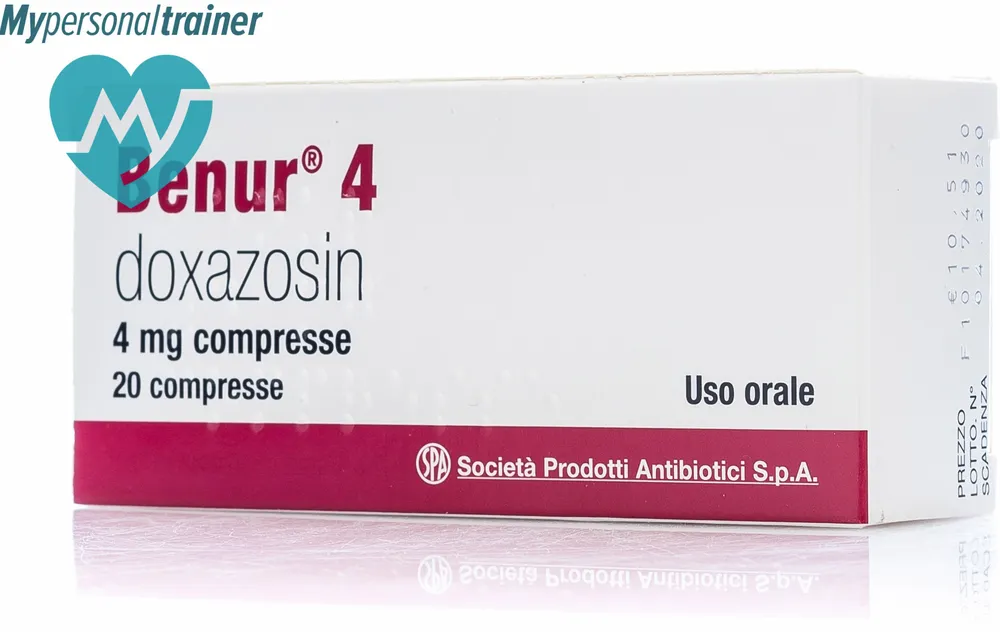
Carton containing 20 divisible 4 mg tablets in blisters.
Marketing Authorization Holder and Manufacturer
Marketing Authorization Holder
Viatris Pharma S.r.l.
Via Vittor Pisani 20
20124 Milan, Italy
Manufacturer
R-Pharm Germany GmbH
Heinrich-Mack-Str. 35,
89257 Illertissen
Germany
Pfizer Manufacturing Deutschland GmbH
Freiburg site Mooswaldallee 1
79090 Freiburg
Germany
The original data is available in the language of the country of manufacture.
Data source: Italian Medicines Agency (AIFA)
Data last verified: September 21, 2026