ATOSIBAN IBISQUS
ItalyIt is used to delay preterm birth in adult women in pregnancy between 24 and 33 weeks. It works by reducing the intensity and frequency of uterine contractions by blocking the effect of oxytocin.
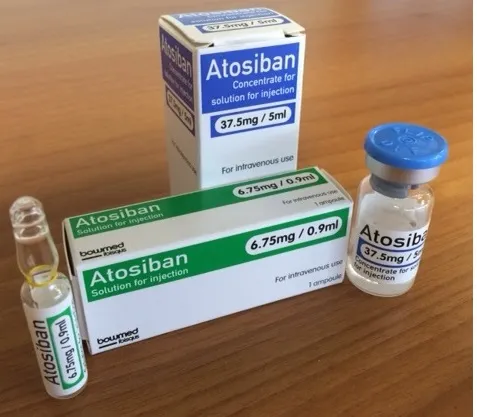
Frequently asked questions
When should Atosiban Ibisqus not be used?
It must not be used if the pregnancy is less than 24 weeks or more than 33 weeks, if there has been a rupture of membranes after the 30th week, if the fetus has an abnormal heart rate, in case of fetal death, uterine infection, placental abruption, or if the placenta covers the birth canal. It is also contraindicated in case of vaginal bleeding or conditions such as pre-eclampsia or eclampsia that require immediate delivery, or if you are allergic to the active substance.
How is Atosiban Ibisqus administered?
It is a medicinal product for hospital use only and must be administered only by medical, nursing, or midwifery personnel intravenously. Treatment occurs in three phases: an initial slow injection of one minute, followed by a continuous infusion for 3 hours, and finally another continuous infusion for up to a maximum of 45 hours (for a maximum total of 48 hours).
What are the side effects of Atosiban Ibisqus?
The most common effects include nausea. Other common effects are headache, dizziness, flushing, vomiting, increased heart rate, lowered blood pressure, injection site reactions, and high blood sugar levels. Less common effects include fever, insomnia, itching, and rash. Rarely, allergic reactions or a reduced ability of the uterus to contract after childbirth may occur, with a risk of hemorrhage. In some cases, especially in twin pregnancies or with the use of other drugs, breathing difficulties or fluid accumulation in the lungs (pulmonary edema) may occur.
Are there any special precautions to keep in mind?
You must inform the doctor if you suffer from kidney or liver disorders, if you have a multiple pregnancy, or if you are taking medication for high blood pressure. It is important to report if a rupture of membranes is suspected. After childbirth, the uterus may contract less, increasing the risk of hemorrhage.
How should the medicinal product be stored?
It must be stored in a refrigerator between 2°C and 8°C, in the original package to protect it from light and out of the reach of children. Once the vial is opened, the product must be used immediately.
Instructions for use
Table of contents
- Atosiban Ibisqus 6.75 mg/0.9 ml injection solution
- 1. What Atosiban Ibisqus is and what it is used for
- 2. What you need to know before using Atosiban Ibisqus
- 3. How to use Atosiban Ibisqus
- 4. Possible side effects
- 5. How to store Atosiban Ibisqus
- 6. Package contents and other information
- Package leaflet: Information for the user
- Atosiban Ibisqus 37.5 mg/5 ml concentrate for solution for infusion
- 1. What Atosiban Ibisqus is and what it is used for
- 2. What you need to know before using Atosiban Ibisqus
- 3. How to use Atosiban Ibisqus
- 4. Possible side effects
- 5. How to store Atosiban Ibisqus
- 6. Package contents and other information
Package leaflet: Information for the user
Atosiban Ibisqus 6.75 mg/0.9 ml injection solution
Equivalent medicine
Please read all of this leaflet carefully before you start using this medicine because it contains important information for you.
- Keep this leaflet. You may need to read it again.
- If you have any questions, ask your doctor, midwife, or pharmacist.
- If you get any side effects, talk to your doctor or pharmacist. This includes any side effects not listed in this leaflet. See section 4.
Contents of this leaflet:
- What Atosiban Ibisqus is and what it is used for
- What you need to know before you use Atosiban Ibisqus
- How to use Atosiban Ibisqus
- Possible side effects
- How to store Atosiban Ibisqus
- Contents of the pack and other information
1. What Atosiban Ibisqus is and what it is used for
Atosiban Ibisqus contains atosiban. Atosiban Ibisqus can be used to delay the premature birth of your baby. Atosiban Ibisqus is used in adult pregnant women between weeks 24 and 33 of pregnancy.
Atosiban Ibisqus works by reducing the strength of uterine contractions. It also slows down the frequency of contractions. It acts by blocking the effects of a natural hormone in the body called "oxytocin", which causes uterine contractions.
2. What you need to know before using Atosiban Ibisqus
Do not use Atosiban Ibisqus:
- if you are less than 24 weeks pregnant
- if you are more than 33 weeks pregnant
- if you have rupture of membranes (premature rupture of membranes) after 30 completed weeks of gestation
- if the fetus has an abnormal heart rate
- if you have vaginal bleeding which, in the opinion of your doctor, requires immediate delivery
- if you have a condition called “severe pre-eclampsia” which, according to your doctor’s judgment, requires immediate delivery. Severe pre-eclampsia is a condition characterized by high blood pressure, fluid retention, and/or presence of protein in the urine
- if you have a condition called “eclampsia”, which is similar to “severe pre-eclampsia” but with the addition of seizures. This condition requires immediate delivery
- in case of fetal death
- if you have or suspect you have a uterine infection
- if the placenta covers the birth canal
- in case of placental abruption (detachment of the placenta from the uterine wall)
- in any other condition affecting you or the fetus where continuing the pregnancy would be dangerous.
- if you are allergic to atosiban or to any of the other ingredients of this medicine (listed in section 6). Do not use Atosiban Ibisqus if you are in any of the above conditions. If you are unsure, consult your doctor, midwife, or pharmacist before using Atosiban Ibisqus.
Warnings and precautions
Talk to your doctor, pharmacist, or nurse before using Atosiban Ibisqus:
- if you think you may have had rupture of membranes (premature rupture of membranes)
- if you have kidney or liver problems
- if your pregnancy is between 24 and 27 weeks
- if you are carrying multiple fetuses (multiple pregnancy)
- if contractions recur, treatment with Atosiban Ibisqus may be repeated up to three more times
- if the fetus is small for gestational age
- after delivery, the uterus may have reduced contractile ability. This may lead to hemorrhage.
- if you have a twin pregnancy and/or are taking medicines that may delay childbirth, such as medications used for high blood pressure. These conditions may increase the risk of pulmonary edema (fluid accumulation in the lungs). If you are in any of the above conditions, or if you are unsure, consult your doctor, midwife, or pharmacist before using Atosiban Ibisqus.
Children and adolescents
Atosiban Ibisqus has not been studied in pregnant women under 18 years of age.
Other medicines and Atosiban Ibisqus
Inform your doctor or pharmacist if you are taking, have recently taken, or might take any other medicines.
Pregnancy, breastfeeding and fertility
If you are pregnant, suspect you may be pregnant, planning a pregnancy, or are breastfeeding, consult your doctor or pharmacist before taking this medicine.
3. How to use Atosiban Ibisqus
Use this medicine exactly as instructed by your doctor or pharmacist. If you have any doubts,
consult your doctor or pharmacist.
Atosiban Ibisqus is a medicine intended exclusively for hospital use and must be administered only by a
doctor, nurse, or midwife. They will determine the necessary dose for you and ensure that the
solution is clear and free from particles.
Atosiban Ibisqus is administered intravenously (by intravenous infusion) in three consecutive stages:
- An initial injection of 6.75 mg in 0.9 ml is slowly injected into a vein over a period of one minute.
- Subsequently, a continuous infusion at a dose of 18 mg/hour is administered for a period of 3 hours.
- Then, another continuous infusion at a dose of 6 mg/hour is administered for a maximum period of 45 hours, or until uterine contractions have ceased. The total duration of treatment must not exceed 48 hours.
Additional treatment cycles with Atosiban Ibisqus may be used if uterine contractions recur.
Treatment with Atosiban Ibisqus may be repeated up to three more times.
During treatment with Atosiban Ibisqus, your uterine contractions and the fetal heartbeat may be monitored.
It is recommended not to perform more than three additional treatment cycles during one pregnancy.
4. Possible side effects
Like all medicines, this medicine can cause side effects, although not everybody gets them.
The side effects observed in the mother have generally been mild in nature. There are no known side effects in the fetus or newborn.
The following are the side effects that may occur with the use of this medicine:
Very common (affects more than 1 in 10 people)
- Feeling unwell (nausea)
Common (affects less than 1 in 10 people)
- Headache
- Dizziness
- Hot flushes
- Feeling unwell (vomiting)
- Increased heart rate
- Low blood pressure. Symptoms may include dizziness or a feeling of emptiness in the head
- Reaction at the injection site
- High blood sugar levels
Uncommon (affects less than 1 in 100 people)
- High temperature (fever)
- Difficulty sleeping (insomnia)
- Itching
- Skin rash
Rare (affects less than 1 in 1,000 people)
- Reduced ability of the uterus to contract after childbirth. This may cause bleeding.
- Allergic reactions
You may experience difficulty breathing or pulmonary oedema (fluid accumulation in the lungs), particularly if your pregnancy is multiple (e.g. twins) and/or you are taking other medicines that may delay childbirth, such as medicines used for high blood pressure.
Reporting of side effects
If you experience any side effect, including those not listed in this leaflet, talk to your doctor, pharmacist, or nurse.
You can also report side effects directly via the national reporting system at www.agenziafarmaco.gov.it/it/responsabili.
By reporting side effects, you can help provide more information on the safety of this medicine.
5. How to store Atosiban Ibisqus
Keep this medicine out of the sight and reach of children.
Do not use this medicine after the expiry date stated on the label. The expiry date refers to the last day of that month.
Store in a refrigerator (2°C-8°C).
Keep in the original packaging to protect the medicine from light.
Once the vial is opened, the product must be used immediately.
Do not use this medicine if, before administration, you notice the presence of particles or a change in colour.
6. Package contents and other information
What Atosiban Ibisqus contains
The active substance is atosiban.
- Each vial (0.9 ml injectable solution) contains 6.75 mg of atosiban (as acetate).
- The other components are: mannitol, concentrated hydrochloric acid, and water for injections.
Description of the appearance of Atosiban Ibisqus and contents of the pack
Atosiban Ibisqus 6.75 mg/0.9 ml solution for injection (injection) is a clear, colourless solution free from particles. One pack contains one type I glass vial (2 ml) containing 0.9 ml of solution.
Marketing Authorisation Holder and Manufacturer
Ibigen s.r.l.
Via Fossignano, 2
04011 – Aprilia (Latina)
Italy
This medicinal product is authorised in the European Economic Area countries under the following names:
Spain: Atosiban Genfarma 6.75 mg/0.9 ml solución inyectable EFG
Belgium: Atosiban Genfarma 6,75 mg/0,9 ml Solution injectable
France: Atosiban Genfarma 6,75 mg/0,9 ml Solution injectable
Germany: Atosiban Genfarma 6,75 mg/0,9 ml Injektionslösung
Austria: Atosiban Genfarma 6,75 mg/0,9 ml Injektionslösung
United Kingdom: Atosiban Genfarma 6,75 mg/0,9 ml solution for injection
More detailed information on this medicinal product is available on the website of the Italian Medicines Agency (Agenzia Italiana del Farmaco).
The following information is intended for healthcare professionals only (see also section 3):
Instructions for use
Before using Atosiban Ibisqus, the solution should be inspected visually to ensure it is clear and free from particles.
Atosiban Ibisqus is administered intravenously in three consecutive stages:
- An initial intravenous bolus injection of 6.75 mg in 0.9 ml is slowly injected into a vein over one minute.
- A continuous infusion at a rate of 24 ml/hour is administered for a period of 3 hours.
- A continuous infusion at a rate of 8 ml/hour is administered for up to 45 hours, or until uterine contractions have subsided.
The total duration of treatment must not exceed 48 hours. Additional treatment cycles with Atosiban Ibisqus may be used if uterine contractions recur. It is recommended not to administer more than three additional treatment cycles during one pregnancy.
For preparation of the intravenous infusion solution, refer to Atosiban Ibisqus 37.5 mg/5 ml concentrate for solution for infusion.
Package leaflet: Information for the user
Atosiban Ibisqus 37.5 mg/5 ml concentrate for solution for infusion
Generic medicine
Please read this entire leaflet carefully before using this medicine, as it contains
important information for you.
- Keep this leaflet. You may need to read it again.
- If you have any questions, consult your doctor.
- If you experience any side effects, including those not listed in this leaflet, contact your doctor or pharmacist. See section 4.
Contents of this leaflet:
- What Atosiban Ibisqus is and what it is used for
- What you need to know before using Atosiban Ibisqus
- How to use Atosiban Ibisqus
- Possible side effects
- How to store Atosiban Ibisqus
- Contents of the pack and other information
1. What Atosiban Ibisqus is and what it is used for
Atosiban Ibisqus contains atosiban. Atosiban Ibisqus may be used to delay the premature birth of your baby.
Atosiban Ibisqus is used in adult pregnant women between week 24 and week 33 of pregnancy.
Atosiban Ibisqus works by reducing the strength of uterine contractions. It also slows down the frequency of contractions. It acts by blocking the effects of a natural hormone in the body called "oxytocin" which causes uterine contractions.
2. What you need to know before using Atosiban Ibisqus
Do not use Atosiban Ibisqus:
- if you are less than 24 weeks pregnant
- if you are more than 33 weeks pregnant
- if you have rupture of membranes (premature rupture of membranes) after 30 completed weeks of gestation
- if the fetus has an abnormal heart rate
- if you have vaginal bleeding which, in the doctor’s judgment, requires immediate delivery
- if you suffer from a condition called “severe pre-eclampsia” which, according to the doctor’s judgment, requires immediate delivery. Severe pre-eclampsia is a condition characterized by high blood pressure, fluid retention, and/or presence of protein in the urine
- if you suffer from a condition called “eclampsia”, which is similar to “severe pre-eclampsia” but with the addition of seizures. This condition requires immediate delivery
- in case of fetal death
- if you have or are suspected of having a uterine infection
- if the placenta covers the birth canal
- in case of placental abruption from the uterine wall
- in any other condition affecting you or the fetus where continuing the pregnancy is considered dangerous
- if you are allergic to atosiban or to any of the other ingredients of this medicine (listed in section 6).
Do not use Atosiban Ibisqus if you are in any of the above conditions. If you are unsure, ask your
doctor, midwife, or pharmacist before using Atosiban Ibisqus.
Warnings and precautions
Talk to your doctor, pharmacist, or nurse before using Atosiban Ibisqus:
- if you think you may have had rupture of membranes (premature rupture of membranes)
- if you suffer from kidney or liver problems
- if your pregnancy is between 24 and 27 weeks
- if you are carrying multiple fetuses
- if contractions recur, treatment with Atosiban Ibisqus may be repeated up to three additional times
- if the fetus is small for gestational age
- after delivery, the uterus may have reduced contractile capacity. This may lead to hemorrhage.
- if you have a twin pregnancy and/or are taking medicines that can delay childbirth, such as medications used for high blood pressure. These conditions may increase the risk of pulmonary edema (fluid accumulation in the lungs). If you are in any of the above conditions, or if you are unsure, consult your doctor, midwife, or pharmacist before using Atosiban Ibisqus.
Children and adolescents
Atosiban Ibisqus has not been studied in pregnant women under 18 years of age.
Other medicines and Atosiban Ibisqus
Tell your doctor or pharmacist if you are taking, have recently taken, or might take any other medicines.
Pregnancy, breastfeeding and fertility
If you are pregnant, suspect you may be pregnant, planning a pregnancy, or are breastfeeding, consult your doctor or pharmacist before taking this medicine.
3. How to use Atosiban Ibisqus
Use this medicine exactly as instructed by your doctor or pharmacist. If you have any doubts, please consult your doctor or pharmacist.
Atosiban Ibisqus is a medicine intended exclusively for hospital use and must be administered only by a doctor, nurse, or midwife. They will determine the required amount for you and ensure that the solution is clear and free from particles.
Atosiban Ibisqus is administered intravenously (by intravenous infusion) in three consecutive stages:
- An initial injection of 6.75 mg in 0.9 ml is slowly injected into a vein over a period of one minute.
- Subsequently, a continuous infusion (intravenous drip) at a dose of 18 mg/hour is administered for a period of 3 hours.
- Then, another continuous infusion (intravenous drip) at a dose of 6 mg/hour is administered for a maximum duration of 45 hours, or until uterine contractions have ceased. The total duration of treatment must not exceed 48 hours.
Additional treatment cycles with Atosiban Ibisqus may be used if contractions recur. Treatment with Atosiban Ibisqus may be repeated up to three more times.
During treatment with Atosiban Ibisqus, your uterine contractions and the fetal heartbeat may be monitored.
It is recommended not to perform more than three additional treatment cycles during one pregnancy.
4. Possible side effects
Like all medicines, this medicine can cause side effects, although not everyone experiences them.
Side effects observed in the mother have generally been mild in nature. There are no known side effects in the fetus or newborn.
The following are side effects that may occur with the use of this medicine:
Very common (affects more than 1 in 10 people)
- Feeling unwell (nausea)
Common (affects less than 1 in 10 people)
- Headache
- Dizziness
- Hot flushes
- Feeling unwell (vomiting)
- Increased heart rate
- Drop in blood pressure. Symptoms may include dizziness or a feeling of emptiness in the head
- Reaction at the injection site
- High blood sugar levels
Uncommon (affects less than 1 in 100 people)
- High temperature (fever)
- Difficulty sleeping (insomnia)
- Itching
- Skin rash
Rare (affects less than 1 in 1,000 people)
- Reduced ability of the uterus to contract after childbirth. This may cause bleeding.
- Allergic reactions
You may experience difficulty breathing or pulmonary edema (fluid accumulation in the lungs), particularly if your pregnancy is multiple (e.g. twins) and/or you are taking other medicines that may delay childbirth, such as medicines used for high blood pressure.
Reporting of side effects
If you experience any side effect, including those not listed in this leaflet, talk to your doctor, pharmacist, or nurse. You can also report side effects directly via the national reporting system at www.agenziafarmaco.gov.it/it/responsabili. By reporting side effects, you can help provide more information on the safety of this medicine.
5. How to store Atosiban Ibisqus
Keep this medicine out of the sight and reach of children.
Do not use this medicine after the expiry date stated on the label. The expiry date refers to the last day of that month. Once the vial has been opened, the medicine must be used immediately.
Store in a refrigerator (2°C - 8°C).
Keep in the original packaging to protect the medicine from light.
After dilution: chemical and physical stability in use has been demonstrated for 24 hours at 25°C.
From a microbiological point of view, the medicine should be used immediately. If it is not used immediately, the in-use storage times and conditions prior to use are the responsibility of the user and should normally not exceed 24 hours at 2–8°C, unless reconstitution/dilution (etc.) has taken place under controlled and validated aseptic conditions.
Do not use this medicine if, before administration, you notice the presence of particles or a change in colour.
6. Package contents and other information
What Atosiban Ibisqus contains
The active substance is atosiban.
Each vial (5 ml) of Atosiban Ibisqus 37.5 mg/5 ml concentrate for solution for infusion contains atosiban (as acetate).
Each ml of solution contains 7.5 mg of atosiban.
The other components are mannitol, concentrated hydrochloric acid, and water for injections.
Description of the appearance of Atosiban Ibisqus and contents of the pack
Atosiban Ibisqus 37.5 mg/5 ml concentrate for solution for infusion (sterile concentrate) is a clear, colourless solution free from particles.
One pack contains one vial containing 5 ml of solution. Vial made of clear, transparent type I glass, sealed with a grey bromobutyl rubber stopper of type I and a removable blue cap.
Marketing Authorisation Holder and Manufacturer
Ibigen s.r.l.
Via Fossignano, 2
04011 – Aprilia (Latina)
Italy
This medicinal product is authorised in the European Economic Area countries under the following names:
Spain: Atosiban Genfarma 37.5 mg/5 ml concentrate for perfusion solution EFG
Belgium: Atosiban Genfarma 37.5 mg/5 ml Solution à diluer pour perfusion
France: Atosiban Genfarma 37.5 mg/5 ml Solution à diluer pour perfusion
Germany: Atosiban Genfarma 37.5 mg/5 ml Konzentrat zur Herstellung einer Infusionslösung
Austria: Atosiban Genfarma 37.5 mg/5 ml Konzentrat zur Herstellung einer Infusionslösung
United Kingdom: Atosiban Genfarma 37.5 mg/5 ml concentrate for solution for infusion
More detailed information on this medicinal product is available on the website of the Italian Medicines Agency (Agenzia Italiana del Farmaco).
The following information is intended for healthcare professionals only (see also section 3):
Once the vial has been opened, the medicinal product must be used immediately. Before administration, vials should be inspected visually for any particles and for changes in colour.
Atosiban Ibisqus is administered intravenously in three consecutive phases:
- An initial intravenous bolus injection of 6.75 mg in 0.9 ml is administered slowly over one minute.
- A continuous infusion at a rate of 24 ml/hour is administered for a period of 3 hours.
- A continuous infusion at a rate of 8 ml/hour is administered for up to 45 hours, or until uterine contractions have subsided.
The total duration of treatment must not exceed 48 hours. Additional treatment cycles with Atosiban Ibisqus may be used if uterine contractions recur. It is recommended not to administer more than three additional treatment cycles during one pregnancy.
Preparation of intravenous infusion, following the initial bolus injection of Atosiban Ibisqus 6.75 mg/0.9 ml injectable solution
The intravenous infusion following the bolus administration requires dilution of the concentrate for solution for infusion of Atosiban Ibisqus 37.5 mg/5 ml in one of the following solutions:
- Sodium Chloride solution 9 mg/ml (0.9%)
- Lactated Ringer's solution
- 5% glucose solution (w/v)
Remove 10 ml of solution from a 100 ml infusion bag and discard it. Replace it with 10 ml of concentrate for solution for infusion of Atosiban Ibisqus 37.5 mg/5 ml obtained from two 5 ml vials, resulting in a final concentration of 75 mg of atosiban in 100 ml.
The reconstituted product is a clear, colourless solution free from particles.
The loading infusion is administered at a rate of 24 ml/hour (equivalent to 18 mg/hour) for a period of 3 hours, under strict medical supervision in an obstetric unit. After 3 hours, reduce the infusion rate to 8 ml/hour.
To continue the infusion, prepare new 100 ml infusion bags following the procedure described above.
If an infusion bag of different volume is used, a proportional calculation must be performed to prepare the solution.
To ensure accurate dosing, the use of an infusion control device is recommended to adjust the flow rate in drops per minute. A microdrop intravenous administration device allows an appropriate range of infusion rates within the recommended dosage levels for Atosiban Ibisqus administration.
If other medicinal products need to be administered intravenously at the same time, it is possible either to share the intravenous cannula used for Atosiban Ibisqus administration or to change the intravenous administration site. This allows independent and continuous monitoring of the infusion rate.
The original data is available in the language of the country of manufacture.
Data source: Italian Medicines Agency (AIFA)
Data last verified: September 21, 2026